
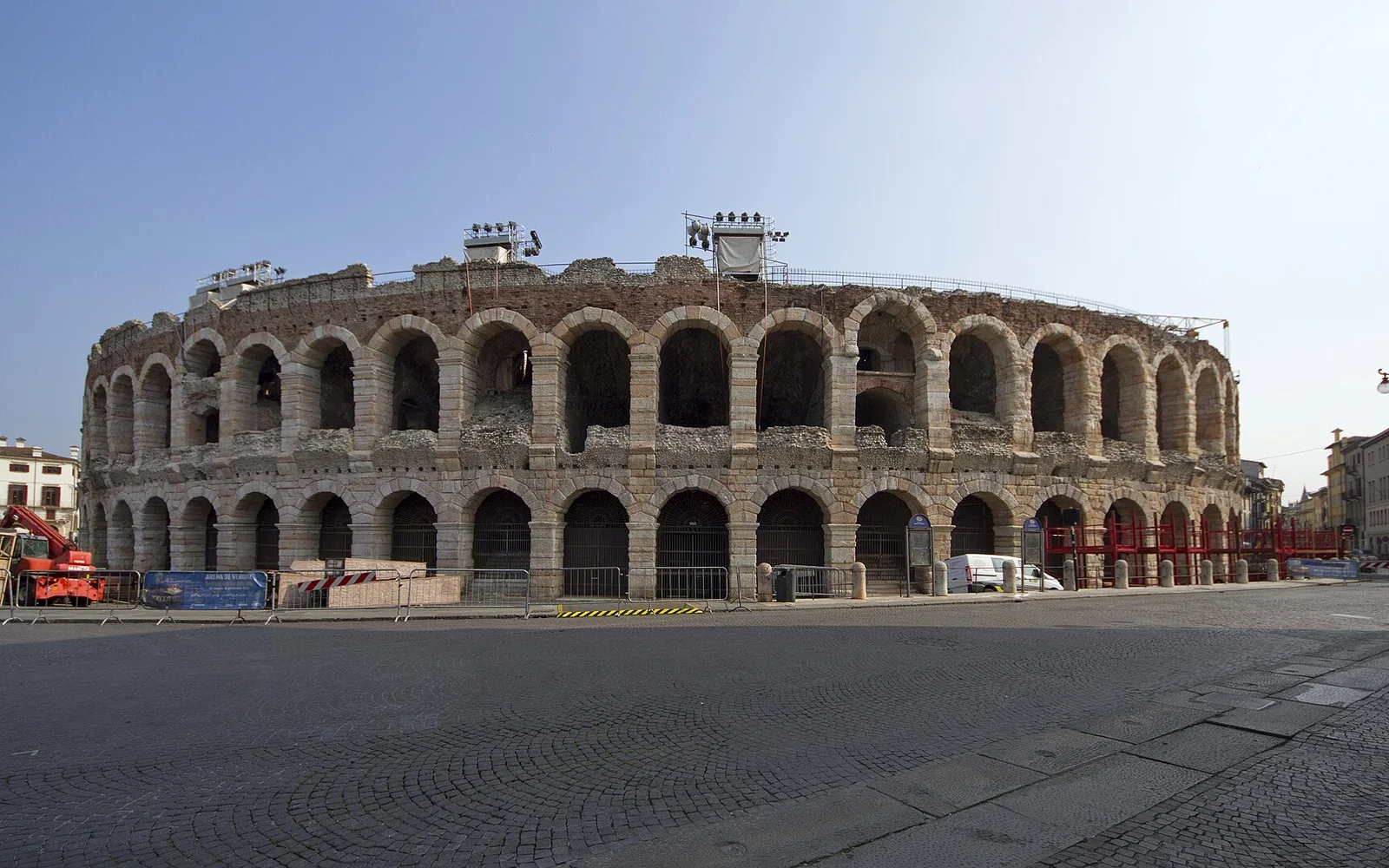
Verona’s main route runs from Piazza Bra and the Arena through Piazza delle Erbe to the Adige and Ponte Pietra. Churches, Castelvecchio and river viewpoints add enough depth for two full days.
Follow Verona from Roman centre to river
Verona’s main route runs from Piazza Bra and the Arena through Piazza delle Erbe to the Adige and Ponte Pietra. Churches, Castelvecchio and river viewpoints add enough depth for two full days.
The city is more than the fictional Juliet sites. Roman remains, medieval civic buildings and the river provide a stronger route, while the rail station makes onward travel straightforward.
Arena and civic squares
Begin in Piazza Bra, then continue through the shopping streets to Piazza delle Erbe and Piazza dei Signori. Arena access changes around performances.
Adige and Ponte Pietra
Cross Ponte Pietra for the Roman Theatre area and Castel San Pietro viewpoint. The hill can be reached by funicular when operating.
Castelvecchio and churches
Castelvecchio adds art and architecture west of the centre. San Zeno and other churches need separate opening checks and a wider walking route.
Build a realistic visit to Verona
Day 1: walk the Arena, Piazza delle Erbe, Ponte Pietra and river route.
Day 2: visit Castelvecchio, one major church and a neighbourhood beyond the busiest centre.
Day 3: add Lake Garda or Vicenza only if current rail and bus times make the trip comfortable.
Arrive and move around Verona
Verona Porta Nuova is the main station on the Milan-Venice and north-south corridors. It sits south of the centre, reached by bus, taxi or a substantial walk.
The historic centre is walkable. Buses connect the station, outer districts and regional destinations. The old city uses a restricted traffic zone, so confirm hotel access before driving.
Food and local stops in Verona
Local dishes include risotto all’Amarone, gnocchi, polenta and regional meats, alongside wines from nearby areas. Central square restaurants vary, so compare menus away from the main views.
Choose the right conditions for Verona
Spring and autumn suit walking. Summer brings heat and the Arena season, with strong event demand. Winter is quieter except around holiday dates.
Visit Verona publishes detailed accessible travel information. Many central streets are manageable, while the Arena, old paving and hill viewpoints have partial access or adapted routes.
Arena visits can change around rehearsals and performances. Major fairs affect accommodation, and popular fictional sites may have separate booking arrangements.
Continue from Verona
Venice, Bologna and Milan are easy onward rail cities. Lake Garda is a separate regional trip, and the station or bus route depends on the chosen shore town.
Continue across Veneto and the north
- Explore Veneto
- Continue to Venice
- Continue to Milan
- Continue to Bologna
- Italy travel guide
- Dolomites
- Lombardy
Verona visit questions
How many days should I spend in Verona?
Two days cover the main centre, river and museums. A third day allows a slower pace or one nearby trip.
Can Verona be visited without a car?
Yes. The centre is walkable and the city sits on major rail routes. Buses connect the station and outer areas.
Is Verona only about Romeo and Juliet?
No. The Roman Arena, medieval squares, churches, Castelvecchio and Adige river routes provide a much broader city visit.
Sources and updates
This guide was last reviewed on 3 September 2026. Transport, access and opening arrangements can change, so check the official source before travel.
- Official Italian tourism information, Italian Ministry of Tourism
- Trenitalia passenger information, Trenitalia
- Official Verona visitor information, Destination Verona & Garda Foundation
- Italian cultural heritage information, Italian Ministry of Culture