
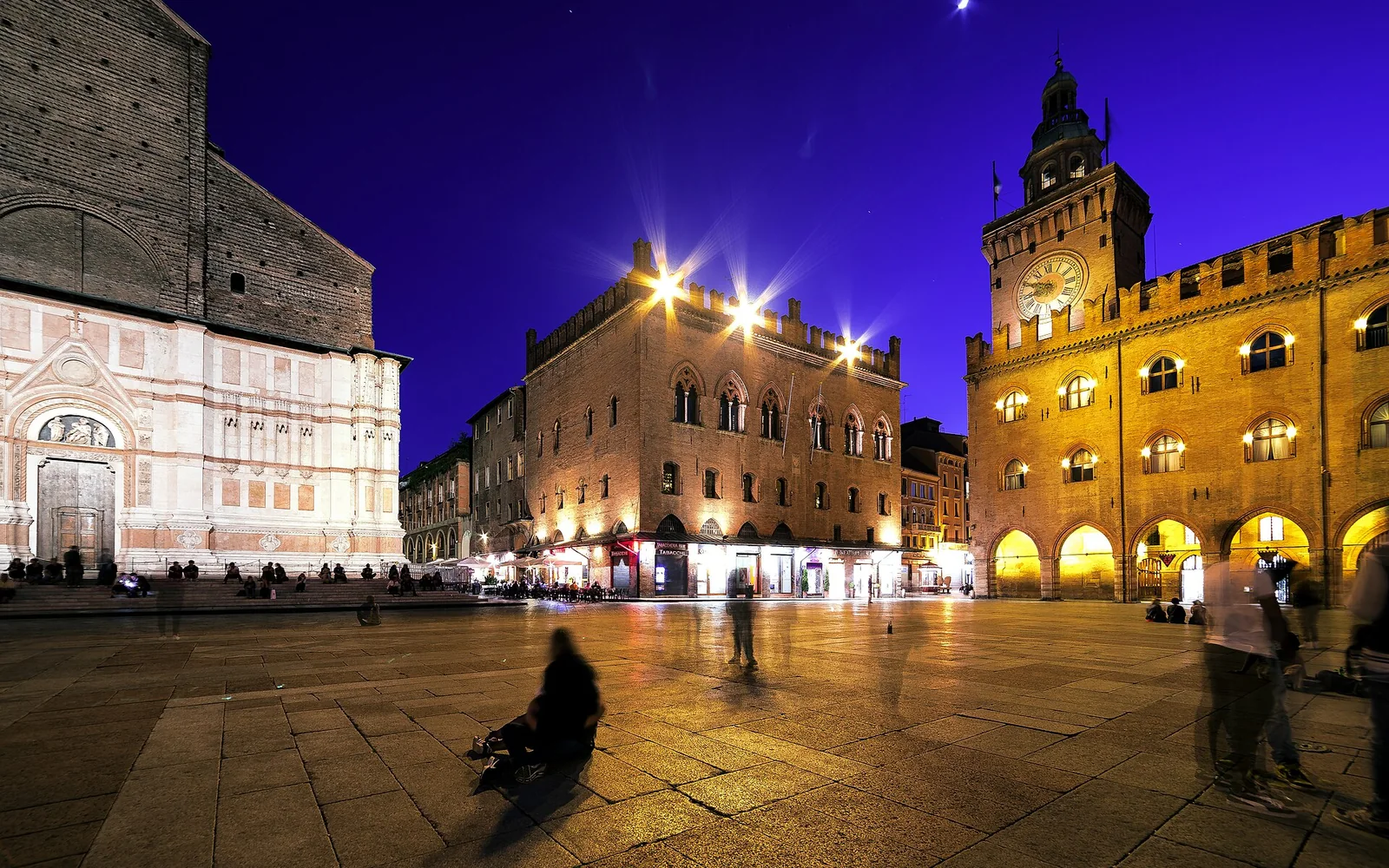
Bologna’s centre unfolds around Piazza Maggiore, the Quadrilatero, university streets and kilometres of porticoes. The city is compact enough for walking but substantial enough for a two-day visit.
Let the porticoes shape the first walk
Bologna’s centre unfolds around Piazza Maggiore, the Quadrilatero, university streets and kilometres of porticoes. The city is compact enough for walking but substantial enough for a two-day visit.
Bologna Centrale makes the city a useful Emilia-Romagna base. Modena, Ferrara and Parma fit simple rail outings, while Ravenna needs more travel time and a full day.
Piazza Maggiore and the old centre
Start with the basilica, civic buildings and Quadrilatero, then continue toward the Two Towers and university area.
Walk the porticoes
Porticoes shape everyday movement and provide shade or rain cover. The route to San Luca is much longer and more demanding than a central stroll.
Make room for food
Markets, bakeries and traditional restaurants explain the region better than one overloaded tasting day. Book specialist visits directly.
Build a realistic visit to Bologna
Day 1: explore Piazza Maggiore, Quadrilatero, the towers area and university streets.
Day 2: visit a museum, walk selected porticoes and spend time in a neighbourhood market.
Day 3: add San Luca with suitable transport or take one regional rail trip.
Arrive and move around Bologna
Bologna Centrale handles high-speed, intercity and regional trains. The station is north of the historic centre and has several exits, so follow the route that matches the accommodation.
Walking covers the central sights. Buses serve San Luca approaches and outer districts. The historic centre uses traffic controls, so a rental car is unnecessary for a city stay.
Food and local stops in Bologna
Bologna is associated with tagliatelle al ragù, tortellini, mortadella and rich filled pasta. Regional recipes have specific forms, and tourist menus that mix every Italian speciality are less useful.
Choose the right conditions for Bologna
Spring and autumn suit walking and day trips. Summer is hot, though porticoes provide shade. Winter works well for food and museums, with fog or cold possible.
Bologna Welcome publishes accessible travel information. Porticoes help create sheltered routes, but paving, kerbs and historic entrances vary. Check tower and museum access separately.
Trade fairs and events can affect accommodation citywide. Tower conditions and openings may change, so verify before making a climb central to the day.
Continue from Bologna
Modena, Parma and Ferrara are rail-linked. Ravenna deserves a full day or overnight stay. Florence and Verona work better as onward bases than repeated day trips.
Continue along the Via Emilia
Bologna city questions
How many days do I need in Bologna?
Two full days cover the historic centre, porticoes and food. A third allows San Luca or one regional rail outing.
Is Bologna a good base for northern Italy?
It is an excellent rail base for Emilia-Romagna and selected nearby cities. Longer day trips to several distant regions can still become tiring.
Do I need a car in Bologna?
No for the city and main rail outings. A car is mainly useful for rural producers or hill areas outside the central transport network.
Sources and updates
This guide was last reviewed on 3 September 2026. Transport, access and opening arrangements can change, so check the official source before travel.
- Official Italian tourism information, Italian Ministry of Tourism
- Trenitalia passenger information, Trenitalia
- Official Bologna visitor information, Bologna Welcome
- Italian cultural heritage information, Italian Ministry of Culture