
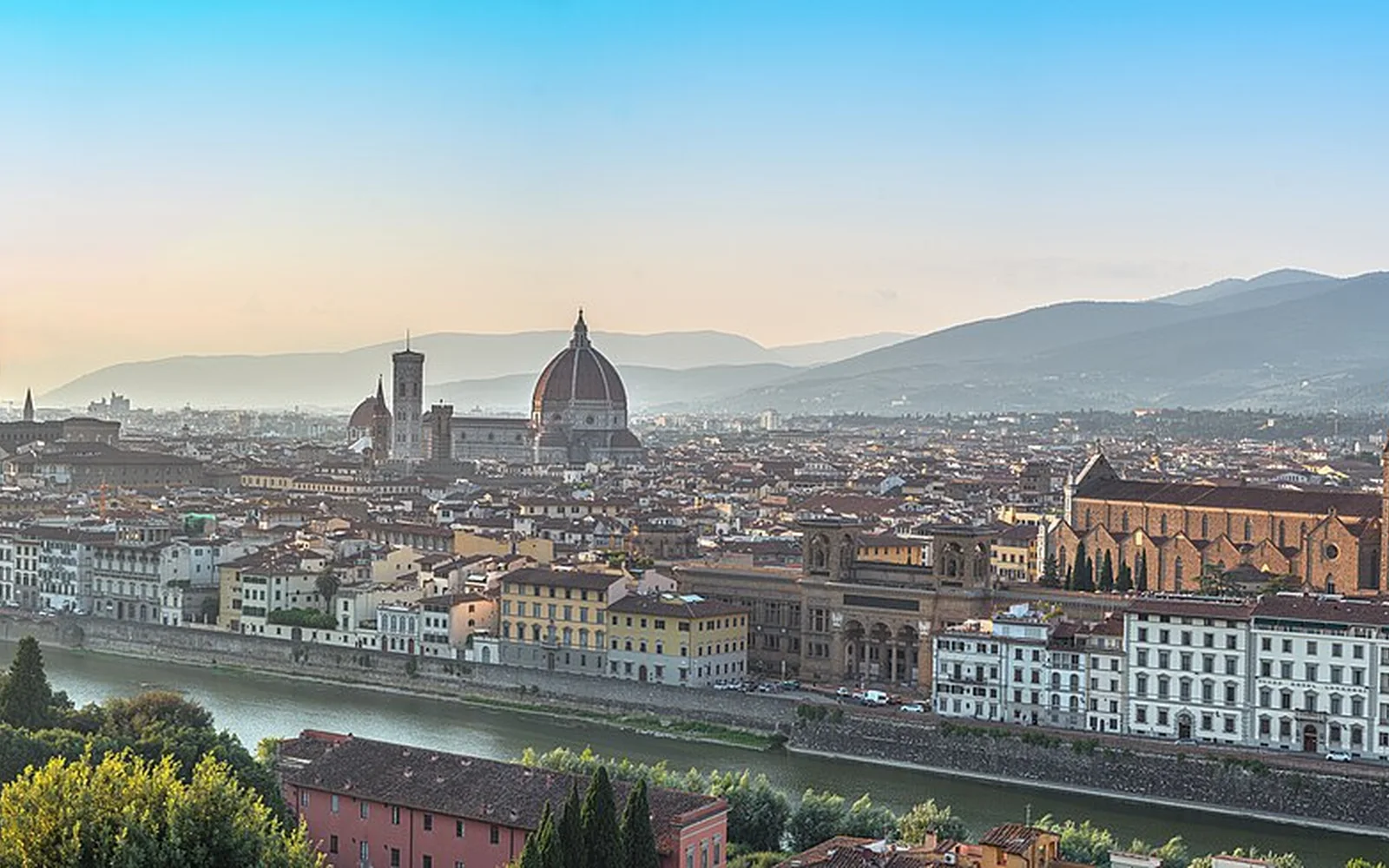
Florence is compact, but its major collections require time. The cathedral complex, Uffizi, Palazzo Vecchio and Ponte Vecchio form a dense central route, while the Accademia and Santa Croce point in different directions.
Secure the main museum entries first
Florence is compact, but its major collections require time. The cathedral complex, Uffizi, Palazzo Vecchio and Ponte Vecchio form a dense central route, while the Accademia and Santa Croce point in different directions.
This guide focuses on the city. The Tuscany guide covers hill towns, countryside, coast and multi-base routes that should not be squeezed into Florence day trips.
Cathedral and civic centre
The Duomo complex and Piazza della Signoria can fill most of a day when climbs or museum interiors are included. Reserve timed entries before building the walking route.
Choose museums carefully
The Uffizi and Accademia have different scales. Add one major collection per half day, then use nearby churches or streets as a change of pace.
Cross into Oltrarno
Pitti, Santo Spirito and artisan streets show a broader city. Piazzale Michelangelo adds a climb or bus ride and works best around a clear-weather evening.
Build a realistic visit to Florence
Day 1: visit the cathedral area, Piazza della Signoria and a central church.
Day 2: reserve the Uffizi or Accademia, then cross the Arno for Oltrarno.
Day 3: choose Santa Croce, Pitti Palace or a second museum and finish at a viewpoint.
Day 4: add a slow neighbourhood day or one well-planned Tuscany outing.
Arrive and move around Florence
Firenze Santa Maria Novella is the main central station. Other stations may appear in search results but can be less useful for a first visit. The airport tram and regional rail links should be checked for current service changes.
Walking covers the historic centre. Trams and buses help with the airport, outer districts and uphill viewpoints. The restricted traffic zone makes a central rental car unnecessary and potentially expensive.
Food and local stops in Florence
Look for ribollita, pappa al pomodoro, lampredotto, crostini and seasonal Tuscan dishes. Florentine steak is large and traditionally served for sharing, so confirm weight and price before ordering.
Choose the right conditions for Florence
Spring and autumn suit walking but remain busy. Summer heat and museum demand require early starts. Winter offers quieter streets outside holiday periods, though daylight is shorter.
Florence’s official tourism site provides barrier-free venue information. The centre is mostly level, but stone paving, narrow pavements and historic stairs vary. Dome climbs are not step-free, while major museums offer separate accessible arrangements.
Avoid booking several large museums on one day. Historic-centre distances are short, but queues and time inside each building add up. Tuscany road trips need a separate plan.
Continue from Florence
Siena, Lucca, Pisa and hill towns suit different travel methods. Choose one for a day trip or stay elsewhere in Tuscany instead of using Florence for every regional journey.
Travel beyond Florence in Tuscany
Florence planning questions
How many days do I need in Florence?
Three full days cover the cathedral area, one or two major museums and Oltrarno. Add a fourth day for a slower pace or one regional outing.
Do I need to book Florence museums?
Advance booking is sensible for the Uffizi, Accademia and popular climbs, especially during busy months. Check the official venue for the exact ticket.
Can Florence be explored without a car?
Yes. The historic centre is best on foot, and trams or buses handle the airport and outer districts. A car is mainly useful for a separate rural Tuscany route.
Daily planning ranges
Travel costs in Florence
These planning ranges are per person, per day and assume two people sharing a room. They are not live quotes.
Standard daily breakdown
- Accommodation
- €82 to €140
- Food
- €34 to €52
- Local transport
- €6 to €14
- Activities
- €22 to €42
What the range assumes: Per person, per day, based on two people sharing a sensible double or twin room. The standard range allows for ordinary paid sightseeing, local transport and a mix of casual and mid-range meals.
Seasonal note: Central rooms cost most from Easter through October, with another shorter rise over holiday periods.
Not included: International travel, intercity travel, shopping, travel insurance and major special-event premiums are excluded.
Price basis 29 August 2026, reviewed 29 August 2026, next review due 28 February 2027.
Cost sources
- Florence public transport tickets, Autolinee Toscane
- Florence cost of living, Numbeo
Sources and updates
This guide was last reviewed on 3 September 2026. Transport, access and opening arrangements can change, so check the official source before travel.
- Official Italian tourism information, Italian Ministry of Tourism
- Trenitalia passenger information, Trenitalia
- Official Florence visitor information, Municipality and Metropolitan City of Florence
- Official Tuscany visitor information, Toscana Promozione Turistica
- Italian cultural heritage information, Italian Ministry of Culture