
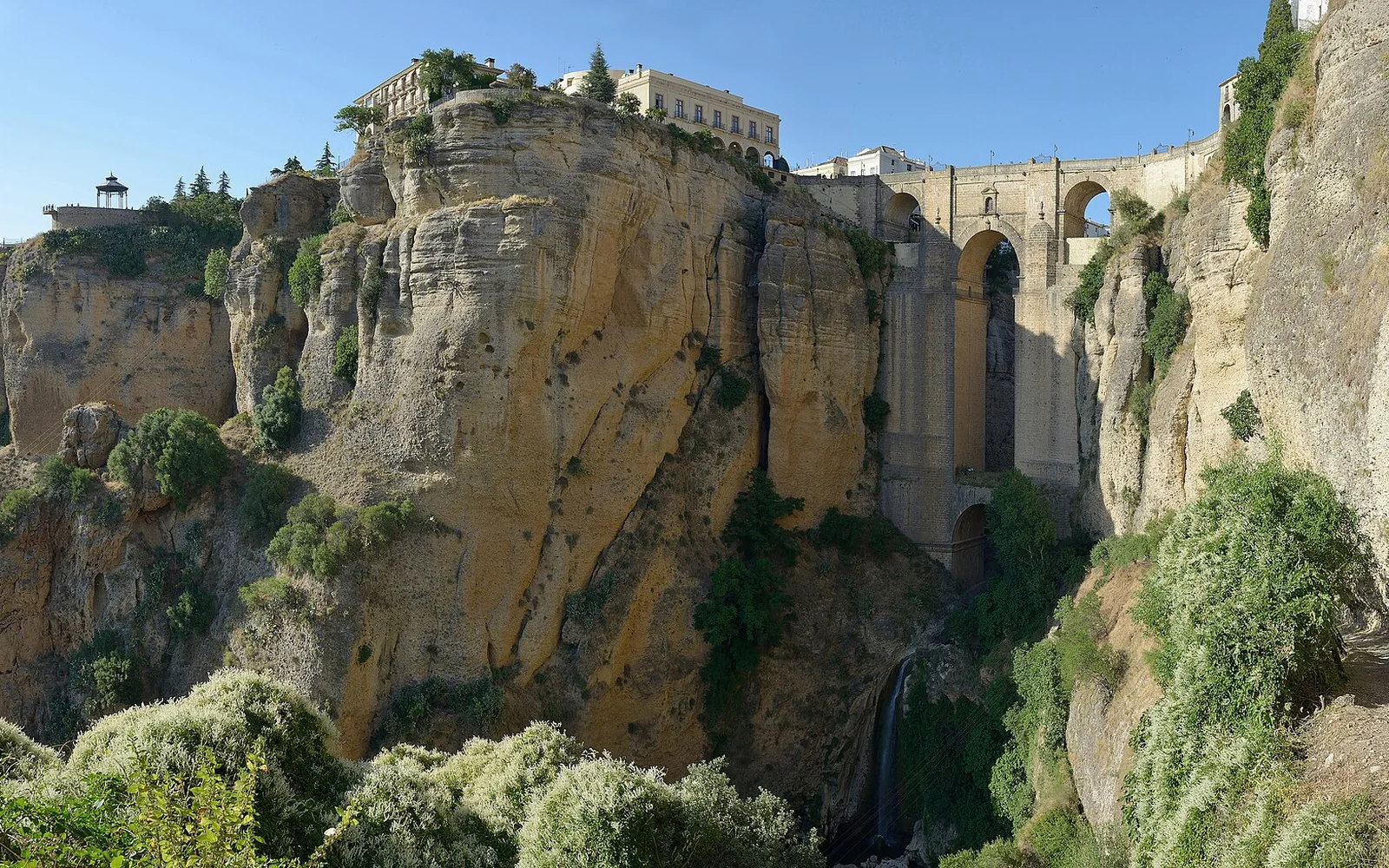
Ronda’s famous bridge is the centre of the visit, but the old town, Arab baths, walls and gorge paths require more than a single viewpoint stop. An overnight stay avoids the tight rhythm of group excursions.
One full day covers the town. Two days allows a lower viewpoint or nearby rural addition without turning the route into a race against infrequent transport.
What to prioritise
Puente Nuevo
See the bridge from more than one safe viewpoint. Lower paths involve steep descents, exposed edges and a return climb.
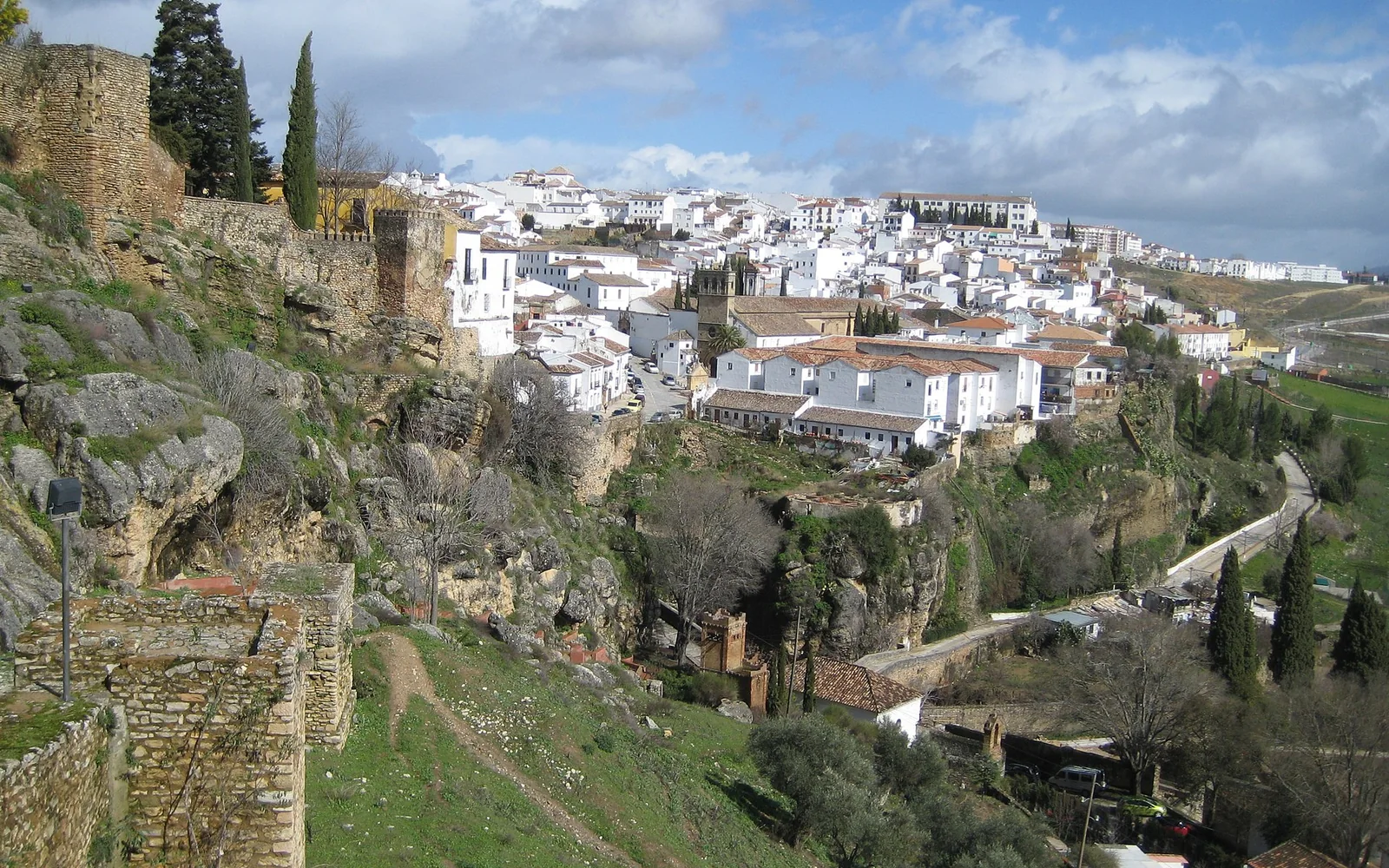
Old town south of the gorge
Historic houses, churches and walls spread beyond the bridge. Continue toward the quieter southern quarter rather than turning back immediately.
Arab baths and lower city
The baths sit below the main town near older approaches. Group them with walls and lower streets to avoid repeated climbs.
Where to stay
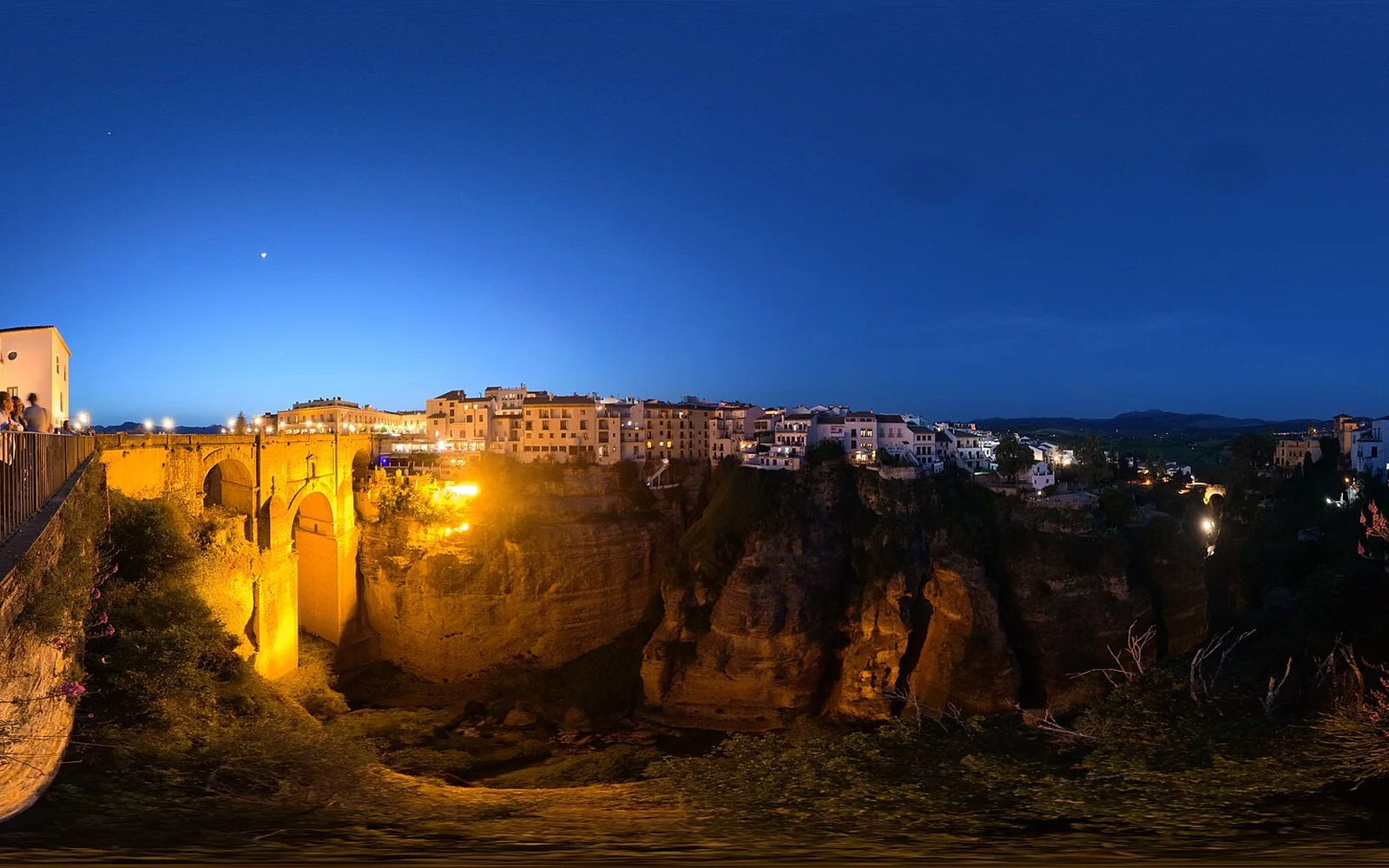
Near Puente Nuevo is most convenient but busiest. The modern town near the station has easier luggage access. Old-town lodging is atmospheric, with more cobbles and limited vehicle access.
A practical itinerary
- Day 1: visit Puente Nuevo viewpoints, cross the old town and continue to walls or the Arab baths.
- Day 2: choose one lower gorge walk or rural outing only after checking weather, path status and return transport.
Getting there
Ronda has rail and coach links, but frequency and journey patterns vary. The station and bus terminal are on the modern side within walking distance of the bridge.
Getting around
Walking covers town, though gradients are significant. A car helps with countryside routes but parking is better outside the tight old streets.
Food to look for
Look for mountain-influenced stews, local cured meats and Andalusian dishes. Gorge-view restaurants charge for location, so compare menus and recent information.
When to visit
Spring and autumn suit exposed walks. Summer is hot, while winter can be cold and wet at elevation. Gorge paths should be avoided in unsafe conditions.
Accessibility
The main bridge crossing is accessible from street level, but lower viewpoints, walls and old lanes involve slopes and steps. Choose viewpoints carefully.
Practical limits
Do not climb barriers or use closed paths for a photograph. Return climbs are harder than descents, and mobile navigation should not override local closure signs.
Nearby places
Málaga, Marbella and Seville are possible gateways, but no single connection is best for every date. Ronda works more naturally as an overnight stop in a wider Andalusia route.
Places to add to your map
- Puente Nuevo: Bridge spanning El Tajo gorge.
- Plaza Duquesa de Parcent: Old-town square south of the bridge.
- Arab Baths: Historic site below the main town.
Open the route planner to place these stops in a wider Spain trip.
Continue planning
Questions about Ronda
Is Ronda a day trip or an overnight stay?
A full day is enough for the town. One night provides quieter viewpoints and removes pressure from limited return transport.
Is Ronda difficult to walk?
The main streets are manageable, but gorge viewpoints and lower sites involve steep climbs and steps.
Can I reach Ronda without a car?
Yes by train or coach on selected routes. Check current times carefully because services may be limited.
Sources and updates
This guide was last reviewed on 28 August 2026. Transport, access and opening arrangements can change, so check the official source before travel.
- Spain tourism, Turespaña
- Renfe passenger information, Renfe
- Official Ronda tourism, Ronda City Council
- Official Andalusia tourism, Andalusia Tourism