

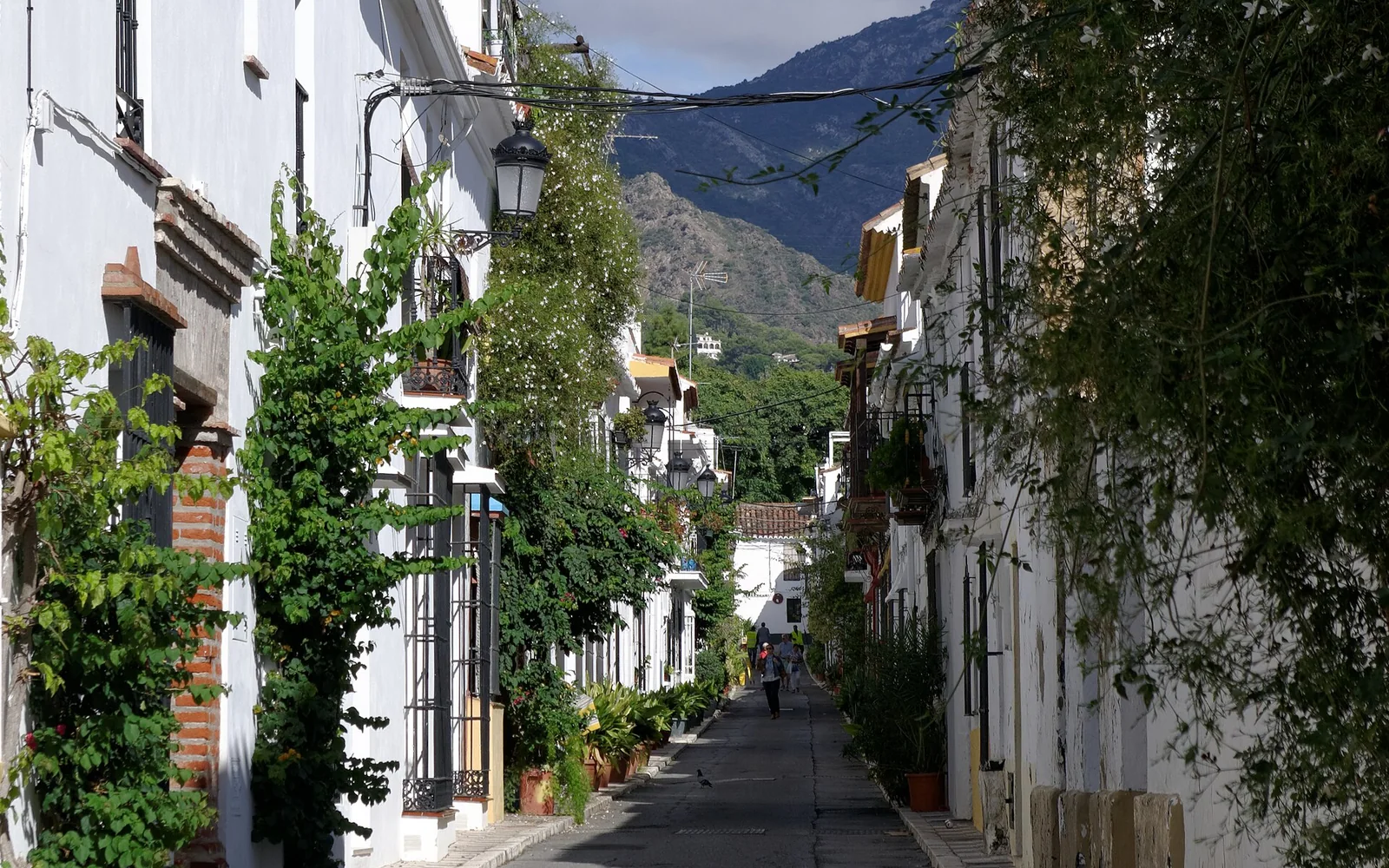
Marbella has more local character than its resort reputation suggests. Plaza de los Naranjos and white old-town lanes sit close to the central promenade, while Puerto Banús is a separate marina district to the west.
Two days covers the centre and beach. Stay longer for a resort break, coastal walks or a planned inland trip, but do not use Marbella as a daily base for distant Andalusian cities.
What to prioritise
Old town
Plaza de los Naranjos anchors a small network of whitewashed lanes, churches and shops. Visit early or near evening for a calmer walk.
Promenade and beaches
The central seafront supports long walks and easy beach access. Beach quality, width and facilities change along the coast, so inspect the section near the chosen hotel.
Puerto Banús and San Pedro
Puerto Banús focuses on yachts, shopping and nightlife. San Pedro has its own centre and beach area. Both require local transport from old Marbella.
Where to stay
The old-town edge is best for restaurants and evening streets. Central beachfront hotels suit short resort stays. San Pedro is calmer, while Puerto Banús is expensive and nightlife-focused.
A practical itinerary
- Day 1: explore Plaza de los Naranjos and old-town lanes, then walk the central promenade near sunset.
- Day 2: choose beach time, San Pedro or Puerto Banús, using local transport rather than walking the full distance.
- Day 3: keep a resort day or take one verified inland outing without a late cross-region return.
Getting there
Málaga Airport is the main gateway, with coaches, private transfers, taxis and road travel. Marbella has no mainline railway station. Do not book a rail itinerary that assumes direct arrival in the city.
Getting around
Walking works in central Marbella. Buses connect San Pedro, Puerto Banús and other coast areas. A car helps with inland trips but brings parking pressure in summer.

Food to look for
Look beyond marina dining for grilled fish, gazpacho, espetos and Andalusian dishes. Old-town squares are attractive, but compare prices and menus before choosing a table.
When to visit
Late spring and early autumn suit both beach and walking. Summer is hot, expensive and busy. Winter is quieter, with mild days but reduced beach services.
Accessibility
The promenade is generally level, while old-town paving and slopes vary. Larger resorts may provide strong facilities, but beach access should be confirmed directly.
Practical limits
Marbella, Puerto Banús and Málaga are distinct places. Airport and regional transfers can be slow in traffic. Avoid describing a distant coast hotel as walkable to the old town.
Nearby places
Málaga is the main city connection. Ronda works as a separate inland day with current bus, road or tour arrangements. Cádiz and Seville are too far for casual repeated trips.
Places to add to your map
- Plaza de los Naranjos: Central square in Marbella old town.
- Avenida del Mar: Pedestrian link between the centre and promenade.
- Puerto Banús: Marina district west of central Marbella.
Open the route planner to place these stops in a wider Spain trip.
Continue planning
Questions about Marbella
Does Marbella have a train station?
No. Use buses or road transfers from Málaga and other Costa del Sol transport points.
How many days do I need in Marbella?
Two days covers the old town and beach. Three or four days suits a slower resort stay or one nearby outing.
Is Puerto Banús in central Marbella?
No. It lies west of the old town and needs a bus, taxi, car or a long coastal journey.
Sources and updates
This guide was last reviewed on 28 August 2026. Transport, access and opening arrangements can change, so check the official source before travel.
- Spanish airports, Aena
- Official Málaga tourism, Málaga City Council
- Official Marbella tourism, Marbella City Council
- Official Andalusia tourism, Andalusia Tourism