
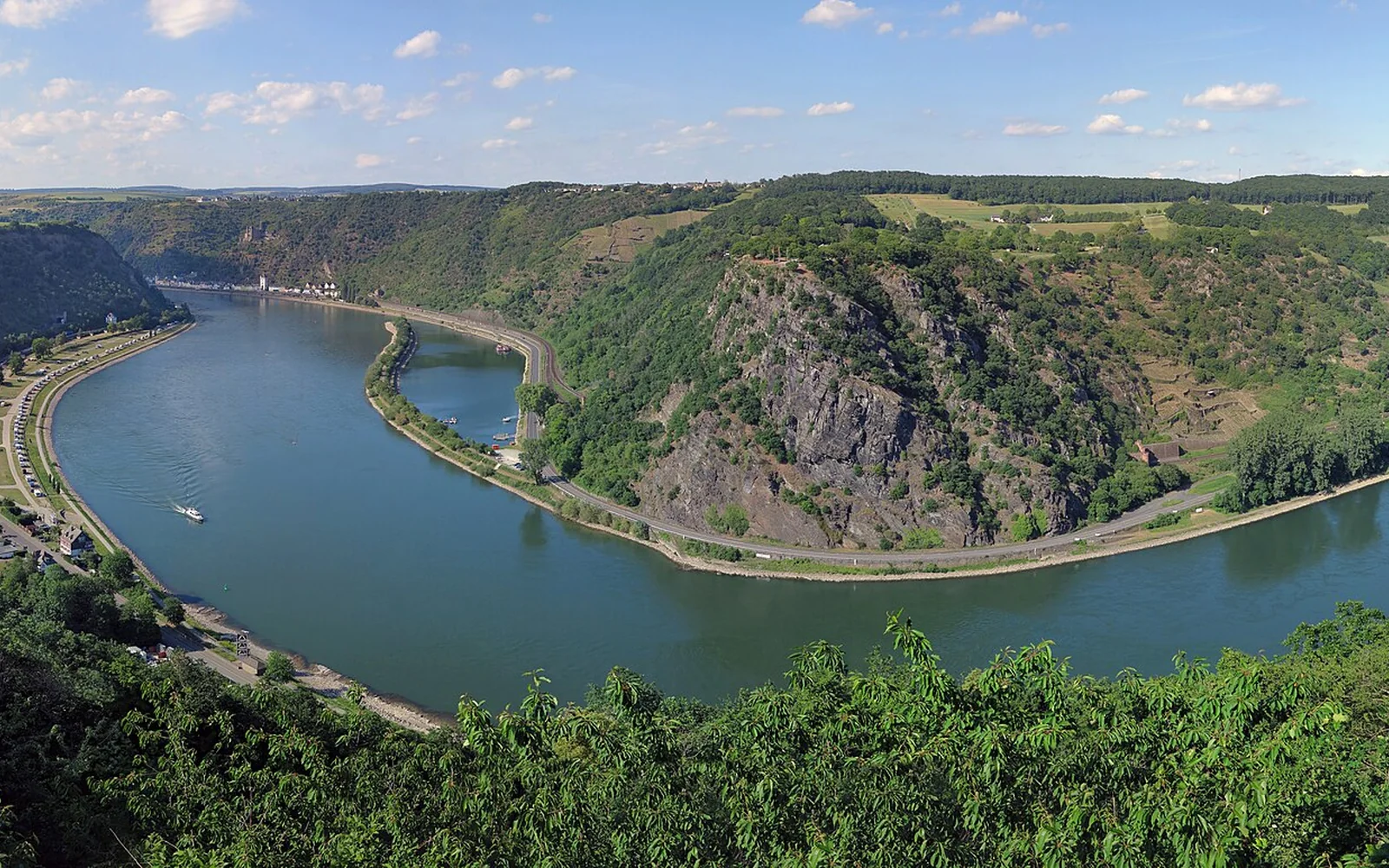
The Rhine is too long for one generic day trip. For the classic castle route, concentrate on the Upper Middle Rhine and choose a town on the bank that serves the planned sights.
Choose the river section and bank first
The Rhine is too long for one generic day trip. For the classic castle route, concentrate on the Upper Middle Rhine and choose a town on the bank that serves the planned sights.
Rail lines run along both banks, while ferries connect selected crossings. Boats add a scenic section but should not be treated as an all-day commuter system.
Choose the bank before the hotel
Bacharach and Boppard sit on the west-bank railway. Rüdesheim and the Loreley viewpoints use different east-bank links.
Select one or two castles
Marksburg, Rheinfels, Stahleck and others have different opening, tour and walking requirements.
Use a boat for one strong section
A timed cruise can connect river views, but rail is usually more flexible for the return.
Use boats to connect, not collect, stops
Day 1: settle into a rail town and walk the riverfront.
Day 2: visit one castle with a confirmed access route.
Day 3: combine a scenic boat section with rail.
Day 4: add Koblenz, Rüdesheim or a marked vineyard walk.
Follow the two rail lines along the river
Mainz, Frankfurt, Cologne and Koblenz provide wider connections. Regional trains continue along both banks of the Middle Rhine.
Rail is the main valley transport. Ferries cross at selected towns, boats operate seasonally, and castle approaches often require walking or local buses.
Food and local stops in Rhine Valley
Riesling, regional taverns, seasonal wine stands and river-town restaurants shape the route. Use rail or a non-driving plan for tastings.
Check water levels, boat seasons and castle access
Late spring to early autumn has the broadest boat and castle schedules. Summer weekends are busy. Winter is quiet, with many reduced rural services.
Valley trains and towns vary by station. Castle paths, steep streets and boat gangways need individual checks, and low or high water can affect cruises.
Boat schedules and water levels change. Some castles are visible from the river but difficult to reach, and the Loreley name covers several different places and viewpoints.
Connect the Rhine with Cologne or Frankfurt
The Moselle meets the Rhine at Koblenz. Cologne and Frankfurt are the main city gateways, while the Rheingau continues south-east.
Continue along western Germany’s rivers
- Rhineland-Palatinate guide
- Moselle Valley guide
- Cologne travel guide
- Frankfurt travel guide
- Trier
- Germany travel guide
Rhine Valley planning questions
Which part of the Rhine Valley should I visit?
The Upper Middle Rhine between Rüdesheim, Bacharach, St Goar and Koblenz provides the most concentrated castle and vineyard scenery.
Which side of the Rhine is better?
Neither side is universally better. Choose according to the town, castle and viewpoint, then use ferries or rail where a crossing is practical.
Can I explore the Rhine Valley without a car?
Yes. Rail, ferries and seasonal boats make the core valley practical without driving, though castle approaches still involve local planning.
Sources and updates
This guide was last reviewed on 3 September 2026. Transport, access and opening arrangements can change, so check the official source before travel.
- Germany travel planning, German National Tourist Board
- DB passenger information, Deutsche Bahn
- Official accessible travel guidance for Germany, German National Tourist Board
- Official Upper Middle Rhine visitor information, Rhine-Nahe Tourism