
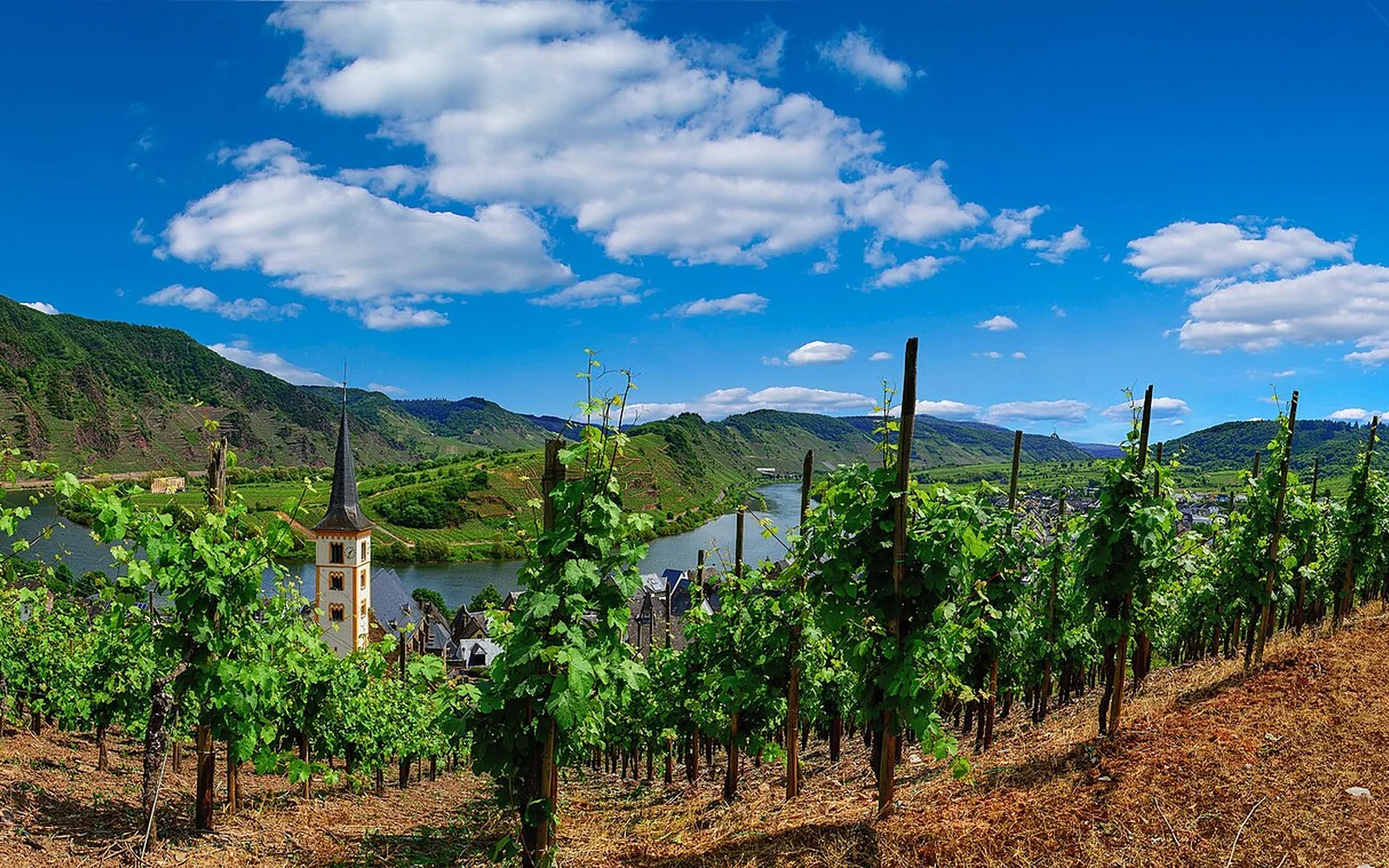
Trier anchors the western end, Cochem sits on the main rail line, and Bernkastel-Kues serves a central stretch without its own railway station. The valley’s curves make road distance deceptive.
Choose a compact stretch of the Moselle
Trier anchors the western end, Cochem sits on the main rail line, and Bernkastel-Kues serves a central stretch without its own railway station. The valley’s curves make road distance deceptive.
Choose two bases for a broad trip. Rail and buses can work well, but a car-free plan must follow the actual corridor rather than a list of famous villages.
Use Cochem for rail convenience
Cochem connects easily with Koblenz and Trier and supports castle, river and walking days.
Treat Bernkastel as a bus route
The nearest useful rail connections require onward bus planning and a confirmed evening return.
Build tasting days safely
Arrange walking, public transport, taxis or a guided visit instead of driving after wine.
Leave time for one town and one landscape each day
Days 1 to 2: explore Trier and the western valley.
Days 3 to 4: stay in Cochem for the castle and river routes.
Day 5: add Bernkastel-Kues or a planned vineyard and cycling day.
Check which side of the river carries the connection
Trier and Koblenz are the main gateways. The railway follows the river closely in some sections and cuts away through tunnels in others.
Regional trains, buses, bicycles and seasonal boats all have roles. Check bicycle space, bus frequency and the correct bank before leaving.
Food and local stops in Moselle Valley
Riesling is central to the valley, alongside regional sausages, river fish, cakes and seasonal dishes. Small-town restaurant hours can be limited outside summer.
Arrange tastings and cycling safely
Late spring through harvest season offers the broadest visitor activity. Autumn is attractive and busy around wine events. Winter is very quiet in smaller towns.
River promenades can be level, but vineyards, castles and old-town lanes are often steep. Station, bus and boat access needs route-specific confirmation.
Boat services are seasonal, and some famous bends are best seen from steep viewpoints. Wine events can fill accommodation long before the date.
Use Trier as the historical anchor
Koblenz links the valley with the Rhine. Luxembourg and Saar routes extend west, while Cologne and Frankfurt are longer onward connections.
Continue from the Moselle
Moselle Valley route questions
Where should I stay in the Moselle Valley?
Cochem is convenient for rail, Trier suits history and the western valley, and Bernkastel-Kues is useful for a slower central-area stay.
Can I explore the Moselle without a car?
Yes with careful base selection. Trains serve Trier, Cochem and Koblenz, while buses cover other towns with less frequent schedules.
When is the Moselle wine harvest?
Timing varies by year, grape and producer. Check current regional information and do not assume harvest work includes ordinary visitor access.
Sources and updates
This guide was last reviewed on 3 September 2026. Transport, access and opening arrangements can change, so check the official source before travel.
- Germany travel planning, German National Tourist Board
- DB passenger information, Deutsche Bahn
- Official accessible travel guidance for Germany, German National Tourist Board
- Official Moselle Valley visitor information, Rhineland-Palatinate Tourism