
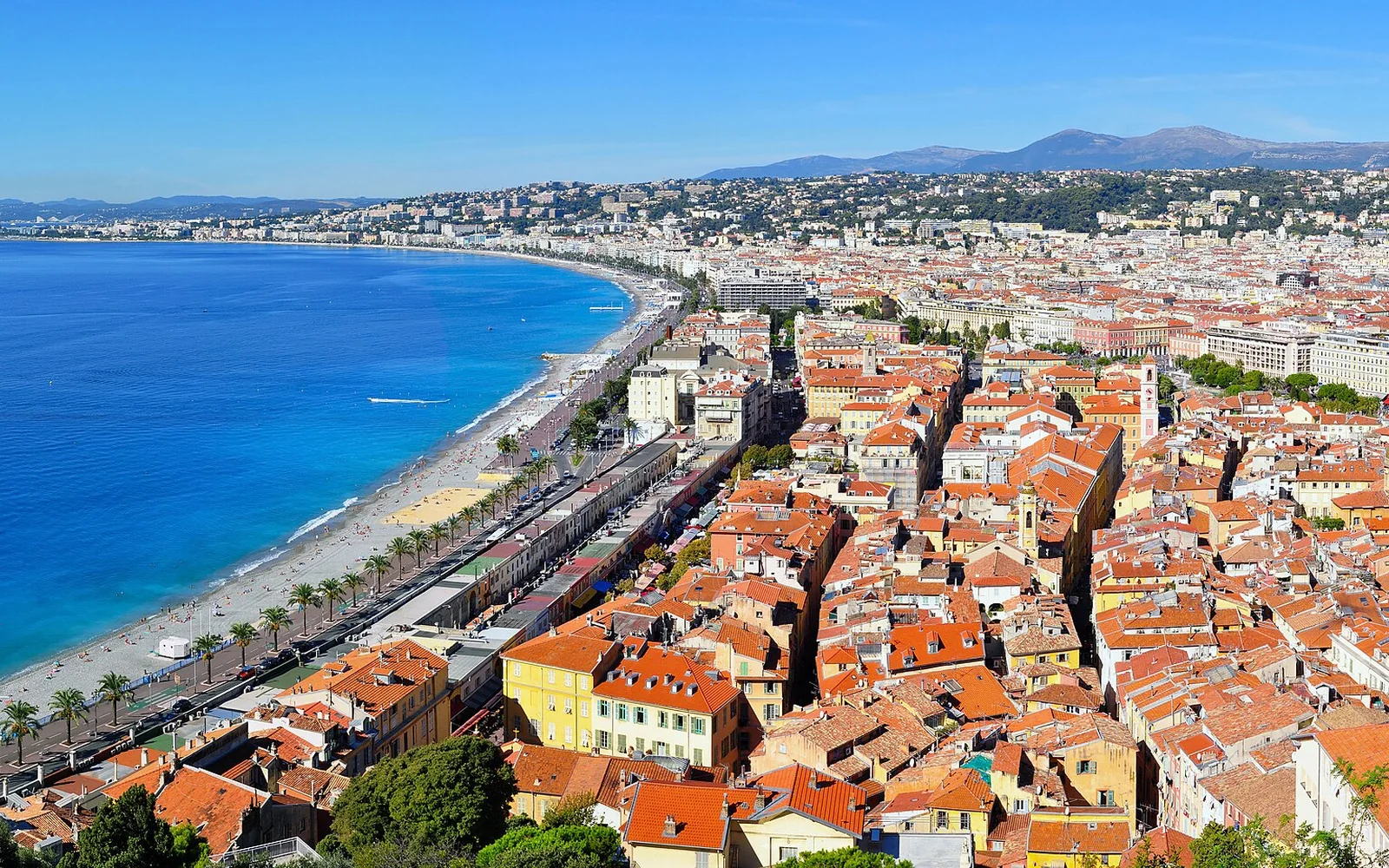
Nice works as both a city stay and a practical Riviera base. Vieux Nice, Castle Hill, the port and Promenade des Anglais can fill two days before any journey to Menton, Antibes or another coast town.
The shoreline is pebbled rather than sandy, and beach access varies between public and private sections. Keep a city alternative for windy, wet or very hot weather.
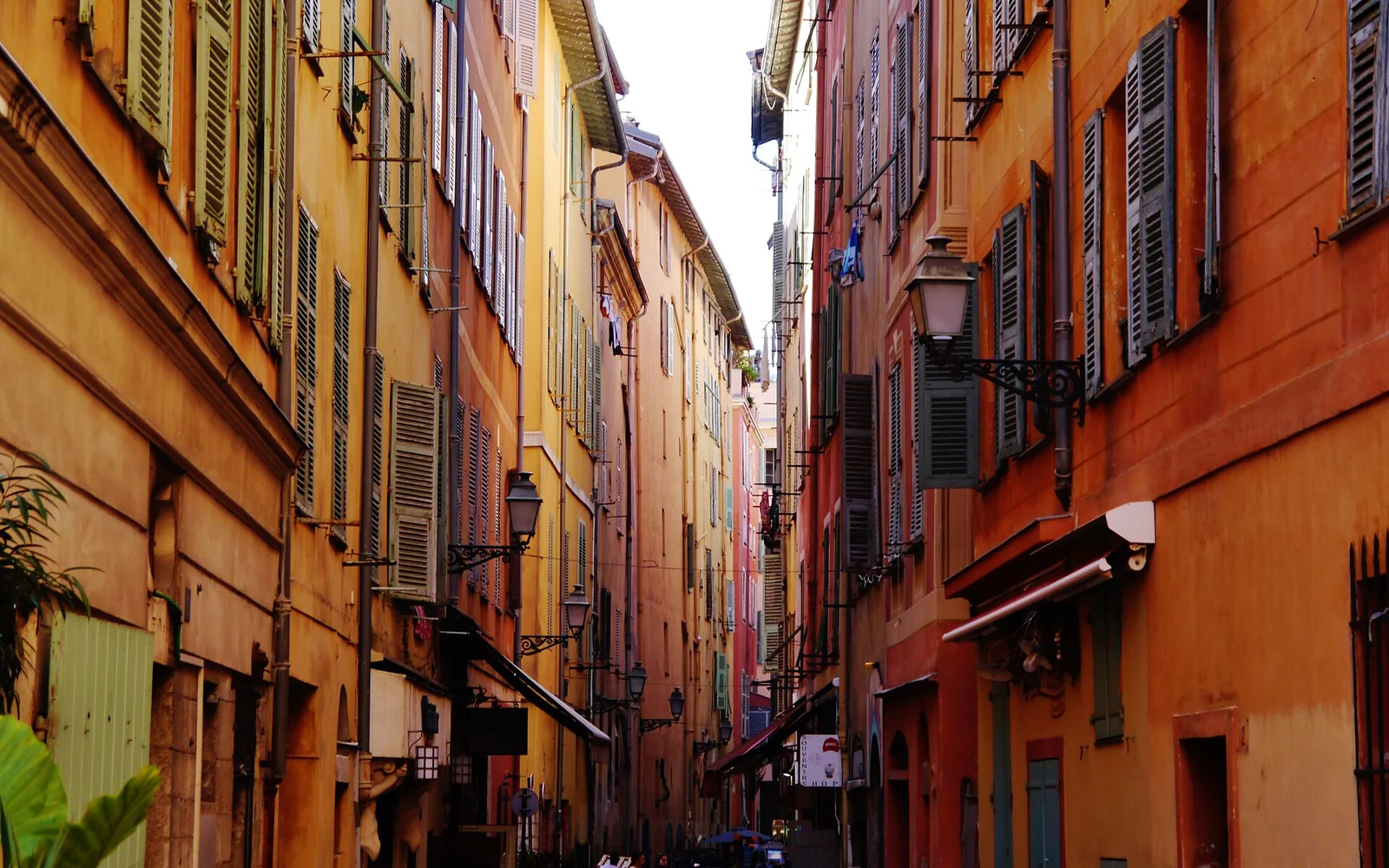
Walk Vieux Nice early
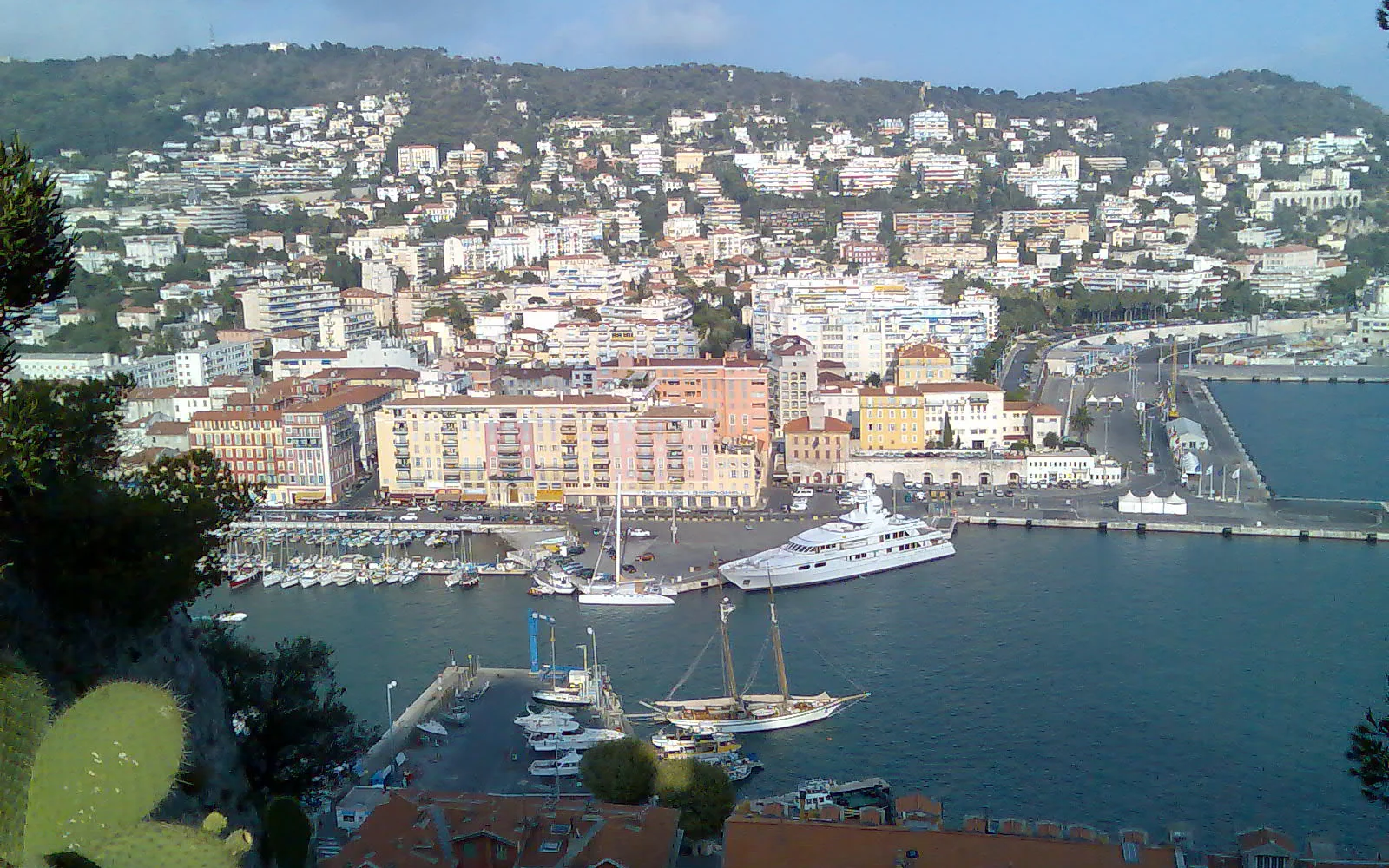
The market streets and narrow lanes become busiest later in the day. Continue toward the port or climb Castle Hill by the route that suits your mobility.
Use the waterfront as a link
The Promenade des Anglais connects the centre with long open views, but distances are greater than they appear. Trams and buses help with the return.
Choose one coast trip
Menton, Antibes, Cannes and Monaco sit on rail routes, but each deserves most of a day rather than a quick station stop.
A practical itinerary
- Day 1: explore Vieux Nice, Cours Saleya and the port.
- Day 2: follow the promenade and visit a museum or Castle Hill.
- Day 3: take one rail trip to Menton, Antibes or another Riviera town.
- Days 4 to 5: add a slower beach, art or inland-village day.
Getting there
Nice Côte d’Azur Airport connects with the city by tram and other transport. Nice-Ville is the main rail station for national and regional services. Confirm the station if a local train uses another Nice stop.
Getting around
Trams and buses cover the city, while regional trains link many coast towns. Vieux Nice is mainly explored on foot. Steep routes, crowded platforms and summer traffic need extra time.
Food to look for
Local dishes include socca, salade niçoise, pissaladière and petits farcis. Markets and bakeries make simple lunches easy, while waterfront prices and menus vary widely.
When to visit
Spring and autumn offer mild city weather. Summer is busy and hot, with strong beach demand. Winter remains active in the city, though some resort services reduce.
Accessible travel
The tourist office publishes responsible and practical travel information. The promenade and much of the modern centre are relatively level, while old-town lanes, hill routes and beach surfaces need closer checks.
Practical limits
Do not assume every coast town has the same last train or accessible station route. Pebble beaches may need suitable footwear, and sea conditions can affect swimming.
Nearby places
Menton, Antibes and Cannes fit rail outings. Provence lies inland and west, with a different transport plan from the Riviera coast.
Places to add to your map
- Cours Saleya: Market area inside Vieux Nice.
- Castle Hill: Elevated park between old town and port.
- Promenade des Anglais: Long seafront route west of the centre.
Open the route planner to place these stops in a wider France trip.
Continue planning
Questions about Nice
Is Nice a good base for the French Riviera?
Yes. It has the strongest mix of rail, airport, city transport and year-round services on the eastern Riviera.
How many days should I spend in Nice itself?
Two full days cover the old town, waterfront and one museum or hill route. Add days for beach time and Riviera rail trips.
Are the beaches in Nice sandy?
Most central beaches are pebbled. Access, facilities and private sections vary, so check the exact beach if step-free entry or equipment matters.
Daily planning ranges
Travel costs in Nice
These planning ranges are per person, per day and assume two people sharing a room. They are not live quotes.
Standard daily breakdown
- Accommodation
- €95 to €170
- Food
- €38 to €58
- Local transport
- €7 to €16
- Activities
- €25 to €50
What the range assumes: Per person, per day, based on two people sharing a sensible double or twin room. The standard range allows for ordinary paid sightseeing, local transport and a mix of casual and mid-range meals.
Seasonal note: Summer, carnival dates and major Riviera events can produce a sharp accommodation premium.
Not included: International travel, intercity travel, shopping, travel insurance and major special-event premiums are excluded.
Price basis 29 August 2026, reviewed 29 August 2026, next review due 28 February 2027.
Cost sources
- Nice public transport fares, Lignes d Azur
- Nice cost of living, Numbeo
Sources and updates
This guide was last reviewed on 28 August 2026. Transport, access and opening arrangements can change, so check the official source before travel.
- Official French rail journey planner, SNCF Connect
- Official Nice visitor information, Nice Côte d’Azur Metropolitan Convention and Visitors Bureau
- Official Côte d’Azur visitor information, Côte d’Azur France Tourism Board