
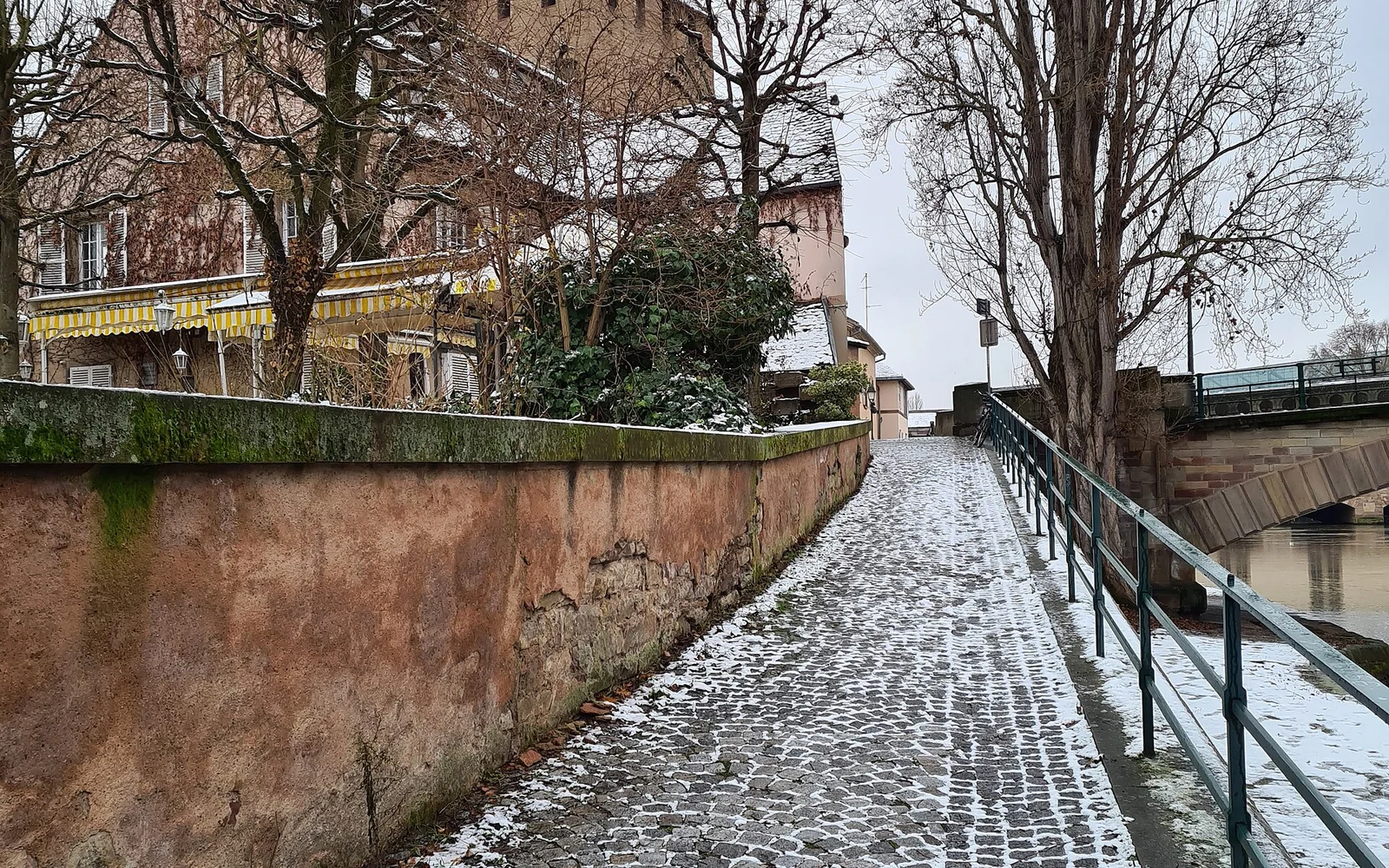
Grande Île, the cathedral and Petite France form the historic core, while Neustadt explains the city’s later urban history. The European quarter and Rhine-facing parks belong to another route.
Two days cover the main city areas. Add time for museums, cycling or a regional train to Colmar rather than treating Strasbourg as a brief connection.
Begin around the cathedral
The cathedral square, nearby lanes and river crossings create a compact first route through Grande Île.
Continue into Neustadt
The planned imperial district contrasts with the medieval centre and leads naturally toward university and park areas.
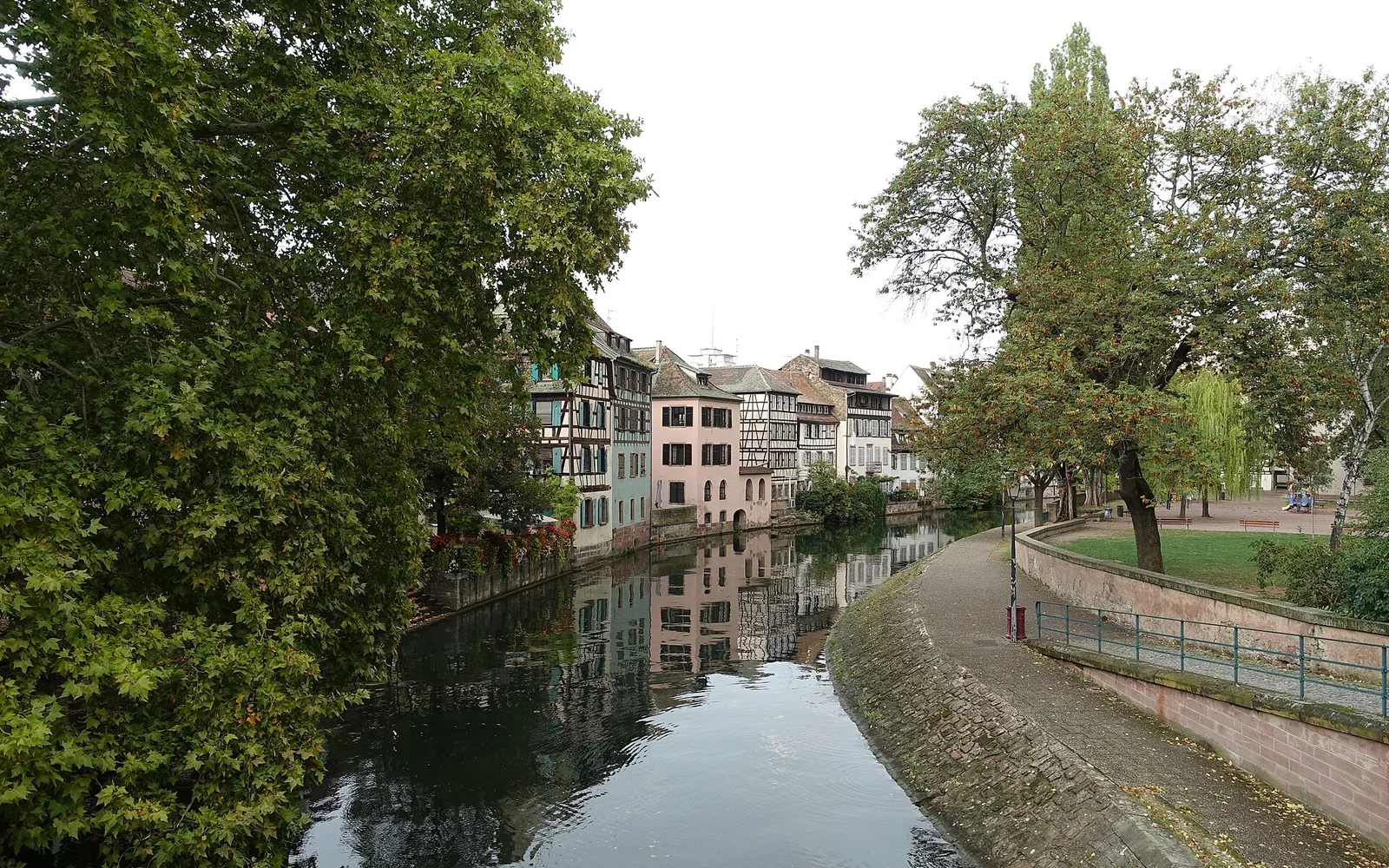
Add the European quarter thoughtfully
Institutions have separate visitor procedures. Even without an interior visit, the district and nearby park form a useful urban route.
A practical itinerary
- Day 1: explore Grande Île, the cathedral and Petite France.
- Day 2: walk Neustadt and continue toward the European quarter.
- Day 3: take a train to Colmar or cycle a local Rhine-side route.
Getting there
Strasbourg-Ville station sits within walking and tram distance of the centre. High-speed and regional services connect to Paris, Colmar and cross-border routes.
Getting around
Trams, buses and a large cycle network cover the city. The historic centre works well on foot, while trams help with the European quarter and outer stops.
Food to look for
Alsatian menus include tarte flambée, choucroute, baeckeoffe, pretzels and regional wines. Winstubs vary from everyday restaurants to busy visitor venues, so read menus and booking terms.
When to visit
Spring and autumn suit walking and cycling. Summer has long evenings. Christmas market season brings dense crowds, security arrangements and high accommodation demand.
Accessible travel
Trams and broad central routes provide useful options, but cobbles and older buildings vary. Check the tourist office for adapted tours and exact venue access.
Practical limits
Christmas-market layouts and security controls change from year to year. Cross-border tickets and tram conditions should be checked before travelling into Germany.
Nearby places
Colmar is the simplest major Alsace rail addition. Wine villages and Vosges routes need more local planning than their distance suggests.
Places to add to your map
- Strasbourg Cathedral: Historic-centre landmark on Grande Île.
- Petite France: Canal district southwest of the cathedral.
- European quarter: Institutional district northeast of the centre.
Open the route planner to place these stops in a wider France trip.
Continue planning
Questions about Strasbourg
How long should I stay in Strasbourg?
Two full days cover the historic centre, Neustadt and European quarter. A third allows museums, cycling or an Alsace rail trip.
Can Strasbourg and Colmar fit in one trip?
Yes. Regional trains make them a practical pair, but staying at least one night in each gives more time than a rushed return.
Is Strasbourg easy without a car?
Yes. Trams, buses, trains and cycling cover the city and major regional links. A car is mainly useful for selected villages and rural routes.
Sources and updates
This guide was last reviewed on 28 August 2026. Transport, access and opening arrangements can change, so check the official source before travel.
- Official French rail journey planner, SNCF Connect
- Official Strasbourg visitor information, Strasbourg Tourist Office
- Official Alsace visitor information, Alsace Destination Tourisme