
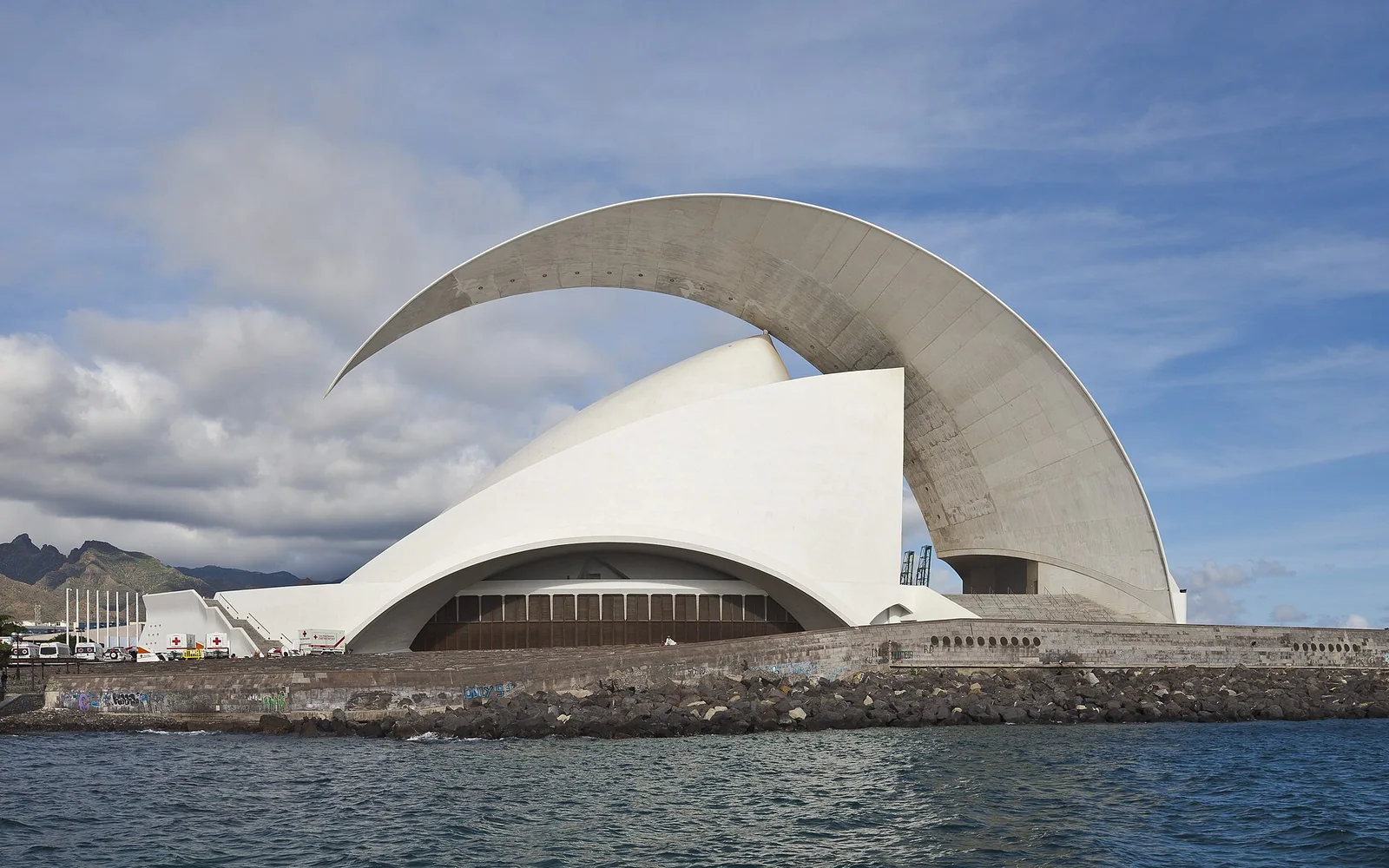
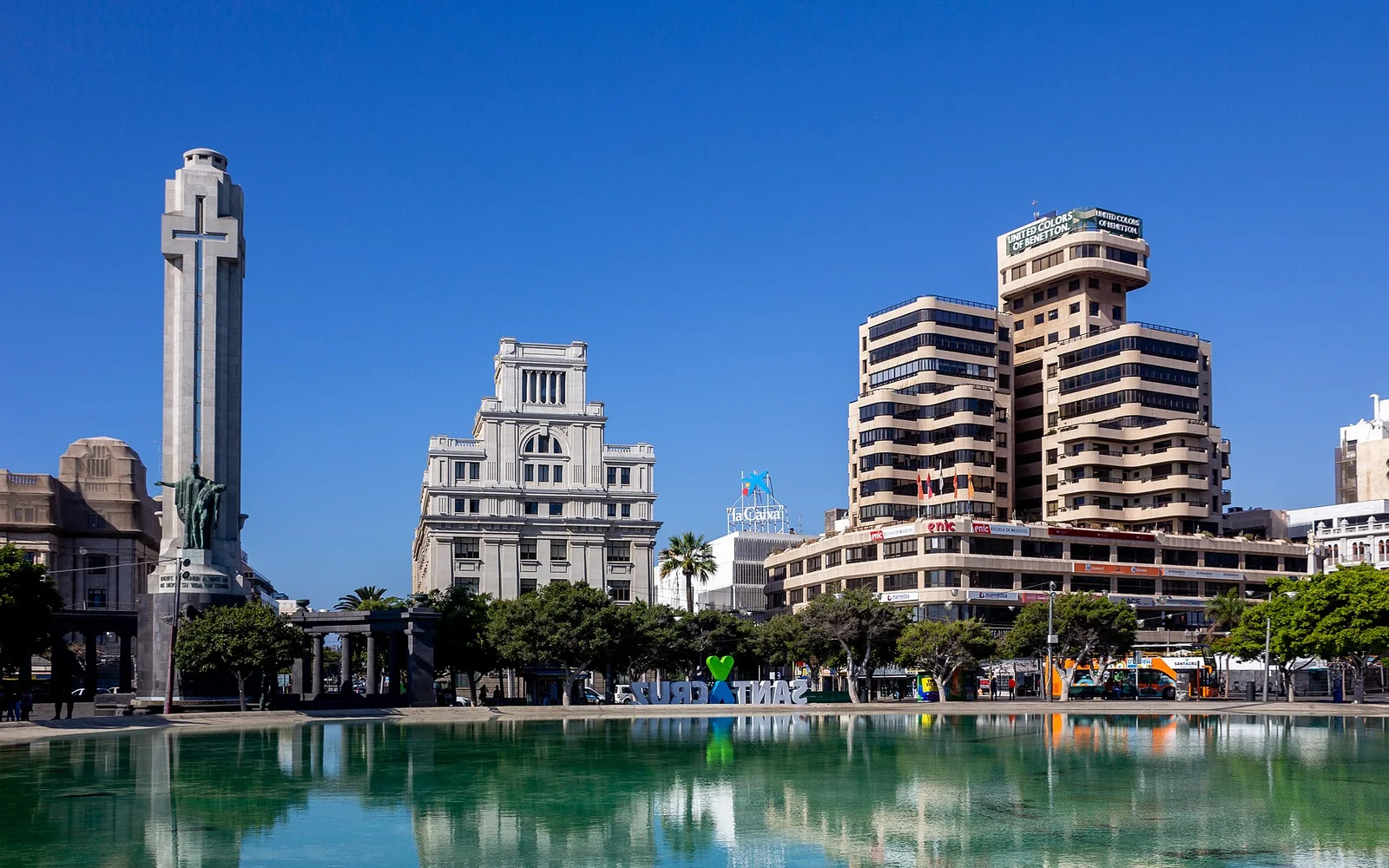
Santa Cruz feels different from Tenerife’s resort coast. Plaza de España, the market, García Sanabria Park and the Auditorio form an urban route, while the tram makes La Laguna an easy partner for the visit.
One full day covers the centre. Stay a second night for museums, shopping, a performance or an early ferry, but use the Tenerife guide for Teide, beaches and island-wide driving.
What to prioritise
Waterfront and Auditorio
Start around Plaza de España and continue south toward the Auditorio and Palmetum area. Distances are longer than the open seafront view suggests.
Market and old centre
Mercado de Nuestra Señora de África works best while stalls are active. Pair it with TEA, nearby bridges and central streets rather than crossing the city several times.
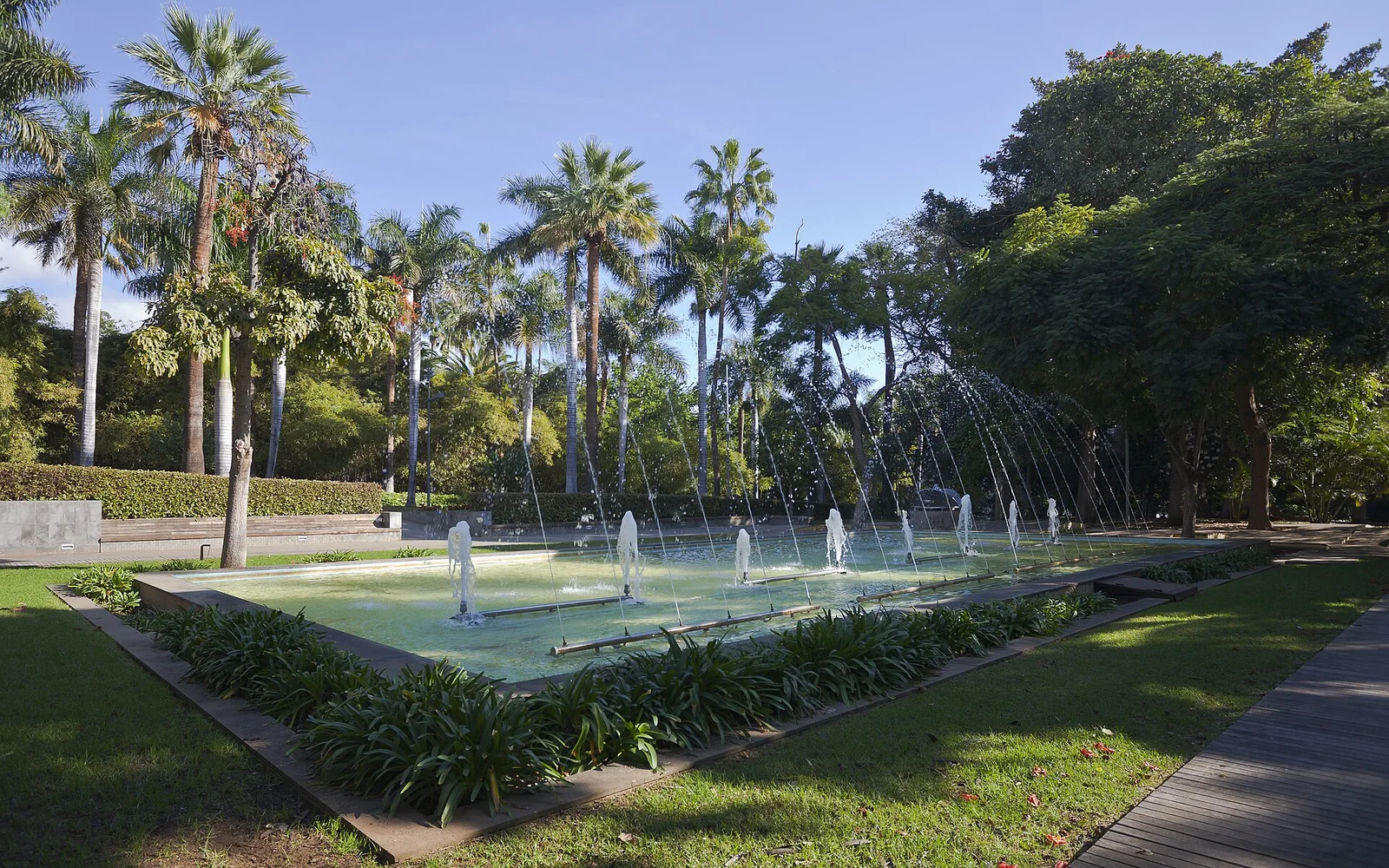
García Sanabria Park
The large city park provides shade and a slower route near the Rambla. It is a useful break from exposed waterfront walking.
Where to stay
Centro puts shops, market streets and Plaza de España close. The Rambla area is greener and calmer. Port-focused accommodation is useful for an early departure but may be less attractive for evenings.
A practical itinerary
- Morning: visit the market and nearby cultural spaces before stalls begin to close.
- Afternoon: walk the central squares, García Sanabria Park and the Rambla.
- Evening: continue to the waterfront or attend a booked event at a recognised venue.
Getting there
Tenerife North Airport is closer than Tenerife South, but both require a transfer. Ferries arrive at the large port beside the city. Tram and bus connections link Santa Cruz with La Laguna and other island areas.
Getting around
The central grid is walkable, with buses for longer waterfront sections and trams toward La Laguna. Port terminals can be far apart, so follow the operator’s exact embarkation point.
Food to look for
The market is a good place to identify island produce and fish. Look for papas arrugadas, mojo, local cheeses and simple seafood dishes, with prices checked before ordering by weight.
When to visit
The city works year-round. Carnival brings major events, road changes and high accommodation demand. Summer waterfront walks can be exposed, while winter remains mild compared with mainland cities.
Accessibility
Modern plazas, trams and much of the central area are accessible. Gradients increase away from the waterfront, and port access differs by terminal. Confirm boarding assistance with the ferry operator.
Practical limits
Santa Cruz is not a beach resort and should not be sold as a substitute for the whole island. Las Teresitas lies outside the central city and needs a bus or road trip with current conditions checked.
Nearby places
La Laguna is the easiest urban addition by tram. Use the Tenerife guide for Anaga, Teide, Puerto de la Cruz and the southern resorts.
Places to add to your map
- Plaza de España: Central orientation point near the waterfront.
- Mercado de Nuestra Señora de África: Working market south of the centre.
- García Sanabria Park: Large shaded park by the Rambla.
Open the route planner to place these stops in a wider Spain trip.
Continue planning
Questions about Santa Cruz de Tenerife
Is Santa Cruz de Tenerife worth visiting?
Yes for markets, museums, parks and city life. One day is enough for the main route, with a second day useful for La Laguna or events.
Does Santa Cruz have a beach?
The central waterfront is urban and port-focused. Las Teresitas is outside the centre and reached by bus or road transport.
Can I reach La Laguna from Santa Cruz?
Yes. The tram links the two cities and makes them easy to combine without a car.
Sources and updates
This guide was last reviewed on 28 August 2026. Transport, access and opening arrangements can change, so check the official source before travel.
- Spanish airports, Aena
- Official Tenerife tourism, Turismo de Tenerife
- Santa Cruz visitor information, Santa Cruz de Tenerife City Council
- Official Canary Islands tourism, Canary Islands Tourism