
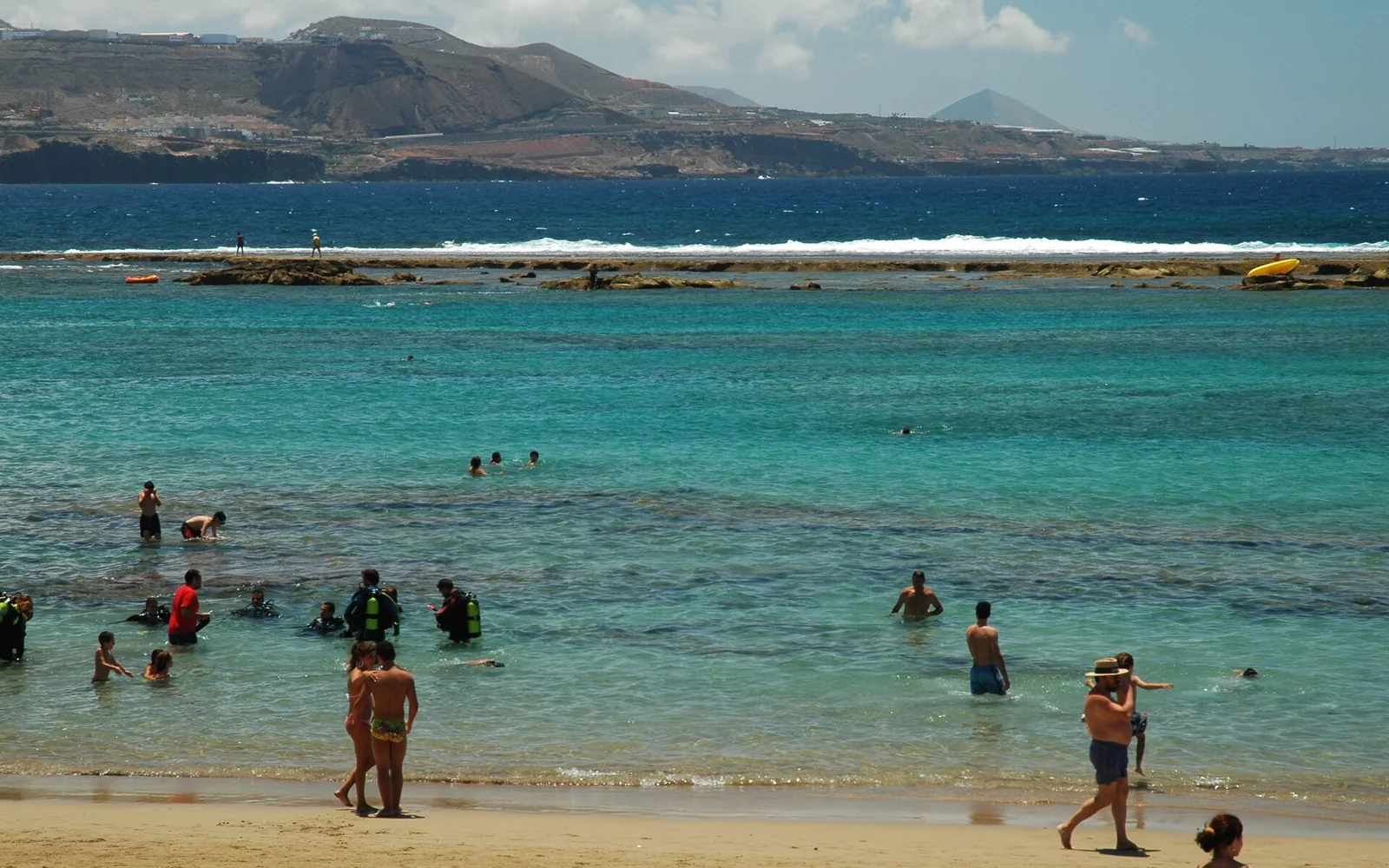
Las Palmas stretches across several districts. Las Canteras provides the beach and promenade, while Vegueta and Triana hold the oldest streets, museums and shopping areas several kilometres to the south.
Two days is enough for both halves of the city if you use buses between them. Stay longer for beach time, markets and a slower urban base before exploring the rest of Gran Canaria.
What to prioritise
Vegueta and Triana
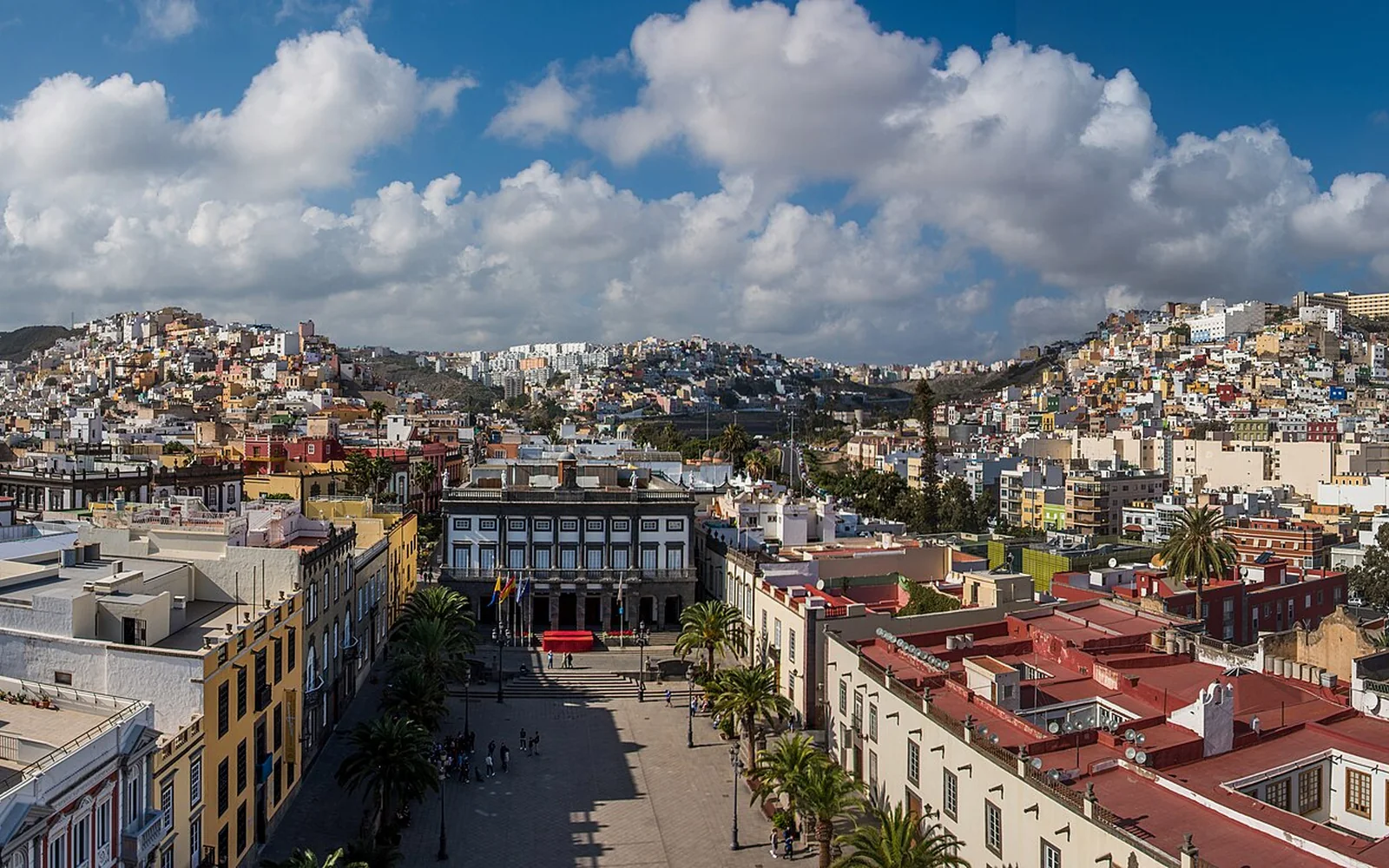
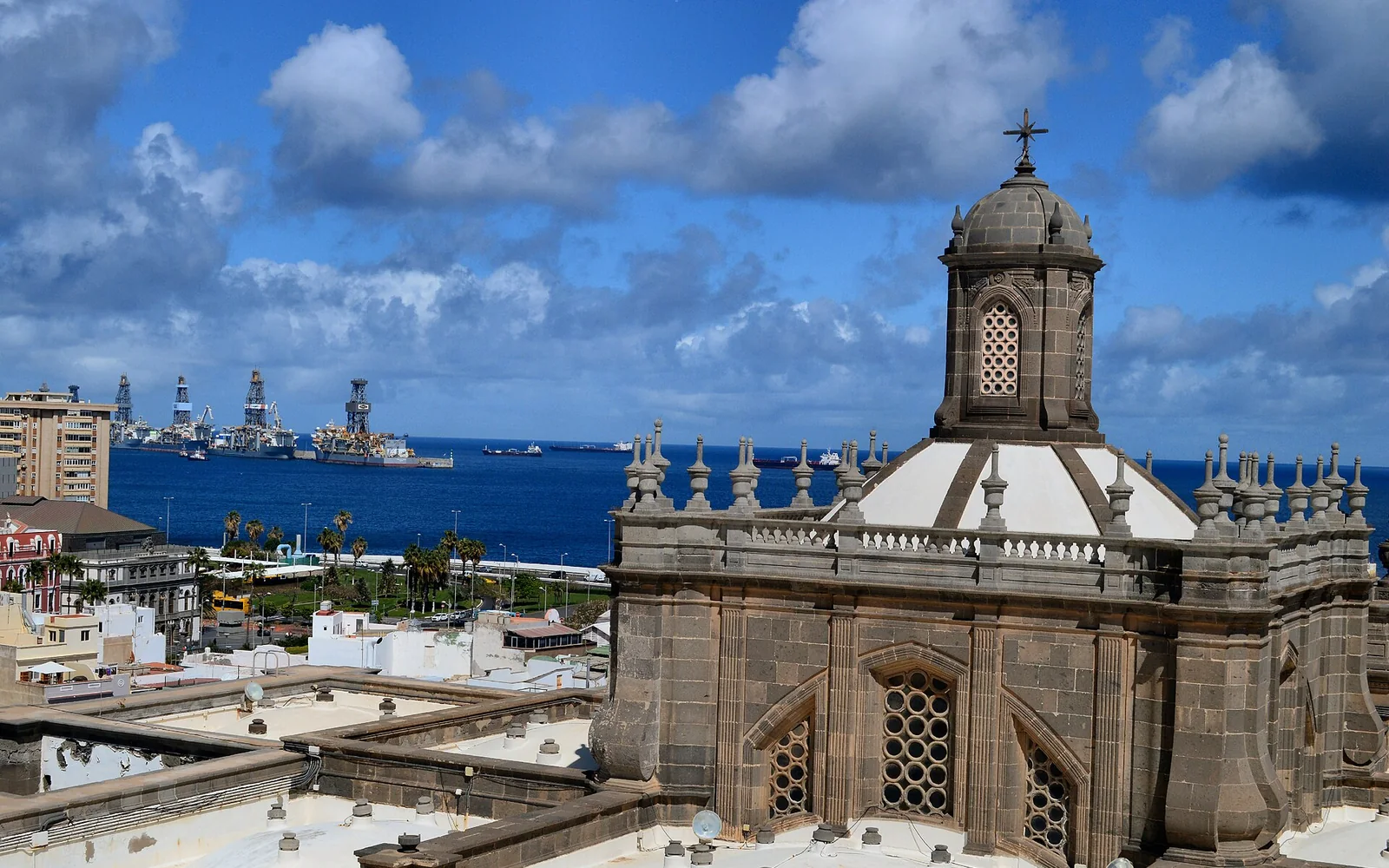
Santa Ana square, the cathedral area and Casa de Colón form the historic route. Continue into Triana for pedestrian streets and modern city life.
Las Canteras
The long urban beach changes with tide, swell and section. Use the promenade to move between swimming areas, cafés and the Alfredo Kraus end.
Markets and museums
Vegueta Market and Mercado del Puerto serve different districts. Choose nearby museums according to interest rather than crossing the city for every small collection.
Where to stay
Las Canteras is best for beach access and evening promenades. Triana works for shopping and transport between the city’s halves. Vegueta is atmospheric but quieter after dark in some streets.
A practical itinerary
- Day 1: explore Vegueta, Santa Ana square and Triana, with one museum or historic interior.
- Day 2: spend the morning around Las Canteras, continue to Mercado del Puerto and walk the promenade.
- Day 3: add a city museum, beach time or a bus trip to a nearby northern town.
Getting there
The airport lies south of the city and is linked by bus and road transport. Ferries use Puerto de la Luz, while some island services use Agaete elsewhere on Gran Canaria. Check the port on the ticket.
Getting around
City buses are essential for moving between Vegueta and Las Canteras. Each district is walkable once you arrive. A car is unnecessary for the city and can be difficult to park near the beach.
Food to look for
Use the markets to identify local fish, cheese and produce. Try papas arrugadas, mojo and island dishes, but remember that beachfront restaurants vary widely in price and focus.
When to visit
Las Palmas works year-round. Atlantic cloud and wind can differ from southern Gran Canaria, and sea conditions change. Winter remains popular, while summer has a stronger local beach rhythm.
Accessibility
The Las Canteras promenade and modern shopping streets are broadly accessible. Historic Vegueta has uneven paving and older thresholds. City buses provide the simplest link between districts.
Practical limits
The city is not beside Maspalomas. Treat southern resorts and mountain sights as separate island days. Cruise and ferry traffic can also change pressure around port roads.
Nearby places
Use the Gran Canaria guide for Teror, Arucas, Roque Nublo and the southern coast. Santa Cruz de Tenerife provides the clearest city comparison on another island.
Places to add to your map
- Santa Ana Square: Historic heart of Vegueta.
- Las Canteras Beach: Main urban beach and promenade.
- Mercado del Puerto: Market building near the northern end of Las Canteras.
Open the route planner to place these stops in a wider Spain trip.
Continue planning
Questions about Las Palmas de Gran Canaria
How many days do I need in Las Palmas?
Two days covers Vegueta, Triana and Las Canteras. Three or four days allows proper beach time and a nearby outing.
Is Las Palmas walkable?
Each main area is walkable, but Vegueta and Las Canteras are far apart. Use city buses between them.
Should I stay in Las Palmas or Maspalomas?
Choose Las Palmas for city life and an urban beach. Choose Maspalomas for a resort stay and southern weather. They are different bases.
Sources and updates
This guide was last reviewed on 28 August 2026. Transport, access and opening arrangements can change, so check the official source before travel.
- Spanish airports, Aena
- Official Gran Canaria tourism, Gran Canaria Tourist Board
- Official Las Palmas tourism, Las Palmas de Gran Canaria Tourism
- Official Canary Islands tourism, Canary Islands Tourism