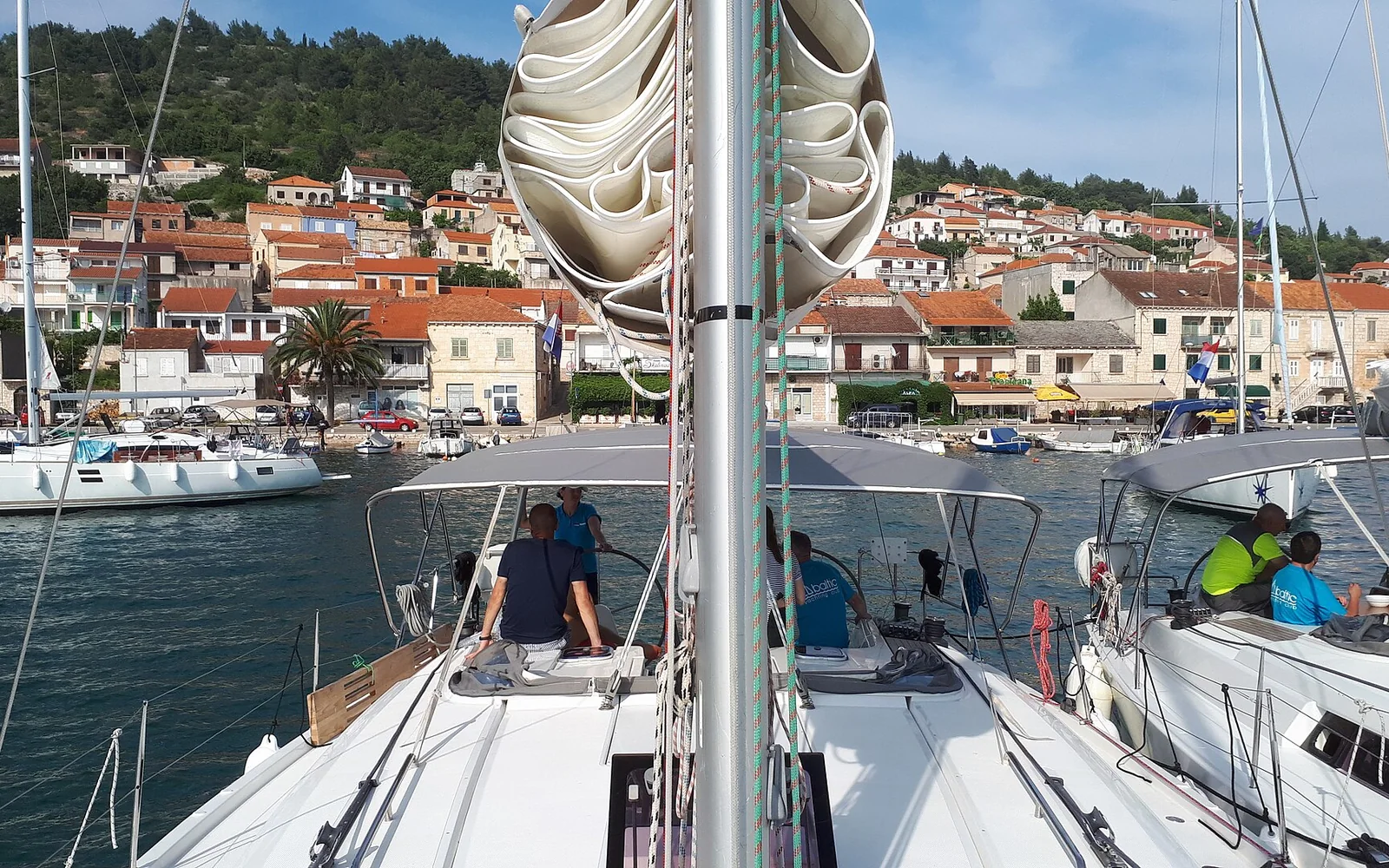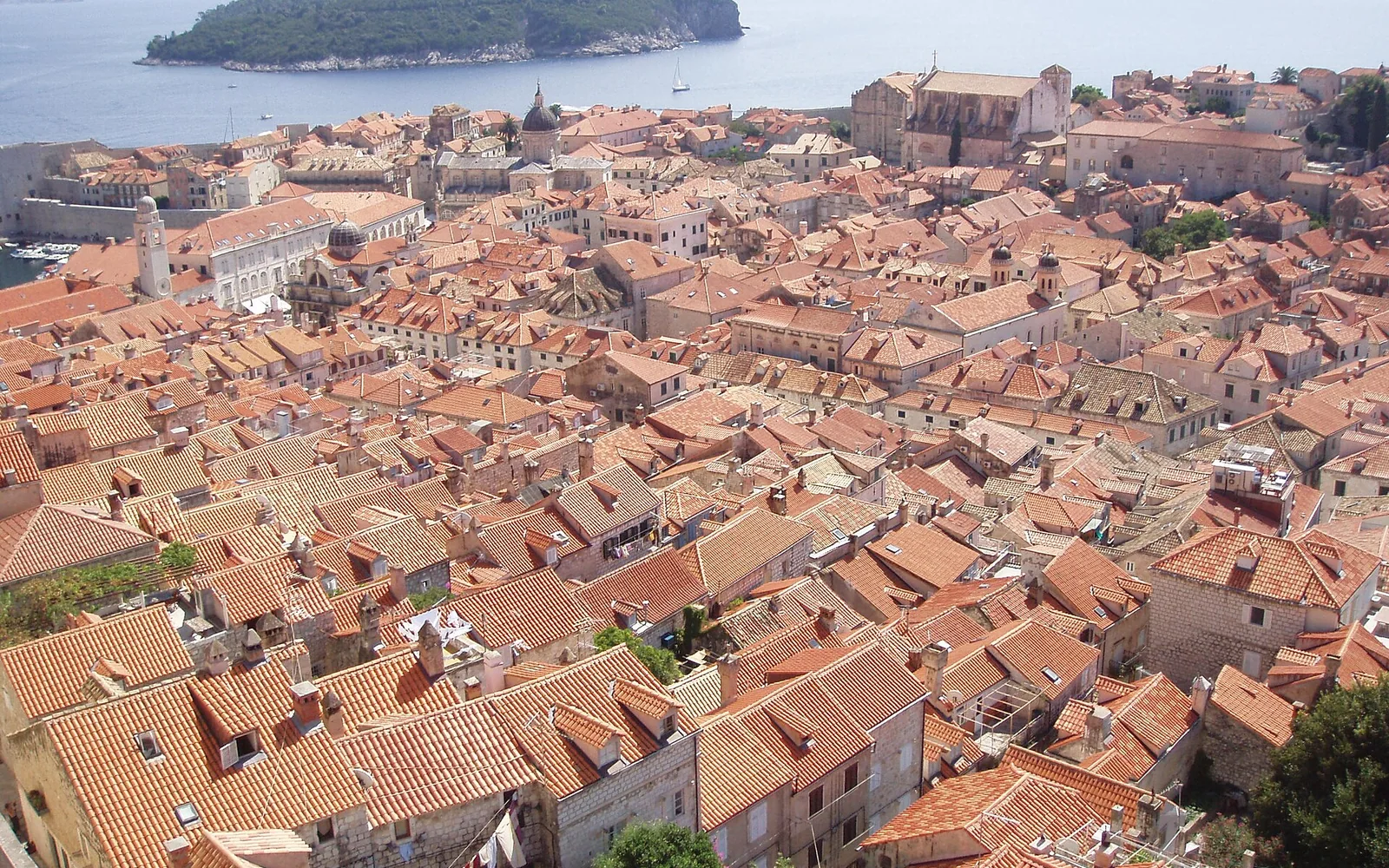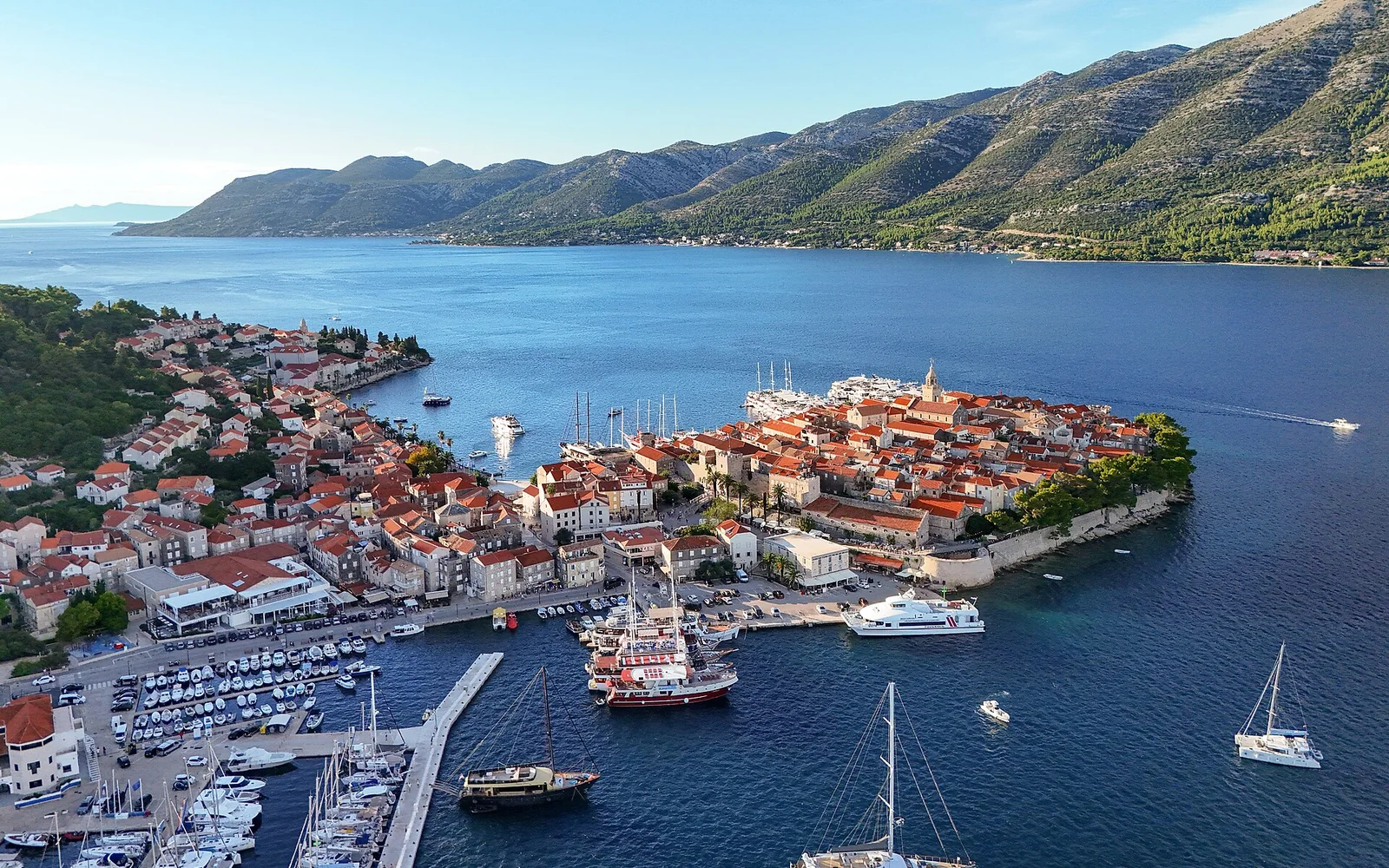
Korčula Town concentrates stone streets, towers, churches and waterfront paths on a small fortified peninsula. Its scale is ideal for a slow two-day stay, especially before day visitors arrive or after the last excursion boats leave.
Start with what makes Korčula Town distinct
Korčula Town concentrates stone streets, towers, churches and waterfront paths on a small fortified peninsula. Its scale is ideal for a slow two-day stay, especially before day visitors arrive or after the last excursion boats leave.
The town guide focuses on the eastern end of the island. Vela Luka and western Korčula require an island-wide route and should not be treated as nearby neighbourhoods.
Inside the walls
Walk the main spine and side lanes around St Mark’s Cathedral, then circle the waterfront. Individual museums and towers have their own seasonal access, so check before building a ticket-heavy day.
Waterfront and nearby swimming
Small swimming spots sit around town, but space and access vary. Lumbarda provides broader beach choices and a different village setting a short local journey away.
Evenings in town
The old centre becomes more relaxed after excursion traffic falls. Accommodation inside the walls may be atmospheric but often involves stairs and a luggage carry.
Build a realistic visit to Korčula Town
Day 1: explore the old centre, cathedral area and waterfront circuit.
Day 2: choose a museum or tower, then visit Lumbarda or a nearby swim.
Day 3: add a verified boat trip or begin a cross-island route.
Arrive and move around Korčula Town
Passenger catamarans use Korčula Town or nearby terminals depending on the route. The short Orebić connection uses local ferry arrangements. Vehicle routes and fast passenger services are not interchangeable.
The old centre is pedestrian. Local buses and taxis connect Lumbarda and other eastern settlements. A car is unnecessary for the town and difficult to park nearby.
Food and local stops in Korčula Town
Look for žrnovski makaruni, seafood, local olive oil and wines from Lumbarda and the wider island. Reserve selectively in high season rather than assuming every waterfront table serves the same quality.
Choose the right conditions for Korčula Town
Late spring and early autumn offer warm days with a calmer centre. Summer has more sailings and events but little shade in the old streets. Winter is quiet with reduced visitor services.
Waterfront promenades are the easiest routes. The old centre contains steps, thresholds and polished stone. Ask the tourist office and accommodation for the least stepped approach.
Do not book accommodation solely on map distance. Stairs, pedestrian zones and port differences affect arrival. Strong wind can alter marine services.
Continue from Korčula Town
Lumbarda is the easiest local addition. Dubrovnik and Mljet depend on current passenger sailings, while Vela Luka needs a longer cross-island journey.
Continue planning
Questions about Korčula Town
How long should I stay in Korčula Town?
Two nights suit the old town and Lumbarda. Add another day for swimming, wine country or a verified boat trip.
Do I need a car in Korčula Town?
No. The centre is pedestrian and local buses or taxis cover nearby places. A car is useful only for the wider island.
Is Korčula Town suitable for reduced mobility?
The waterfront is easier than the stepped old centre. Confirm the route to accommodation and specific attractions before booking.
Sources and updates
This guide was last reviewed on 3 September 2026. Transport, access and opening arrangements can change, so check the official source before travel.
- Official Croatia travel planning, Croatian National Tourist Board
- Jadrolinija ferry information, Jadrolinija
- Croatian rail timetable, HŽ Passenger Transport
- Official Dubrovnik visitor information, Dubrovnik Tourist Board
- Official Korčula visitor information, Korčula Tourist Board
Related places to consider
These guides can help you place Korčula Town within a wider route.