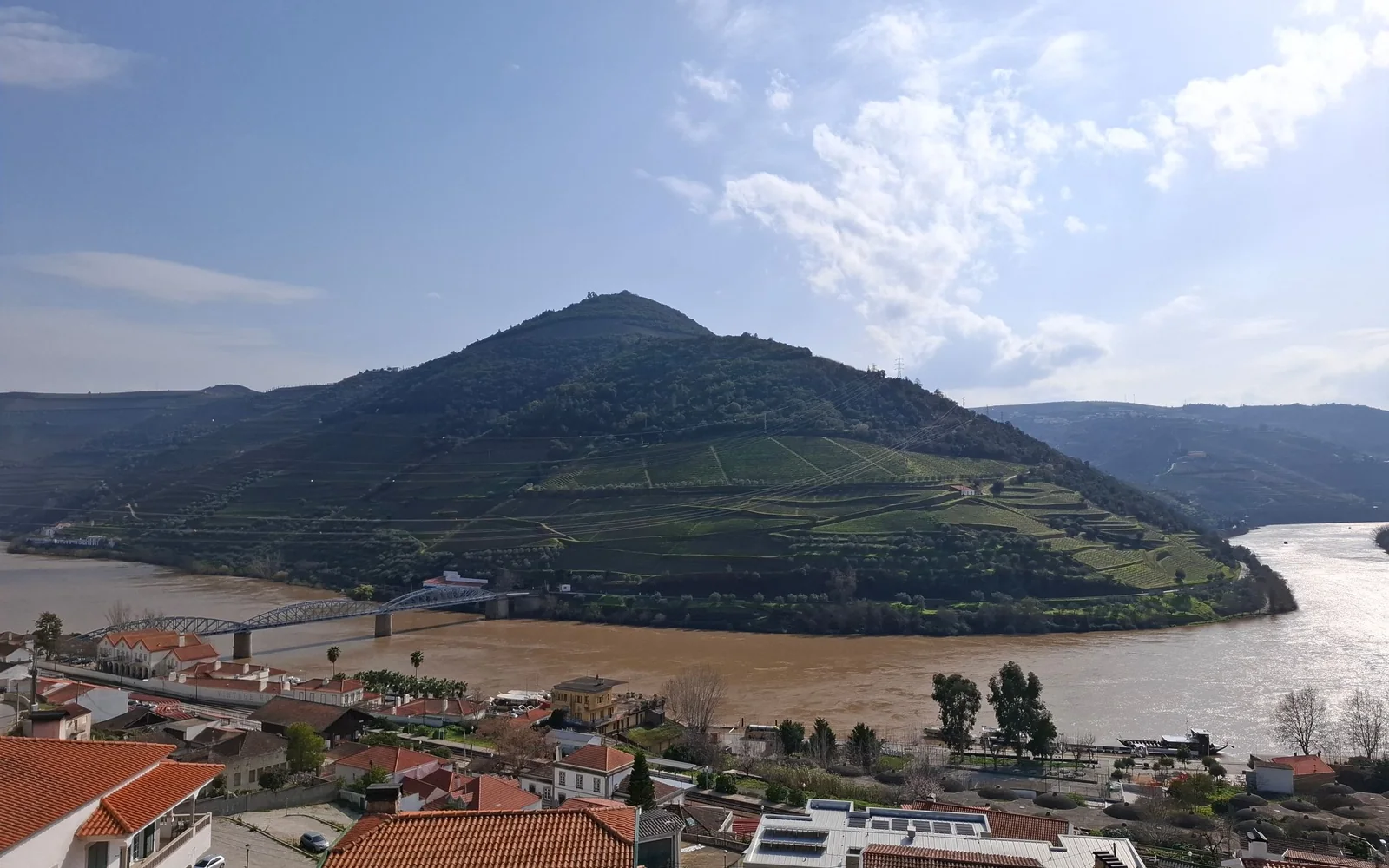
The Douro Valley is a long wine-growing landscape rather than a single town. Terraced vineyards follow the river east from Porto, with rail stations and road bridges providing only part of the local transport. A useful visit begins by choosing a base and confirming how to reach the accommodation from the nearest station.
Visit from Porto or stay in the valley
A day from Porto can provide the scenic rail journey, a short river section or one organised winery visit. It cannot comfortably cover several estates, distant viewpoints and a long cruise. Staying for two nights removes the return-to-Porto deadline and makes an early producer appointment realistic. It also gives the region an evening and morning beyond the busiest excursion hours.
Porto remains the easiest gateway because trains on the Douro Line begin at São Bento or pass through Campanhã. Travellers arriving from Braga or other northern Portugal stops should normally change in Porto or use a clearly documented road transfer. Do not choose a remote property simply because its address contains Douro. Ask for the nearest station, road-transfer time and final taxi price before booking.
Choosing a base
Peso da Régua is the practical transport base. It has a rail station, road connections, the Douro Museum and a larger range of everyday services. Choose it when the trip depends on public transport or when several local transfers need arranging. The town is less intimate than a vineyard stay, but missed connections are easier to recover from.
Pinhão sits farther east on the railway and provides the more recognisable river-and-vineyard setting. The station, waterfront and a small number of estates are accessible from the centre, but many vineyard visits still require a taxi. It suits travellers who want scenery close to the overnight base and are prepared to reserve meals and transfers.
Lamego is inland from the river and is useful for travellers with a car or a booked transfer. The sanctuary of Nossa Senhora dos Remédios, cathedral area and town services give it a cultural purpose beyond wine. It is not on the Douro railway, so it should not be selected as a rail base without an agreed connection from Régua.
Train, boat, taxi, tour or car
The Douro Line follows the river from Porto through Régua and Pinhão towards Pocinho. It is the strongest low-stress option for scenery and town-based stays. Check the current CP timetable because engineering work, seasonal changes or disruption can alter the useful departures. A train ticket does not solve the final journey to a hillside quinta.
River cruises show the valley from a different level, but locks, waterway notices, vessel schedules and the distance covered determine what fits. Some trips travel one way by boat and return by train or coach. Read the complete itinerary and arrival point before paying. A cruise is not flexible transport between individual wineries, and reduced-mobility access differs by vessel and landing.
Taxis and accommodation transfers fill the gap between stations and estates. Supply can be limited, so arrange both outward and return journeys rather than assuming a car will wait near the property. An organised tour is useful when it includes a named pickup point, estate reservations and a sober driver. Check the group size and how much of the day is spent in the vehicle.
A car gives access to viewpoints, villages and rural accommodation, but roads are narrow and winding. The driver should not take part in tastings. Agree on a designated driver, use spittoons, or leave the car at the accommodation and book transport. Parking and turning space at older properties may be restricted.
Vineyard visits and responsible planning
Wine estates are working properties, not walk-in bars. Reserve the visit, confirm the language, arrival time and tasting format, and ask whether the property provides transport from a station. Harvest work can limit visitor access even when the wider valley is open. Late arrival may mean losing the tour because production schedules cannot be paused.
Build the day around one or two confirmed visits at most. Food, water and travel time belong in the schedule. Never plan to drive after tasting. A boat or guided tour can reduce that risk, but the meeting point and return still need checking.
Heat, harvest and access
Summer heat is intense on exposed terraces, at viewpoints and inside vehicles parked in the sun. Start outdoor walks early, carry water and avoid turning vineyard access roads into informal hiking routes. September and early October bring harvest interest but also greater pressure on accommodation, restaurants, roads and producer availability.
Rural-fire danger can lead to restrictions in forest and countryside areas. Check official notices on high-risk days and follow local closures. Smoke, road blocks or emergency operations are reasons to simplify the route rather than find an unofficial path around a restriction.
The terrain is steep. Historic stations, boats, vineyard paths and rural properties provide different levels of step-free access. Ask for details about gradients, surfaces, bathrooms and vehicle drop-off points. Pinhão waterfront and central Régua are easier than a terrace walk, but neither guarantees a completely level route.
Two nights in the Douro
On the first day, take a morning train from Porto to Régua or Pinhão. Leave luggage, have lunch and use the afternoon for the Douro Museum, a short waterfront walk or one nearby reserved visit. Keep dinner close to the base.
Use the full middle day for one confirmed vineyard visit plus a town, viewpoint or short boat trip with explicit transport. Do not combine estates on opposite sides of the river unless a driver has planned the route. On the final morning, choose a quiet river walk or local museum before returning to Porto or continuing east by rail.
Three or four nights
An additional night provides a weather and transport reserve. It can also support separate stays in Régua and Pinhão, a day in Lamego with a booked transfer, or a longer journey towards Pocinho. Four nights suit travellers using slow public transport or staying at a property where the landscape and meals are part of the purpose.
Food and where to stay
Look for regional cooking based on river fish where available, roast meats, smoked sausages, bread, olive oil, almonds and local fruit, alongside Douro and Port wines. Small towns and rural hotels may have limited dinner service, so reserve meals or confirm alternatives before arrival.
Stay near Régua station for practical connections, in central Pinhão for river scenery and walkable services, or at a quinta for a property-led experience with arranged transport. Lamego works for travellers prioritising heritage and road access. The most scenic room is not useful when every meal and train requires an uncertain taxi.
What to book first
Book the accommodation, final station transfer, vineyard visits and any long cruise first. Add the intercity rail ticket when the timetable is confirmed. Reserve restaurants at remote stays and during harvest. Keep local walks and viewpoints flexible.
What not to attempt in one day
Do not combine a full Porto return, long cruise, several wineries, Lamego, Pinhão and distant viewpoints. Choose one transport experience, one main visit and one base. The valley becomes more useful when the route accepts its distances.
Onward routes
Return west to Porto for national rail and airport connections. Continue through Porto for Braga or other northern Portugal guides. Eastbound rail towards Pocinho can extend the scenic journey, but the onward road network and return timetable need checking. For the existing Portugal itinerary, the safest finish is a valley stay followed by a protected return to Porto rather than a tight flight connection.
Sources and updates
This guide was last reviewed on 4 September 2026. Transport, access and opening arrangements can change, so check the official source before travel.
- Douro Valley visitor information, Turismo de Portugal
- Peso da Régua visitor information, Turismo de Portugal
- Pinhão visitor information, Turismo de Portugal
- Nossa Senhora dos Remédios sanctuary, Turismo de Portugal
- Douro railway line, Comboios de Portugal
- Douro Inland Waterway, APDL
- Rural fire risk restrictions, ICNF
Related places to consider
These guides can help you place Douro Valley within a wider route.