Guimarães has one of Portugal's most coherent historic centres and a strong connection to the formation of the kingdom. The old streets, castle and Palace of the Dukes sit close enough for a focused day, but the city feels less like a stopover after visitors leave in the evening.
The UNESCO-listed centre is valued for the way medieval urban fabric developed into a modern town while keeping traditional building forms. It is not only a collection of individual monuments.
Give the historic squares time between interiors
Build the centre walk around Largo da Oliveira and Largo de São Tiago, then decide which museum or monument interior deserves the remaining time. The squares are part of the visit, so allow a meal or a pause there instead of treating them as passages between ticketed attractions.
For a day from Porto, keep Guimarães as the main destination. Adding Braga creates another journey and leaves less time for the historic centre. If you want a second northern day, compare Braga separately: its centre and Bom Jesus need a different plan from this connected walk around Guimarães.
Continue planning: Stay in Porto · Plan a separate Braga visit · Compare northern outings.
Official information: Turismo de Portugal: Largo da Oliveira.
Castle and Palace of the Dukes
Guimarães Castle is linked in public memory with Afonso Henriques, Portugal's first king. Historical associations around birthplaces and exact events are not always as simple as local slogans, so the site is best understood as part of a wider early national story.
The nearby Palace of the Dukes is a separate visit with large rooms, collections and a distinctive roofline. Check current ticket and opening information before choosing the order. The small Church of São Miguel lies between the major monuments.
Old-town squares
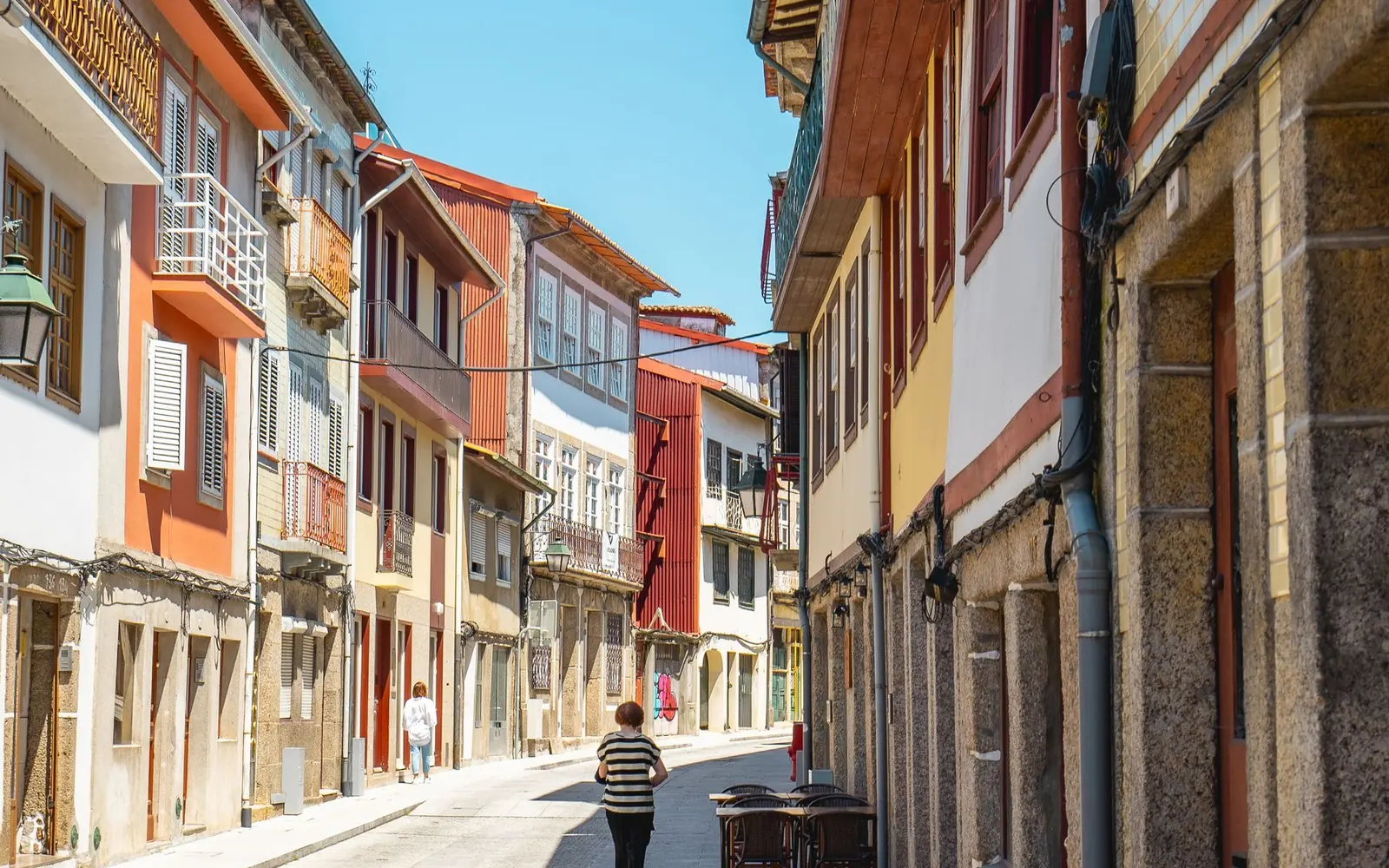
Walk south into Largo da Oliveira and Praça de Santiago. Arcades, timber details and stone façades create the best-known view of Guimarães, but the squares still serve restaurants and local events. Continue to Largo do Toural to see where the old city meets later commercial streets.
The centre rewards slow walking more than a strict attraction list. Side streets between the main squares show how the heritage area connects to everyday shops and homes.
A full-day route
- Begin at the castle and Palace of the Dukes before tour groups build.
- Walk downhill through the old streets to Praça de Santiago and Largo da Oliveira.
- Stop for lunch, then continue through Toural and the later centre.
- Add a museum or travel to Penha only if time, weather and operating schedules suit.
Penha is a hilltop park rather than part of the old-town walking loop. Its cable car and road access need separate checking.
Where to stay
Inside or beside the historic centre is best for a short stay. The railway station lies south of the main sights and can be convenient for an early train. Hotels farther out may offer parking, but a car is unnecessary for the central route.
Food
Northern Portuguese cooking, including roast meats, cod dishes and substantial soups, is widely available. Local sweets include tortas de Guimarães. Restaurants on the two famous squares have attractive settings, while streets just beyond them may feel less visitor-focused.
Getting there
Train and bus services connect Guimarães with Porto and Braga. The train route from Porto is practical for a day trip, but current departure patterns should be checked. The station-to-centre walk is straightforward for many visitors.
Season and events
Spring and autumn suit long walks and Penha. Summer brings warmer days and busy squares, while winter rain can make stone paving slippery. Local festivals may be an excellent reason to visit, but programmes can also restrict normal monument access. Verify dates with the city tourism authority.
Access
The compact centre limits distances, though cobbles, ramps and historic stairs remain. The castle and palace have their own access conditions. Contact the monuments directly if a step-free route or lift is essential.
Common planning mistakes
- Do not reduce the city’s history to one unqualified birthplace claim.
- Do not treat Penha as if it were beside the castle.
- Do not rush both Braga and Guimarães because they share a regional route.
- Leave time to walk the old-town streets rather than only entering monuments.
Places to add to your map
- Guimarães Castle: Castle linked to the city’s early national history.
- Palace of the Dukes: Large medieval-inspired palace near the castle.
- Largo da Oliveira: Central square in the UNESCO-listed old town.
- Largo do Toural: Broad square at the edge of the historic centre.
- Penha: Hilltop park above the city.
Open the route planner to place these stops in a wider Portugal trip.
Plan nearby destinations
Questions about Guimarães
Why is Guimarães called the birthplace of Portugal?
The city is closely associated with Afonso Henriques and events in the formation of the Portuguese kingdom. The phrase is a civic and historical shorthand rather than a claim that the country began in one building.
Can I see Guimarães in one day?
Yes. The old town, castle and Palace of the Dukes fit into a full day. Staying overnight adds quieter evening streets and time for Penha.
Is Guimarães easy to walk?
The main historic area is compact. Cobbles and monument steps create some access limits, but the centre is less steep than Porto or Coimbra.
Should I combine Guimarães with Braga?
Only if you want brief highlights. Each city offers enough for a separate day, and Braga’s Bom Jesus adds travel outside its centre.
Sources and updates
This guide was last reviewed on 28 August 2026. Transport, access and opening arrangements can change, so check the official source before travel.
- CP passenger information, Comboios de Portugal
- Guimarães, Turismo de Portugal
- Guimarães World Heritage, Guimarães Tourism
- Historic Centre of Guimarães, UNESCO World Heritage Centre
Related places to consider
These guides can help you place Guimarães within a wider route.