
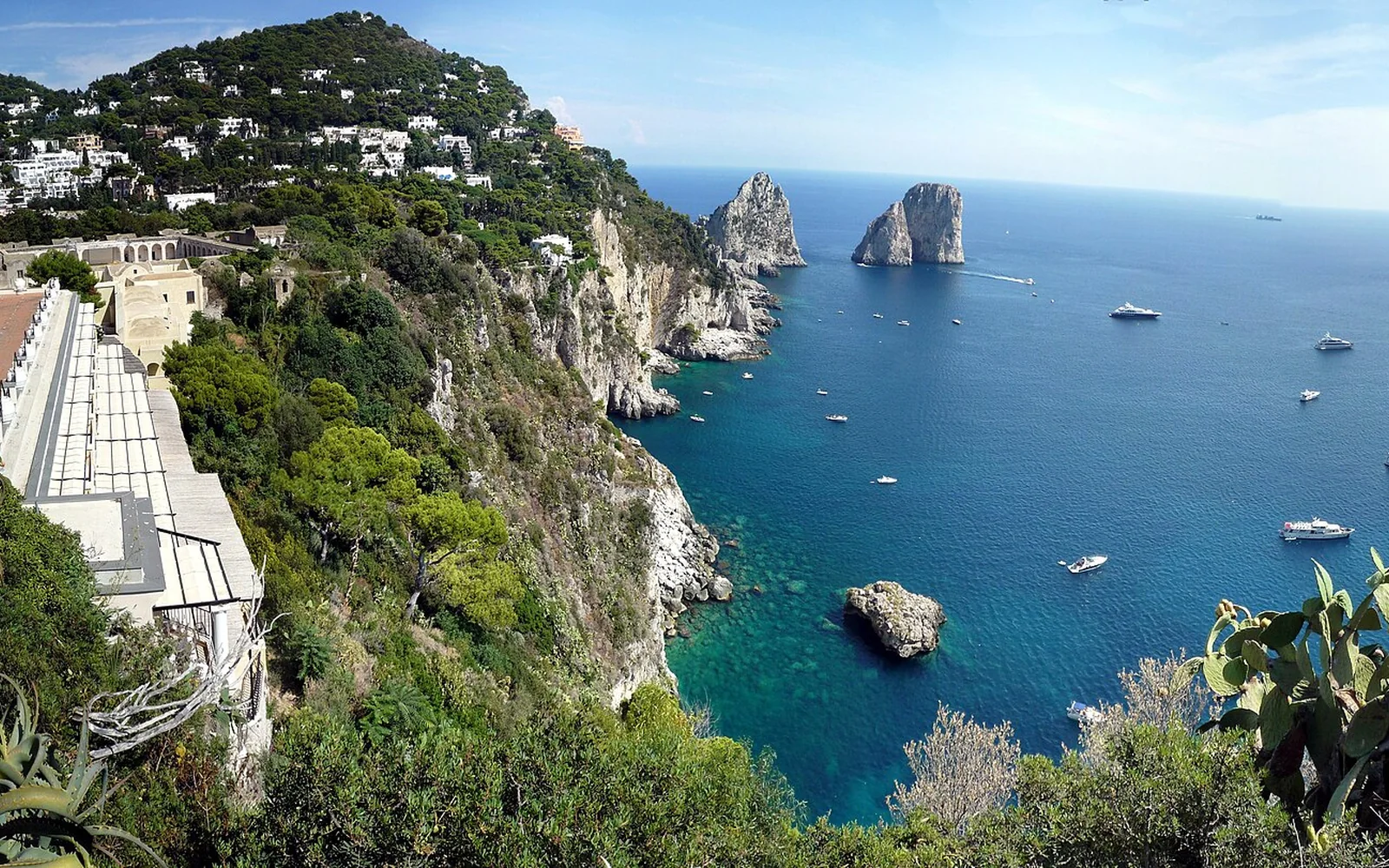
Capri town and Anacapri are separate bases linked by buses and taxis. Marina Grande is the arrival port, while viewpoints, villas, paths and beaches sit at different levels across the island.
Move beyond Marina Grande deliberately
Capri town and Anacapri are separate bases linked by buses and taxis. Marina Grande is the arrival port, while viewpoints, villas, paths and beaches sit at different levels across the island.
An overnight stay changes the experience by opening early mornings and evenings outside peak day-trip hours. Two days allow one town, one longer walk or viewpoint route and time for weather changes.
Capri town and the east
The Piazzetta, Gardens of Augustus and routes toward the Faraglioni lie on the busier side of the island. Start early before the main ferry arrivals.
Anacapri and the west
Anacapri provides a quieter base for Villa San Michele, Mount Solaro access and western viewpoints. Lift and path conditions should be checked.
Coast and caves
Boat tours and the Blue Grotto depend on sea conditions, queues and seasonal operation. Keep a land-based plan that still makes the day worthwhile.
Build a realistic visit to Capri
Day 1: arrive at Marina Grande, settle in, then explore Capri town and a nearby viewpoint route.
Day 2: spend the morning in Anacapri and choose Mount Solaro, a villa or a suitable walk.
Day 3: add a boat trip or quieter beach only if conditions and departure timing allow.
Arrive and move around Capri
Capri is reached by sea. Ferries and fast boats operate from Naples and Sorrento, with additional seasonal links from the Amalfi Coast and other ports. Services can change with weather, so avoid a tight connection to a flight.
Buses, the Marina Grande funicular, taxis and walking connect the island. Vehicles for non-residents are restricted for much of the year. Small buses fill quickly, and luggage is often handled separately by accommodation or port services.
Food and local stops in Capri
Island dishes include ravioli capresi, seafood, tomatoes, local cheeses and lemon desserts. Waterfront and Piazzetta prices can be high, so read menus and explore side streets in both towns.
Choose the right conditions for Capri
Late spring and early autumn bring useful services with slightly less pressure than midsummer. Summer has the busiest ferries and paths. Winter is quiet, with reduced transport and weather-dependent crossings.
Capri’s steep terrain, steps and small vehicles can be difficult. Marina Grande, the funicular and town centres have some accessible options, but each hotel, path, boat and viewpoint needs direct confirmation.
Do not build the visit around one sea attraction. Wind and queues can close or delay caves and boats. Carry light luggage and keep the final ferry connection conservative.
Continue from Capri
Sorrento and Naples provide the most dependable gateways. Ischia and the Amalfi Coast have seasonal links, but same-day combinations depend heavily on the current timetable.
Continue around the Bay of Naples
Capri visit questions
Is Capri worth an overnight stay?
Yes. Staying overnight provides quieter evenings and mornings and gives more flexibility when boats or island buses are busy.
Do I need a car on Capri?
No. Non-resident vehicles are restricted for much of the year, and buses, taxis, the funicular and walking cover the main routes.
Where should I stay on Capri?
Capri town suits first-time access to the east and evening activity. Anacapri is quieter and closer to western viewpoints and Mount Solaro.
Sources and updates
This guide was last reviewed on 3 September 2026. Transport, access and opening arrangements can change, so check the official source before travel.
- Official Italian tourism information, Italian Ministry of Tourism
- Trenitalia passenger information, Trenitalia
- Official Campania travel information, Italian Ministry of Tourism
- Official Amalfi visitor and transport information, Municipality of Amalfi
- Sorrento municipal information, Municipality of Sorrento
- Capri municipal information, Municipality of Capri