
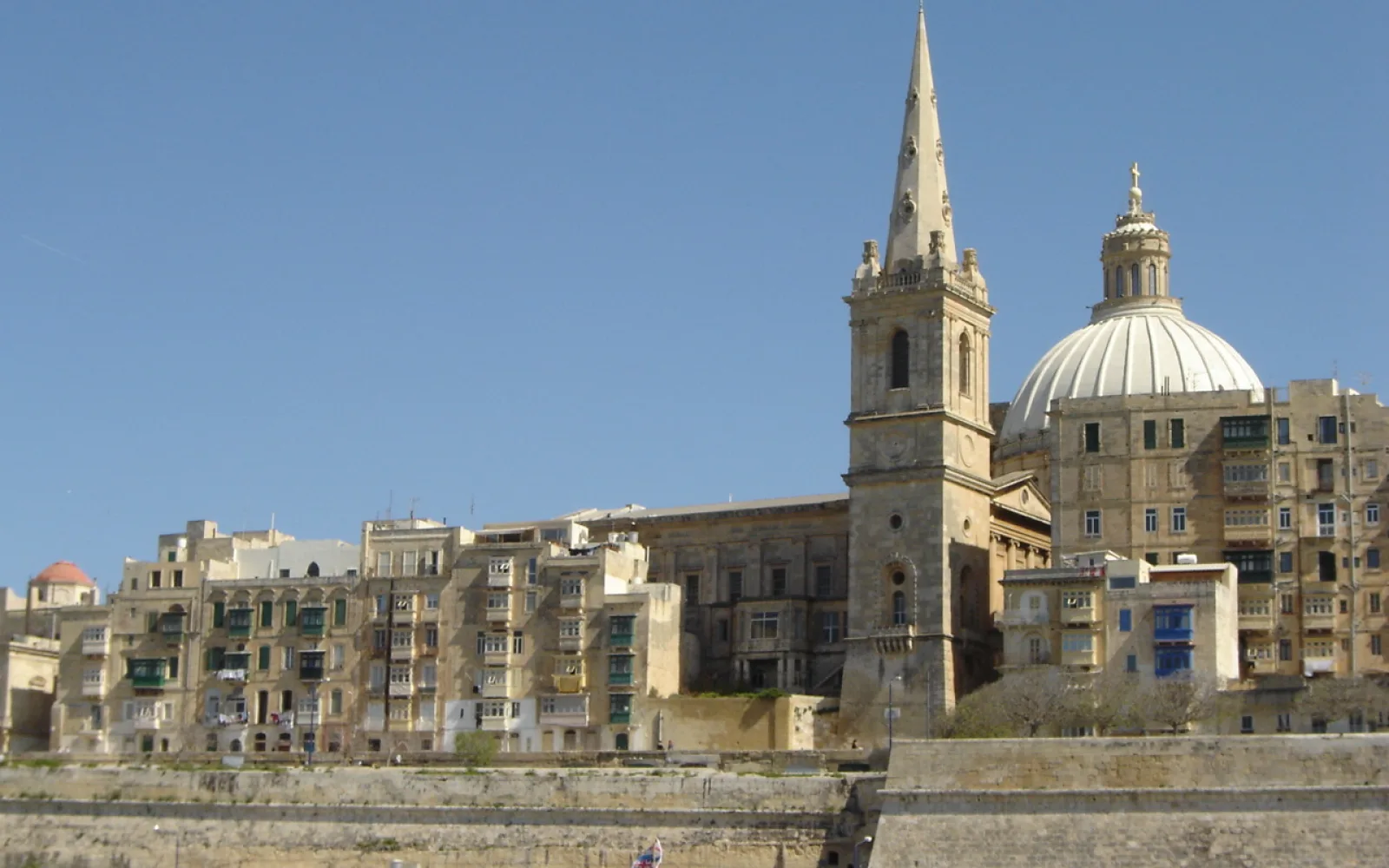
Valletta rewards a slower walk than its small map footprint suggests. Its streets rise and fall across the peninsula, and a complete visit needs time for at least one major museum or historic interior as well as the public spaces and harbour edges.
Build the day around one major interior
St John’s Co-Cathedral, the Grand Master’s Palace, MUŻA, the National Museum of Archaeology and Fort St Elmo each demand more attention than a quick photo stop. Pick one or two according to current opening information, then leave room for the streets, squares and Upper Barrakka Gardens.
The archaeological museum is the clearest introduction to Malta’s prehistoric sites, while Fort St Elmo and the National War Museum explain the harbour’s military position. Choosing by subject gives the day a stronger thread than entering whichever doorway has the shortest queue.
Read the city from its harbour edges
The grid is easy to understand, but the slopes and bastions change every walk. The Upper Barrakka side looks over the Grand Harbour and the Three Cities, while the western edge faces Marsamxett Harbour. Following both sides gives the city more context than staying only on Republic Street.
Use ferries as part of the route
Passenger ferries connect Valletta with Sliema and the Three Cities. They can be a useful alternative to the road, but sailing times and weather status need a same-day check. The waterfront terminals sit below the main streets, so include the lift, steps or connecting walk in the plan.
Stay after the busiest hours
Cruise calls and day visitors can make the central streets crowded. Early morning and evening reveal a calmer residential side, especially away from the main axis. An overnight stay also gives more freedom to visit a museum without turning the rest of the city into a checklist.
Valletta remains an active administrative and residential city. Side streets hold homes, workshops and small businesses, and not every historic doorway is public. A quieter walk works best when it respects that distinction.
Related Malta guides
Questions about Valletta
Is one day enough for Valletta?
One full day covers the centre and one major site. Two days allow several museums, quieter streets and an unhurried harbour section.
Do I need a car in Valletta?
No. The centre is best explored on foot, and buses and ferries are more practical for most onward trips.
Can I combine Valletta and the Three Cities?
Yes for an overview, but each side deserves several hours. A ferry makes the connection more direct when it is operating.
Sources and updates
This guide was last reviewed on 3 September 2026. Transport, access and opening arrangements can change, so check the official source before travel.
- Visiting Malta, Malta Public Transport
- Ferry schedule, Valletta Ferry Services
- Heritage Malta, Heritage Malta
- City of Valletta, UNESCO World Heritage Centre
- City of Valletta, UNESCO World Heritage Centre
- Museums and historic sites in Malta, Heritage Malta
- Valletta harbour ferry services, Valletta Ferry Services