
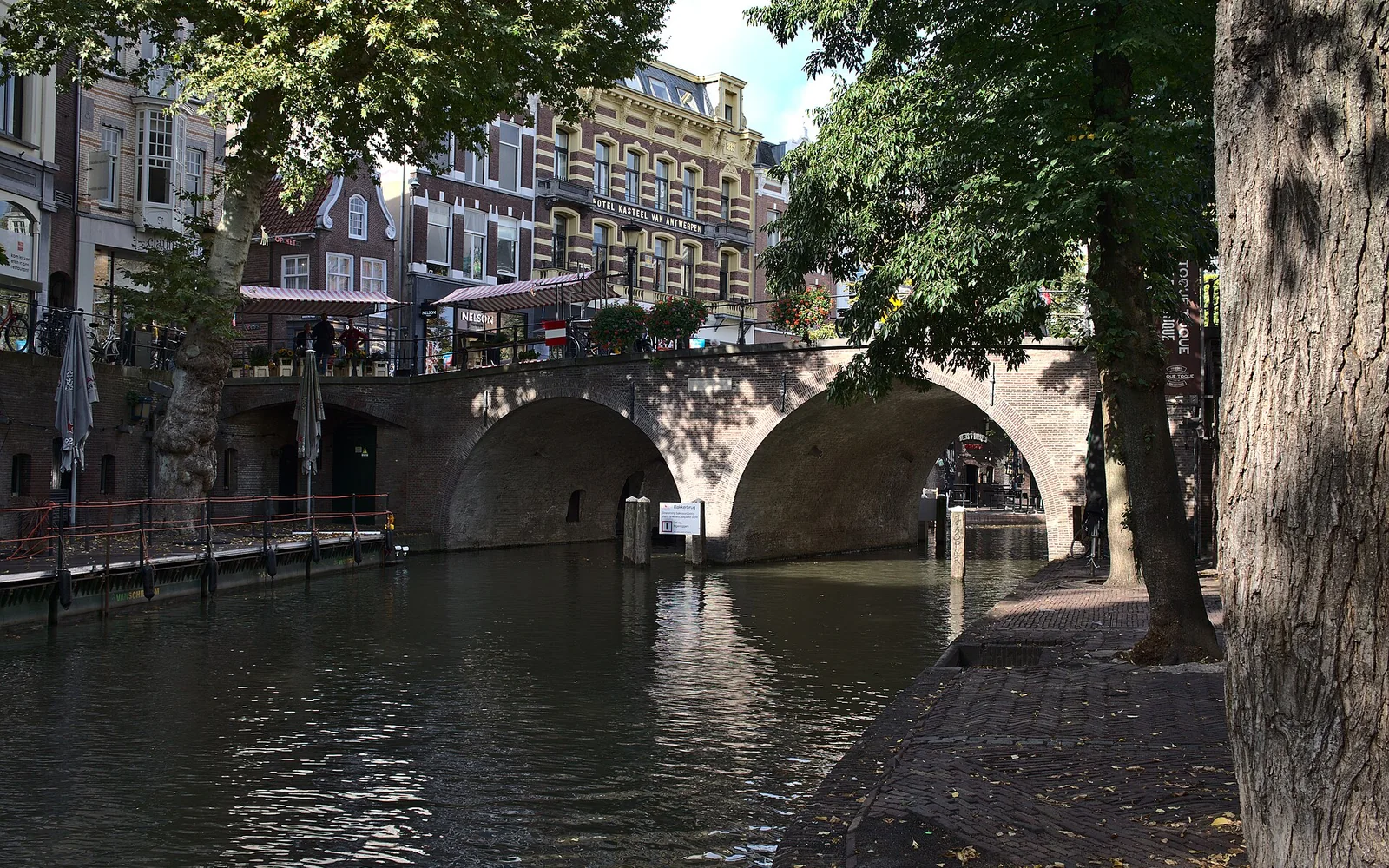
The Oudegracht runs below street level with wharf cellars, terraces and bridges unlike Amsterdam’s canal pattern. Domplein, Museum Quarter and the eastern neighbourhoods sit within a manageable walk.
Start with the main local route
The Oudegracht runs below street level with wharf cellars, terraces and bridges unlike Amsterdam’s canal pattern. Domplein, Museum Quarter and the eastern neighbourhoods sit within a manageable walk.
Utrecht Centraal is the country’s main rail interchange, but the station and adjoining shopping complex can confuse first arrivals. Follow signs for the city centre and keep peak commuting hours in mind.
Follow the Oudegracht slowly
Walk at both street and wharf level where public access allows, noticing how bridges connect the two.
Read Domplein before climbing
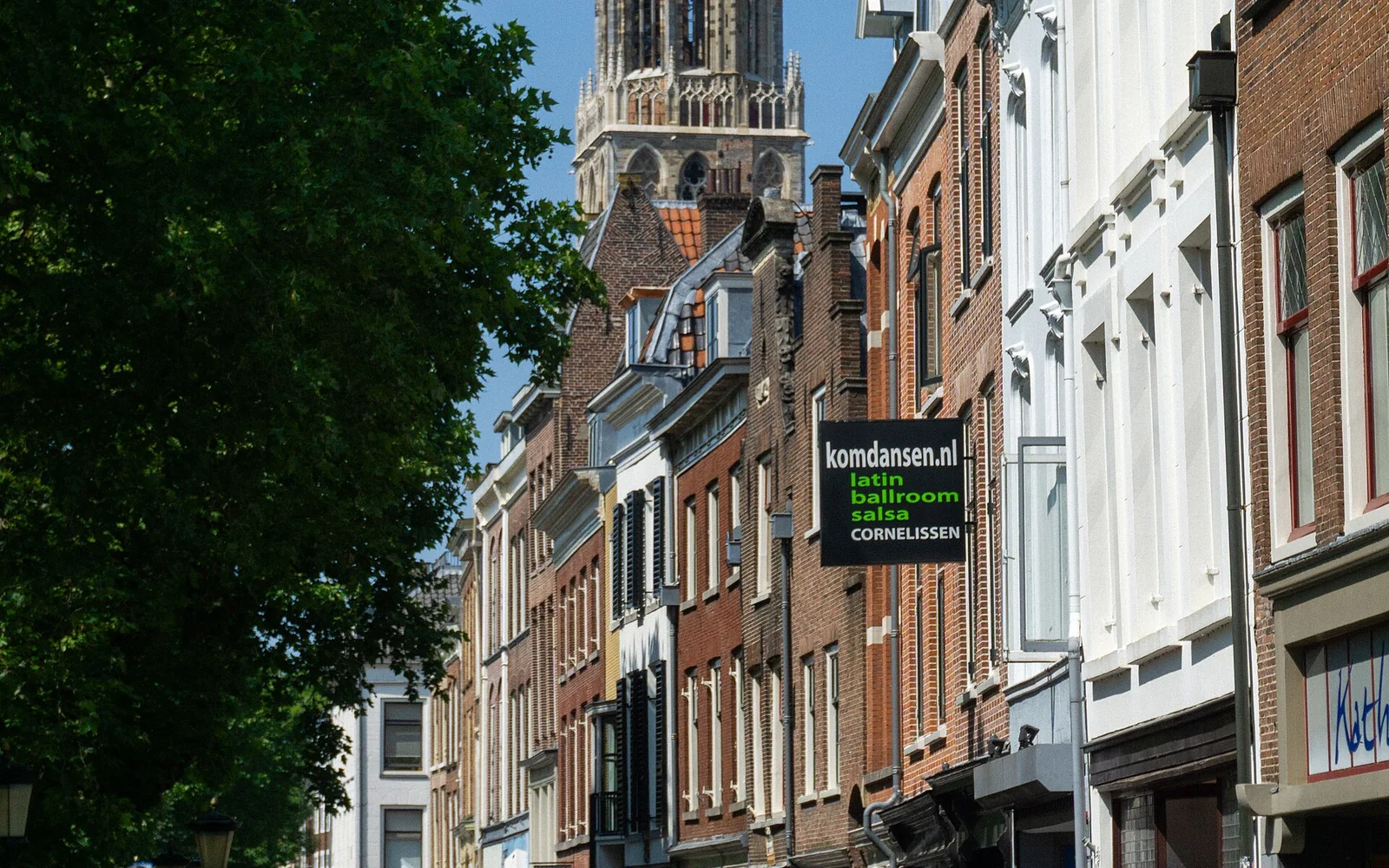
The separated tower and cathedral show the effect of the nave collapse and later city development.
Continue beyond the canal loop
Museum Catharijneconvent, Centraal Museum, parks and residential districts reward an extra day.
Getting there
Utrecht Centraal has direct trains across the country and is connected to the old centre through Hoog Catharijne. Follow the signed walking route rather than relying only on street views inside the complex.
Getting around
The historic centre is best on foot. Buses and trams cover outer districts, and bicycles suit confident riders. Park only in marked facilities.
Food to look for
Wharf cafés are attractive but busy. Streets away from Oudegracht offer bakeries, Indonesian and Middle Eastern cooking, modern Dutch restaurants and student-friendly places.
When to visit
Utrecht works year-round. Spring and early autumn suit long walks, summer fills the terraces, and winter is quieter outside shopping weekends and festivals.
Accessible travel
The station and major museums have accessible routes, while steep wharf stairs and historic buildings vary. Street level provides alternative canal views.
Practical limits
Dom Tower access uses a managed route and many steps. Bicycle traffic is heavy around the station, and waterfront edges need attention after dark or rain.
Nearby places
Amsterdam, Rotterdam and The Hague have direct trains. De Hoge Veluwe needs an onward rail and bus connection, while smaller castles and estates follow local schedules.
Continue planning
Questions about Utrecht
How many days do I need in Utrecht?
Two days cover the old centre, canals and one or two museums. Add a third for neighbourhoods or a nearby excursion.
Is Utrecht a day trip from Amsterdam?
Yes by direct train, though an overnight stay gives the city a quieter evening and makes onward travel easy.
Can I explore Utrecht without a bicycle?
Yes. The historic centre is compact and most first-visit sights are easy on foot.
Sources and updates
This guide was last reviewed on 3 September 2026. Transport, access and opening arrangements can change, so check the official source before travel.
- Official Netherlands visitor information, Netherlands Board of Tourism and Conventions
- Official Netherlands rail journey planner and service information, NS
- Official nationwide public transport journey planner, 9292
- Official Utrecht visitor information, Utrecht Marketing