
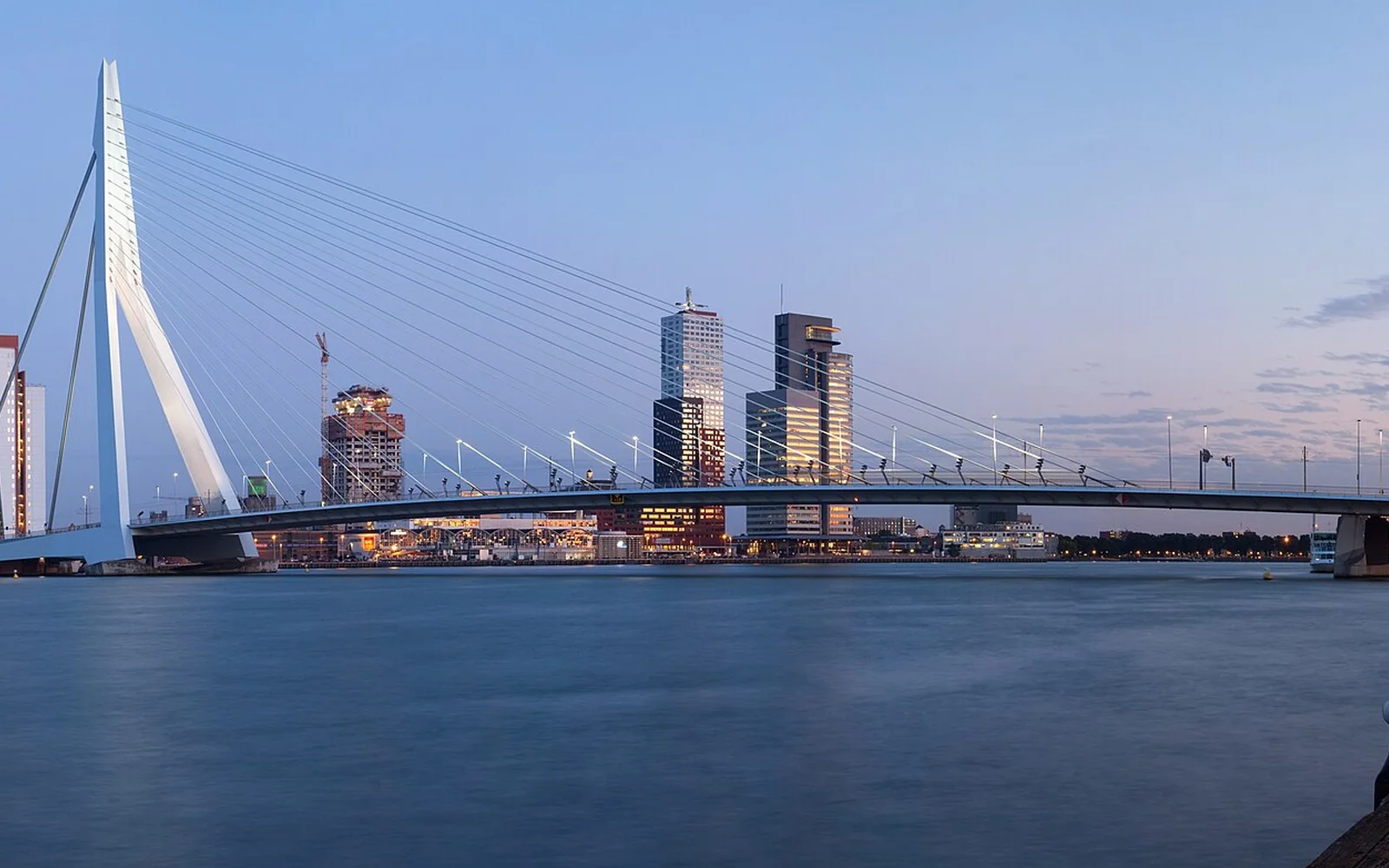
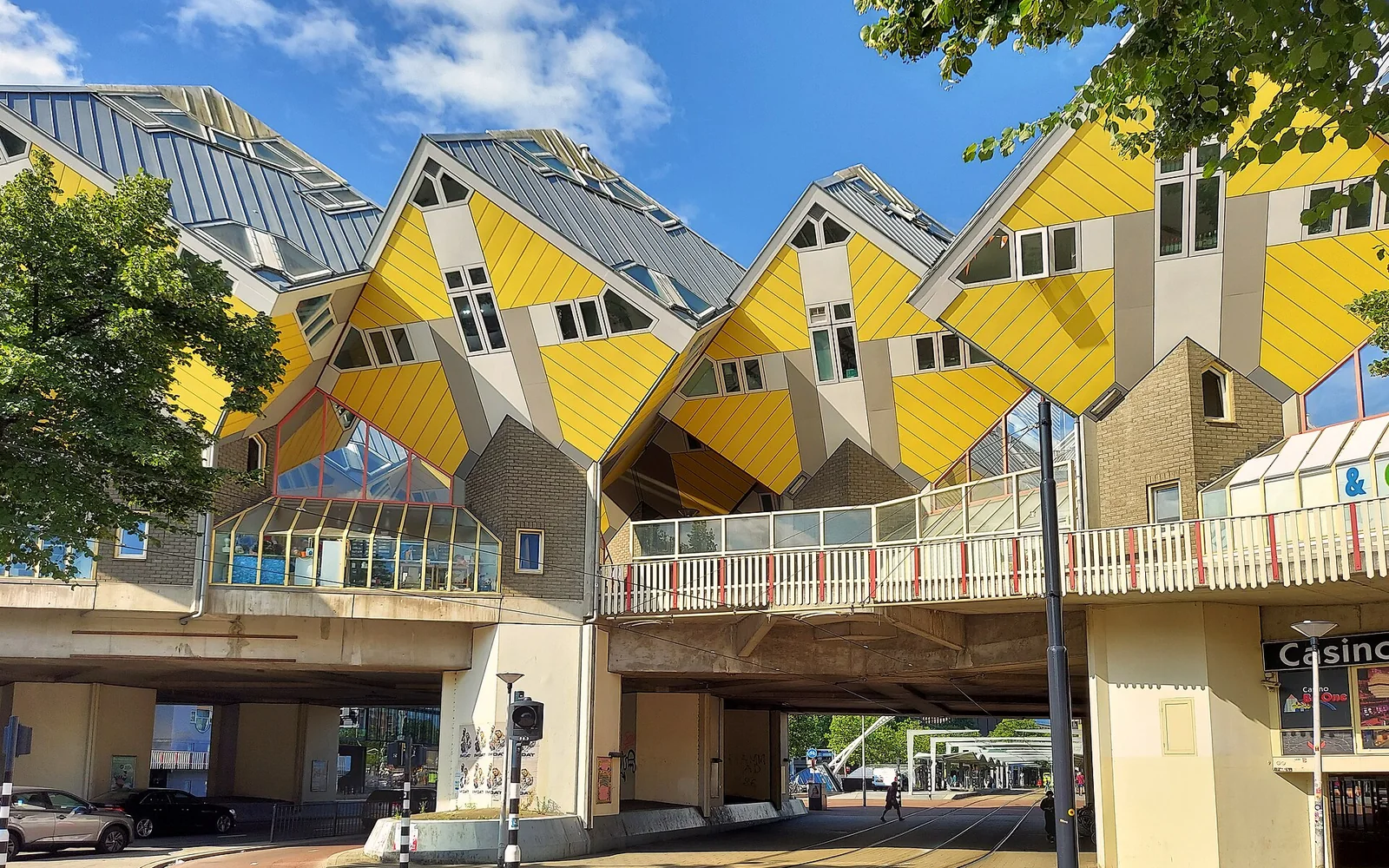
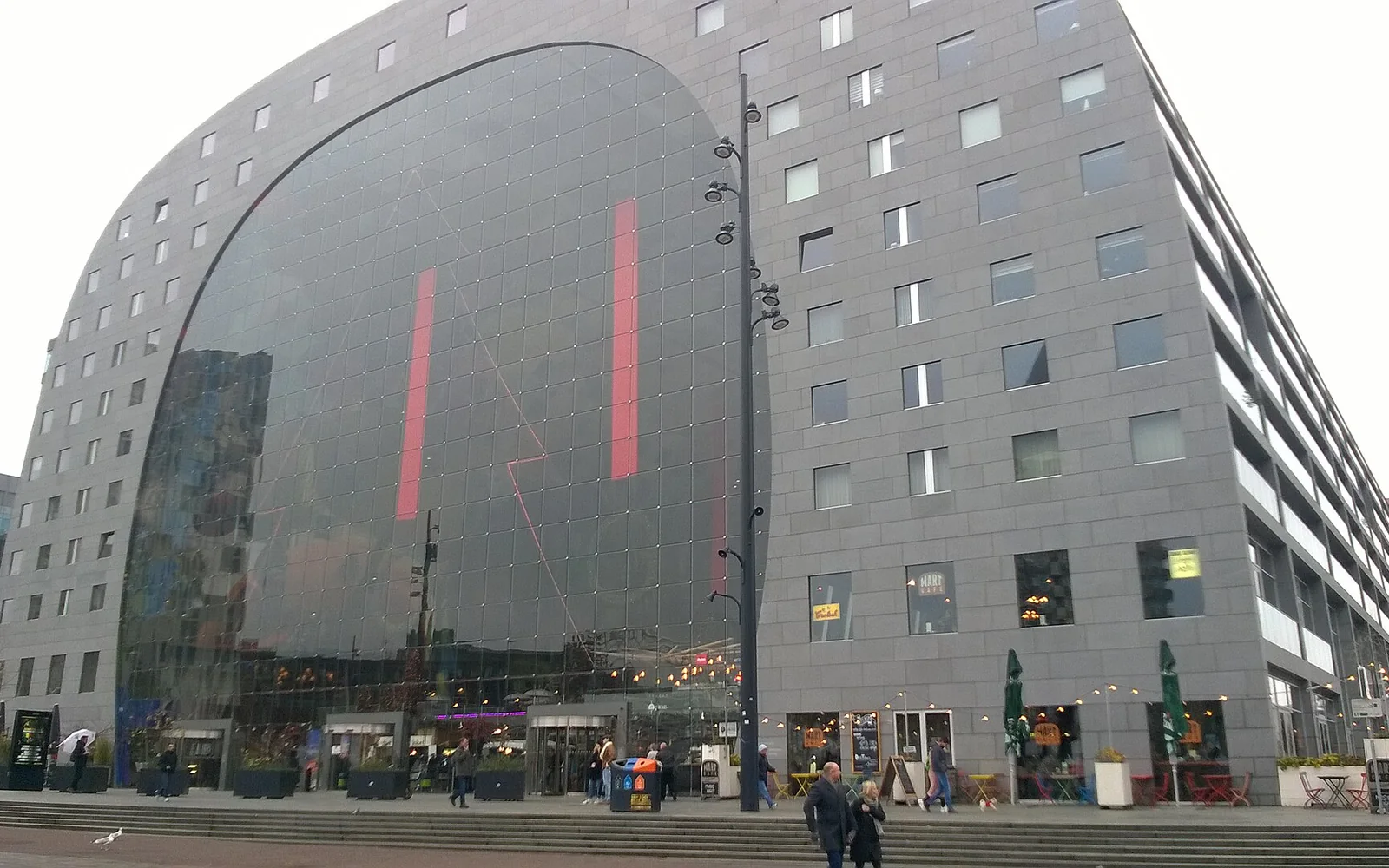
Rotterdam Centraal, the Lijnbaan, Museumpark, Markthal and Cube Houses form a strong central route. The Erasmus Bridge connects it to Kop van Zuid and Katendrecht across the river.
Start with the main local route
Rotterdam Centraal, the Lijnbaan, Museumpark, Markthal and Cube Houses form a strong central route. The Erasmus Bridge connects it to Kop van Zuid and Katendrecht across the river.
Distances are longer than in Delft or Leiden. Use metro and tram links to avoid spending the day on featureless connecting roads, then walk the architecture clusters slowly.
Read the rebuilt centre
Begin at Rotterdam Centraal and follow the post-war city through shopping streets, public art and new towers.
Cross the river on purpose
The Erasmus Bridge, Kop van Zuid and Katendrecht belong together and reveal the shift from port infrastructure to new city districts.
Choose one harbour perspective
A boat tour, maritime museum or waterfront walk each tells a different part of the port story.
Getting there
Rotterdam Centraal has frequent domestic trains and international services. Rotterdam The Hague Airport connects by local transport, while Schiphol is reached by direct or one-change trains.
Getting around
Metro, trams, buses, water transport and bicycles cover the wide city. Walking works within each district, but not every attraction sits comfortably in one continuous route.
Food to look for
Rotterdam’s port history and diverse communities support Surinamese, Cape Verdean, Turkish, Chinese and many other cuisines. West-Kruiskade, markets and Katendrecht are useful starting areas.
When to visit
Late spring to early autumn suits river walks and boats. Wind and rain remain common. Winter works well for museums and architecture with shorter outdoor stages.
Accessible travel
Much of the rebuilt centre, transit network and major museums is step-free, though individual boats, older venues and waterfront edges vary. Confirm boarding details.
Practical limits
Harbour cruises depend on operator schedules and weather. Construction can redirect walking routes in rapidly changing districts.
Nearby places
Delft and The Hague are easy by train. Kinderdijk requires a separate waterbus, bus, bicycle or road plan depending on the season and service.
Continue planning
Questions about Rotterdam
How many days do I need in Rotterdam?
Two days cover the central architecture and river districts. Add a third for museums, harbour history or neighbourhoods.
Is Rotterdam walkable?
Individual districts are walkable, but the city is spread out. Metro and tram journeys make the route more efficient.
Can I visit Kinderdijk from Rotterdam?
Yes, but the final connection changes by mode and season. Check the full outward and return journey before leaving.
Daily planning ranges
Travel costs in Rotterdam
These planning ranges are per person, per day and assume two people sharing a room. They are not live quotes.
Standard daily breakdown
- Accommodation
- €80 to €145
- Food
- €36 to €55
- Local transport
- €9 to €18
- Activities
- €22 to €45
What the range assumes: Per person, per day, based on two people sharing a sensible double or twin room. The standard range allows for ordinary paid sightseeing, local transport and a mix of casual and mid-range meals.
Seasonal note: Large events and busy conference dates create the clearest short-term accommodation rises.
Not included: International travel, intercity travel, shopping, travel insurance and major special-event premiums are excluded.
Price basis 29 August 2026, reviewed 29 August 2026, next review due 28 February 2027.
Cost sources
Sources and updates
This guide was last reviewed on 3 September 2026. Transport, access and opening arrangements can change, so check the official source before travel.
- Official Netherlands visitor information, Netherlands Board of Tourism and Conventions
- Official Netherlands rail journey planner and service information, NS
- Official nationwide public transport journey planner, 9292
- Official Rotterdam visitor information, Rotterdam Partners
- Official Kinderdijk visitor information, Kinderdijk World Heritage Foundation