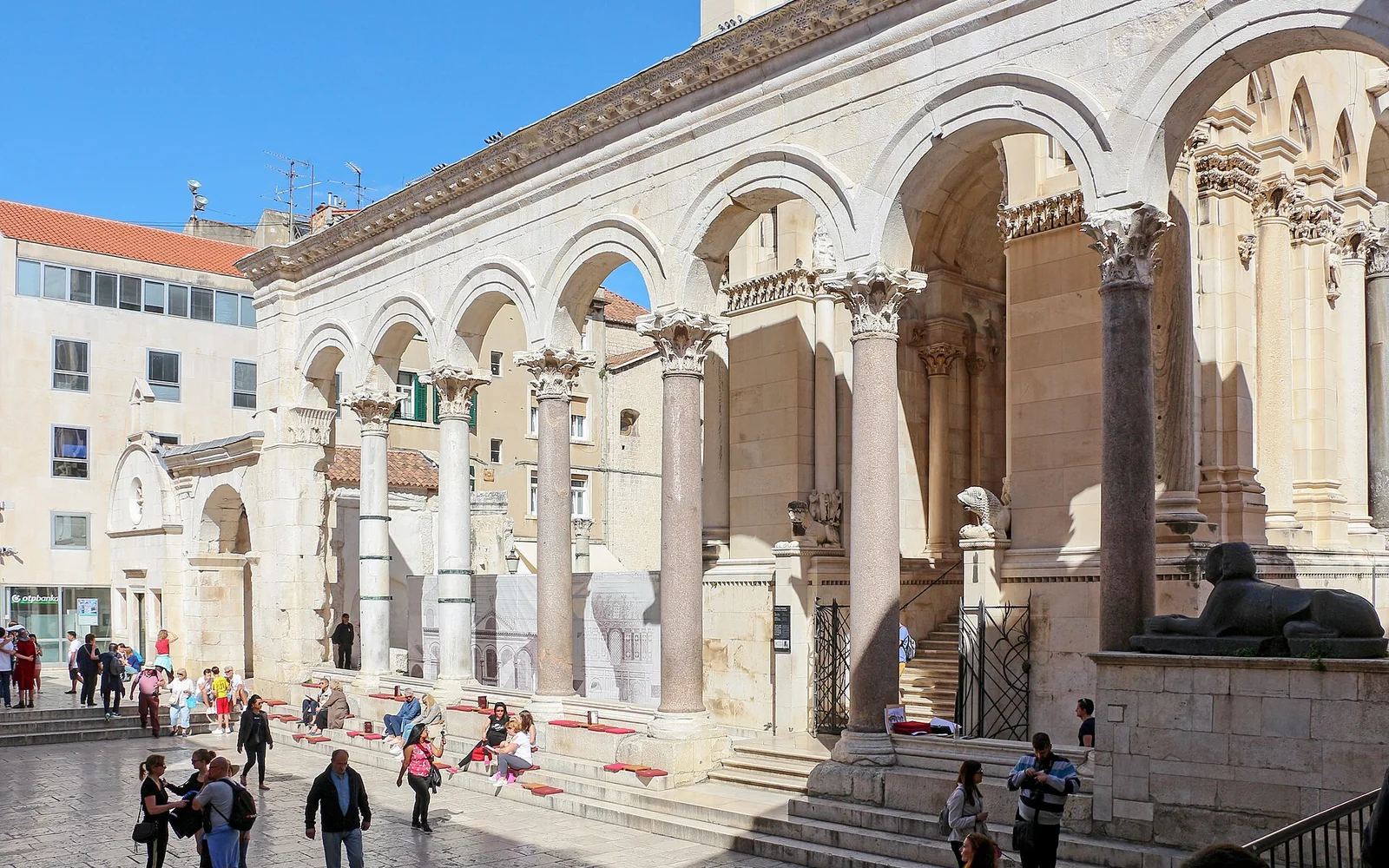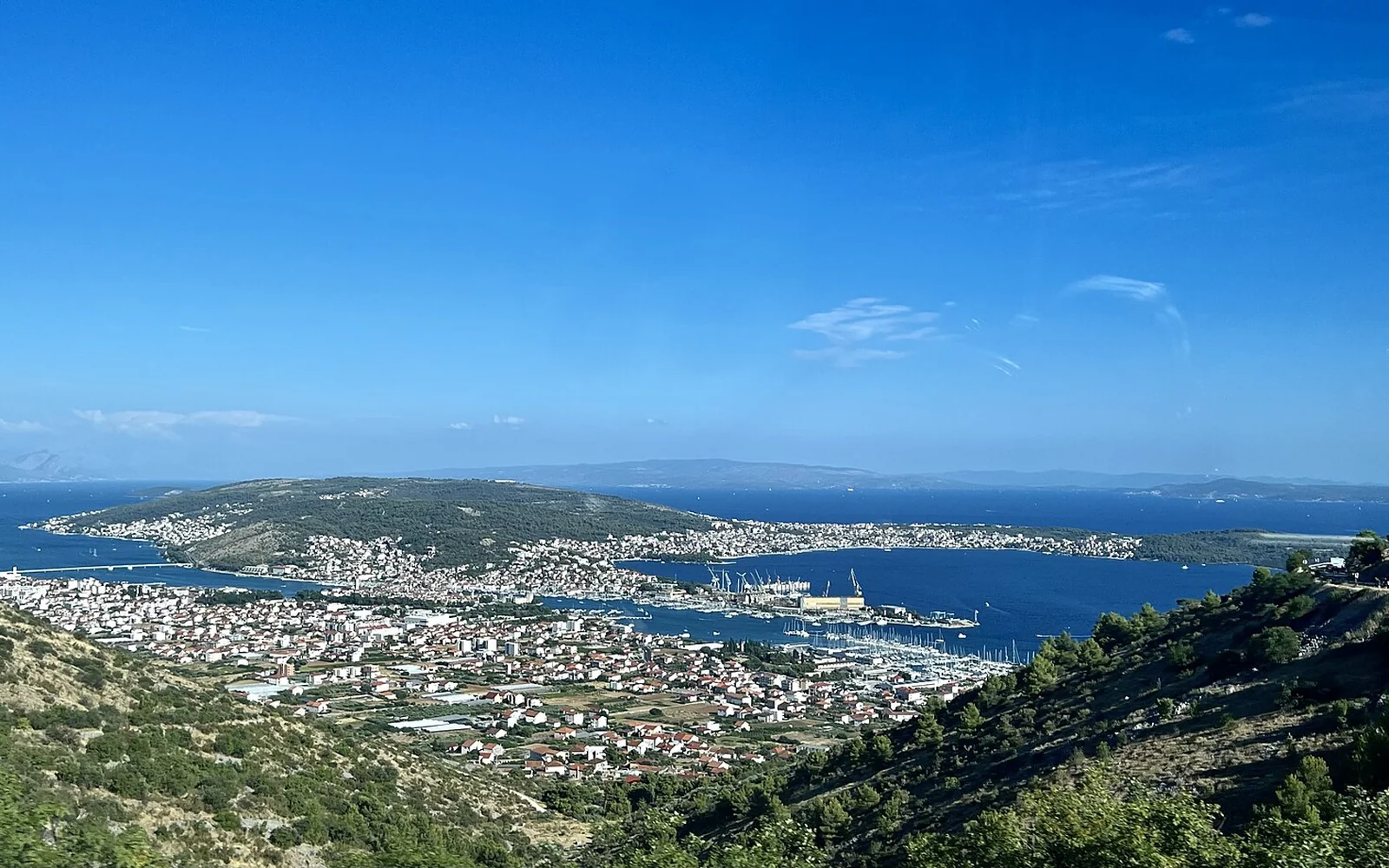
Trogir’s historic core sits on a small island between the mainland and Čiovo. Its cathedral portal, lanes and waterfront can be seen in a day, but an overnight stay brings quieter mornings and evenings.
Start with what makes Trogir distinct
Trogir’s historic core sits on a small island between the mainland and Čiovo. Its cathedral portal, lanes and waterfront can be seen in a day, but an overnight stay brings quieter mornings and evenings.
The town is close to Split Airport, yet summer road traffic can make journey times unpredictable. Use it as a deliberate first or final base rather than assuming it is simply part of Split.
Old town circuit
Begin at the Cathedral of St Lawrence and main square, then follow the lanes to Kamerlengo Fortress and the waterfront. Individual opening arrangements change, so confirm any tower or interior visit.
Waterfront and Čiovo
The promenade faces boats and cafés, while bridges lead towards Čiovo and its residential coast. Beach access requires a separate walk, bus or taxi plan.
Day trip or overnight
A day trip works for the main monuments. Staying overnight suits early airport departures, evening dining and travellers who prefer a smaller base than Split.
Build a realistic visit to Trogir
Morning: visit the cathedral square and trace the old lanes before tour groups arrive.
Afternoon: walk the waterfront, visit Kamerlengo if open and cross towards Čiovo.
Evening or day 2: enjoy the quieter centre, add a beach or continue to Split.
Arrive and move around Trogir
Split Airport is nearby by road, but public transport stops and traffic conditions need current checks. Buses connect Trogir with Split and other coastal points. The old town itself is pedestrian.
Walk inside the old town. Local buses, boats and taxis serve parts of Čiovo and the wider coast. A car is not useful in the core and parking is outside the historic island.
Food and local stops in Trogir
Seafood, grilled fish, pašticada and Dalmatian cured meats are common. The waterfront is convenient, while lanes and the mainland side offer additional choices.
Choose the right conditions for Trogir
Spring and autumn suit architecture and waterfront walks. Summer is lively but congested. Winter is calm, with fewer attractions and marine services operating regularly.
The main old-town route is fairly level but paved in uneven stone. Church thresholds, towers and fortress sections may involve steps. Check specific access before arrival.
Map distance to the airport does not guarantee a fast transfer. Allow a large buffer in summer. Accommodation in the pedestrian core may require a luggage carry.
Continue from Trogir
Split is the natural next stop and offers onward ferries to Hvar and Brač. Keep Trogir separate from a full Split sightseeing day if both old centres matter.
Continue planning
Questions about Trogir
Is Trogir a day trip from Split?
Yes. Its main historic sights fit into a focused day, though an overnight stay gives a quieter view of the town.
Is Trogir close to Split Airport?
It is geographically close, but summer road traffic can delay the transfer. Check current transport and leave a generous buffer.
Do I need a car in Trogir?
No. The old town is pedestrian and buses connect with Split. A car creates parking rather than solving a town-centre problem.
Sources and updates
This guide was last reviewed on 3 September 2026. Transport, access and opening arrangements can change, so check the official source before travel.
- Official Croatia travel planning, Croatian National Tourist Board
- Croatian rail timetable, HŽ Passenger Transport
- Official Trogir visitor information, Trogir Tourist Board
- Split-Dalmatia regional information, Split-Dalmatia County Tourist Board
Related places to consider
These guides can help you place Trogir within a wider route.