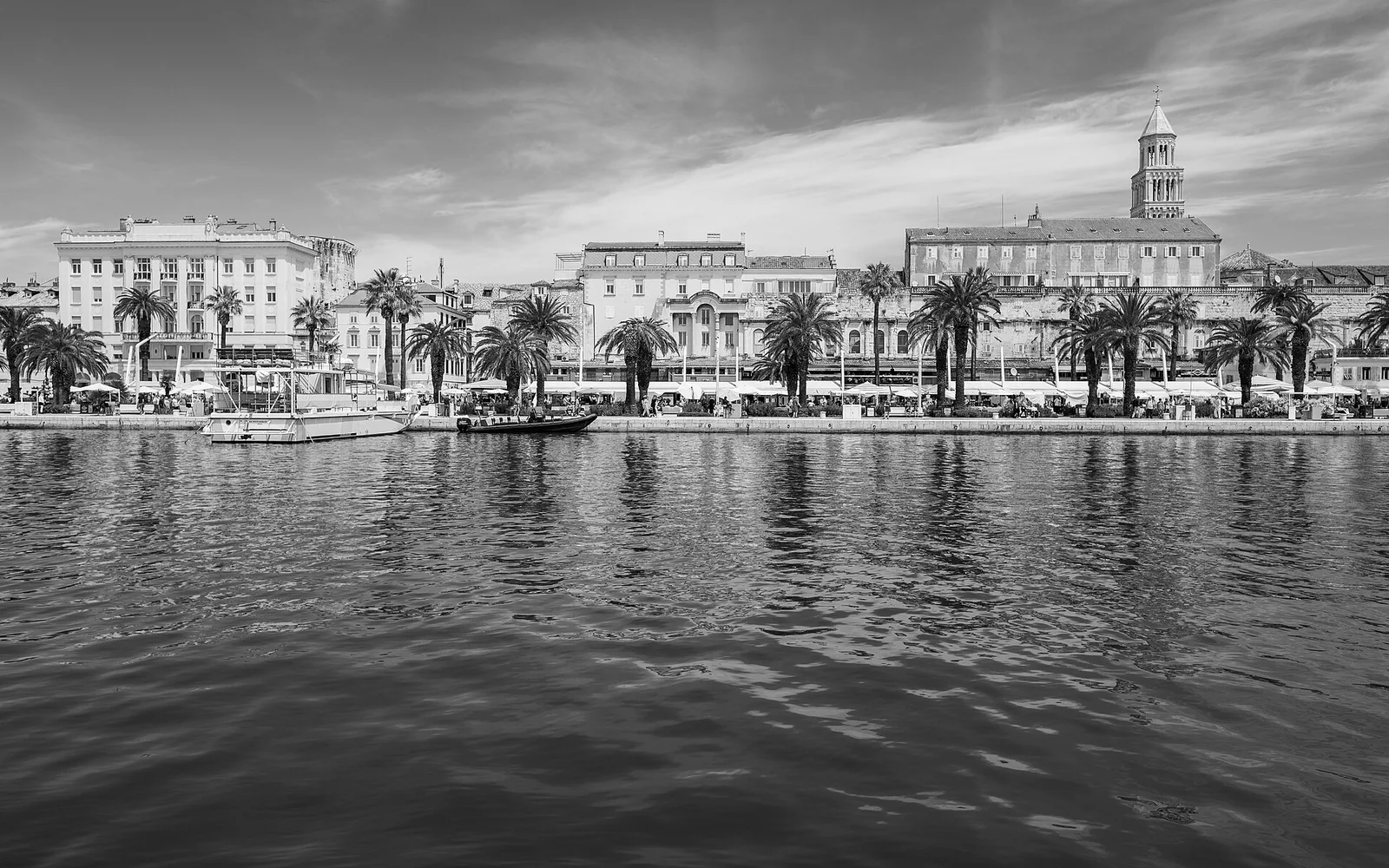
Split is not a preserved monument with a city around it. Homes, cafés and shops occupy Diocletian’s Palace, while the Riva, Varoš and Bačvice extend the centre towards the water and Marjan hill.
Start with what makes Split distinct
Split is not a preserved monument with a city around it. Homes, cafés and shops occupy Diocletian’s Palace, while the Riva, Varoš and Bačvice extend the centre towards the water and Marjan hill.
Stay at least two full days before taking a ferry. That allows time for the palace at quieter hours, one museum or guided visit, Marjan or a beach, and a neighbourhood meal away from the busiest lanes.
Diocletian’s Palace
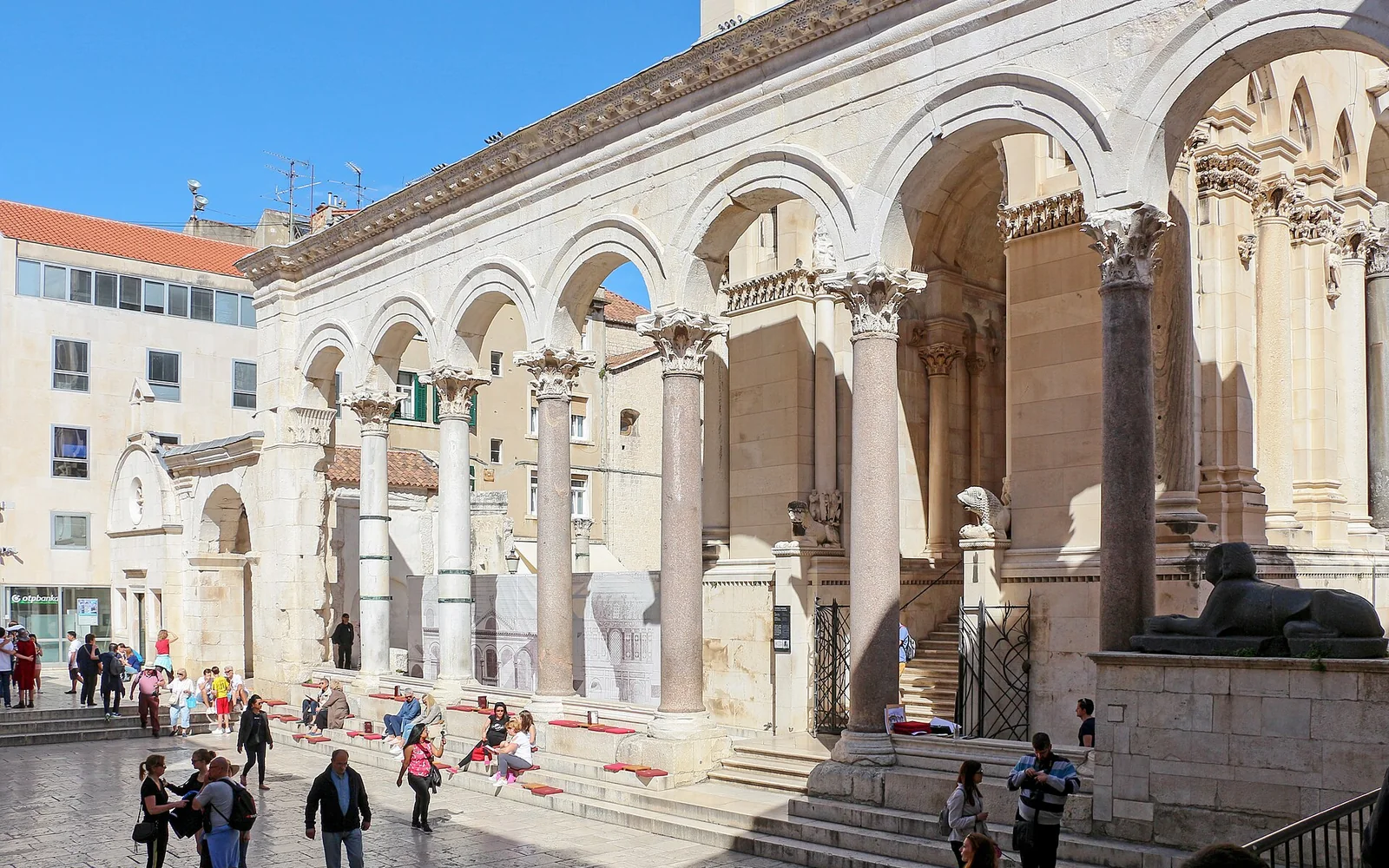
Begin around the Peristyle, substructures and cathedral complex, then return in the evening when day visitors have left. Individual sites use separate tickets and hours, so choose the ones that match your interests.
Marjan and Varoš
Varoš leads into Marjan’s wooded slopes and viewpoints. Routes vary in gradient and surface. Carry water, avoid exposed climbs in intense heat and do not assume every path is lit after dark.
Markets, beaches and daily life
The green market and fish market show the working centre. Bačvice is the best-known city beach, but swimming conditions, crowds and facilities vary along the coast.
Build a realistic visit to Split
Day 1: explore the palace core, markets and Riva, returning after sunset for a second walk.
Day 2: walk through Varoš to Marjan, then choose a museum or beach.
Day 3: visit Trogir or keep a slower Split day before an island departure.
Arrive and move around Split
Split Airport is west of the city near Trogir. Road transfers can slow in summer. The intercity bus station, rail terminus and main ferry port sit together beside the old centre, but specific ferries may use different berths.
Central Split is easiest on foot. Local buses reach outer neighbourhoods, beaches and parts of Marjan. A car is unnecessary in the centre and difficult to park. Use it only if the wider trip requires road access.
Food and local stops in Split
Try pašticada, soparnik, grilled fish and seafood dishes, while remembering that menus in the palace vary from quick visitor food to serious local cooking. The market area and neighbourhood streets broaden the choice.
Choose the right conditions for Split
Spring and autumn suit long walks. Summer is lively and has the widest ferry network, but heat and crowds change how much can fit into a day. Winter is quieter and better for city life than island hopping.
The Riva and parts of the palace ground level are accessible, but ancient thresholds, polished stone and steps limit some interiors. Check specific site access and use main paved routes on Marjan.
The polished palace stones can be slippery. Ferry queues and road traffic peak in summer. Leave a buffer between an airport transfer and a separate ferry ticket.
Continue from Split
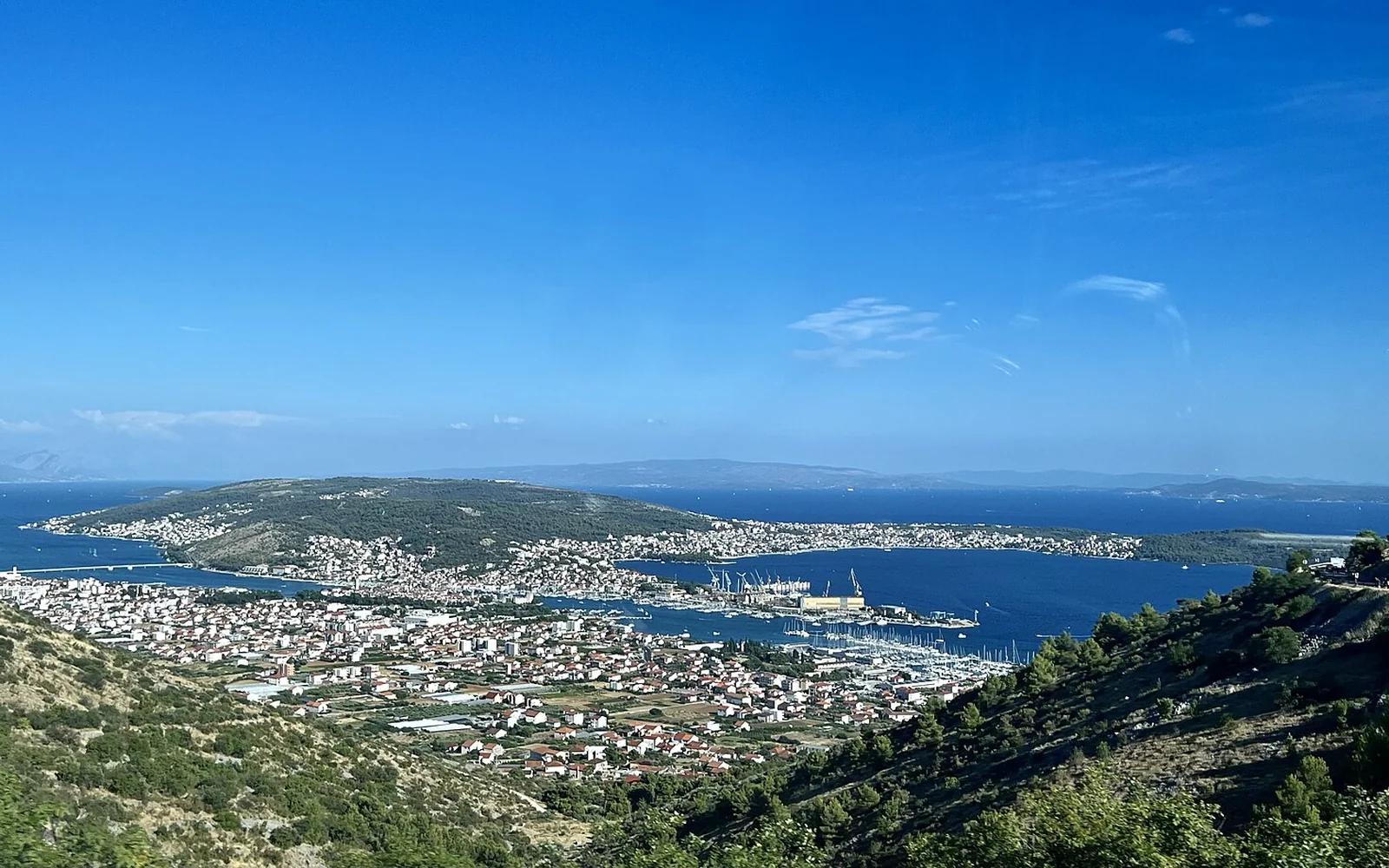
Trogir is the easiest covered historic town to combine with Split. Hvar Island, Brač Island and Makarska deserve separate stays based on the current ferry or bus plan.
Continue planning
Questions about Split
How many days should I spend in Split?
Two full days cover the main palace sights, Marjan and central neighbourhoods. Three or four days suit a slower stay or one nearby trip.
Is Split only a ferry stop?
No. The palace, waterfront, markets, museums and Marjan justify a city stay before or after the islands.
Can I visit Trogir without a car?
Yes. Public buses and other seasonal services connect Split and Trogir. Check the current stop and timetable before departure.
Daily planning ranges
Travel costs in Split
These planning ranges are per person, per day and assume two people sharing a room. They are not live quotes.
Standard daily breakdown
- Accommodation
- €70 to €125
- Food
- €30 to €48
- Local transport
- €6 to €15
- Activities
- €18 to €42
What the range assumes: Per person, per day, based on two people sharing a sensible double or twin room. The standard range allows for ordinary paid sightseeing, local transport and a mix of casual and mid-range meals.
Seasonal note: July and August accommodation can exceed the range, especially near the old town and ferry port.
Not included: International travel, intercity travel, shopping, travel insurance and major special-event premiums are excluded.
Price basis 29 August 2026, reviewed 29 August 2026, next review due 28 February 2027.
Cost sources
- Promet Split passenger information, Promet Split
- Split travel costs, Budget Your Trip
Sources and updates
This guide was last reviewed on 3 September 2026. Transport, access and opening arrangements can change, so check the official source before travel.
- Official Croatia travel planning, Croatian National Tourist Board
- Jadrolinija ferry information, Jadrolinija
- Croatian rail timetable, HŽ Passenger Transport
- Official Split visitor information, Split Tourist Board
- Split-Dalmatia regional information, Split-Dalmatia County Tourist Board
Related places to consider
These guides can help you place Split within a wider route.