
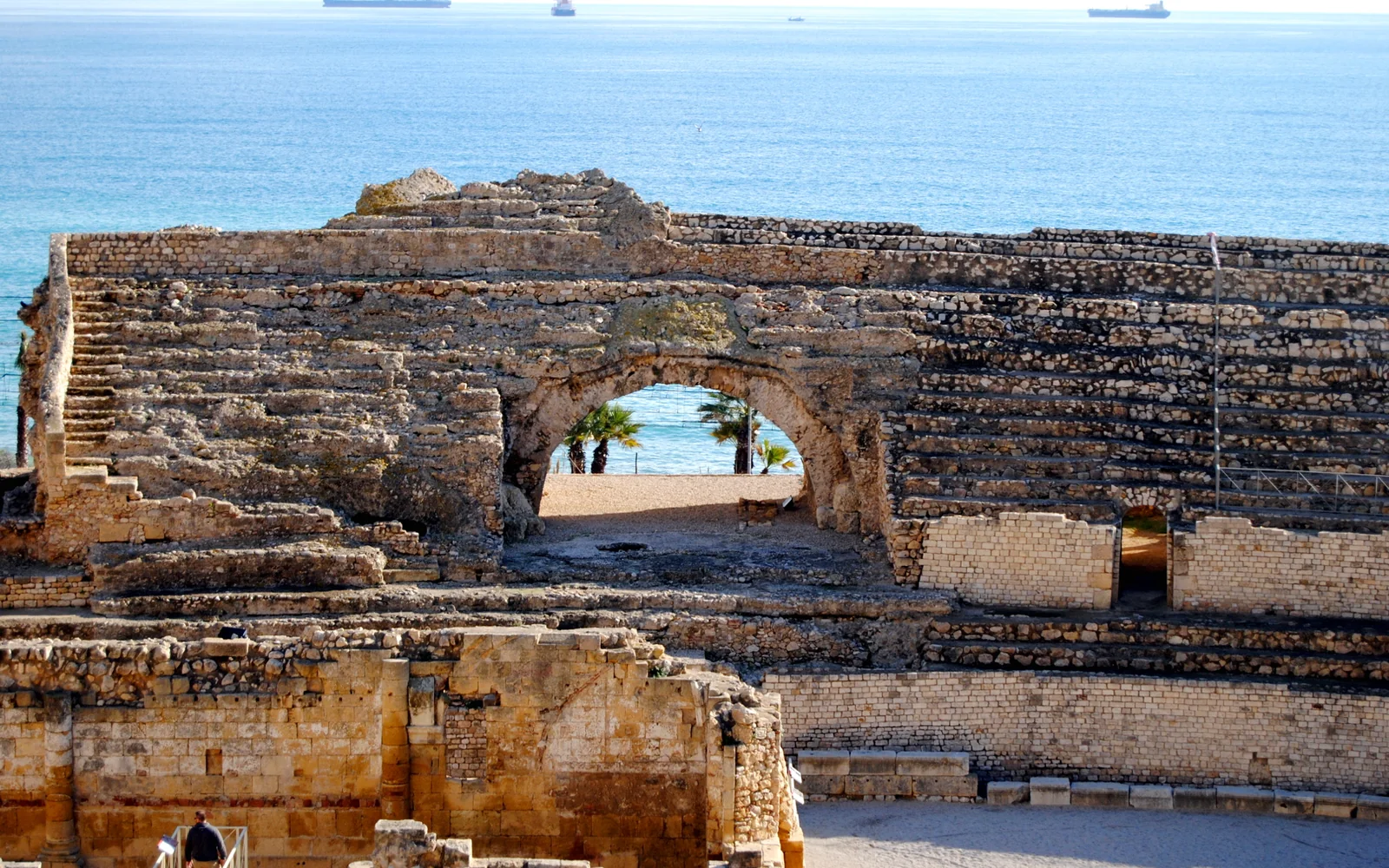
Tarragona’s Roman amphitheatre has an exceptional position beside the sea, but the heritage extends into walls, forum remains and the upper old town. The modern Rambla links these areas with the Mediterranean viewpoint.
One day covers the main city sites. An overnight stay allows a museum, beach time or a broader Roman route without rushing back to Barcelona.
What to prioritise
Amphitheatre and coast
The amphitheatre sits below the old city near the railway. Check monument access and combine it with the Balcó del Mediterrani rather than repeating the descent.
Part Alta and cathedral
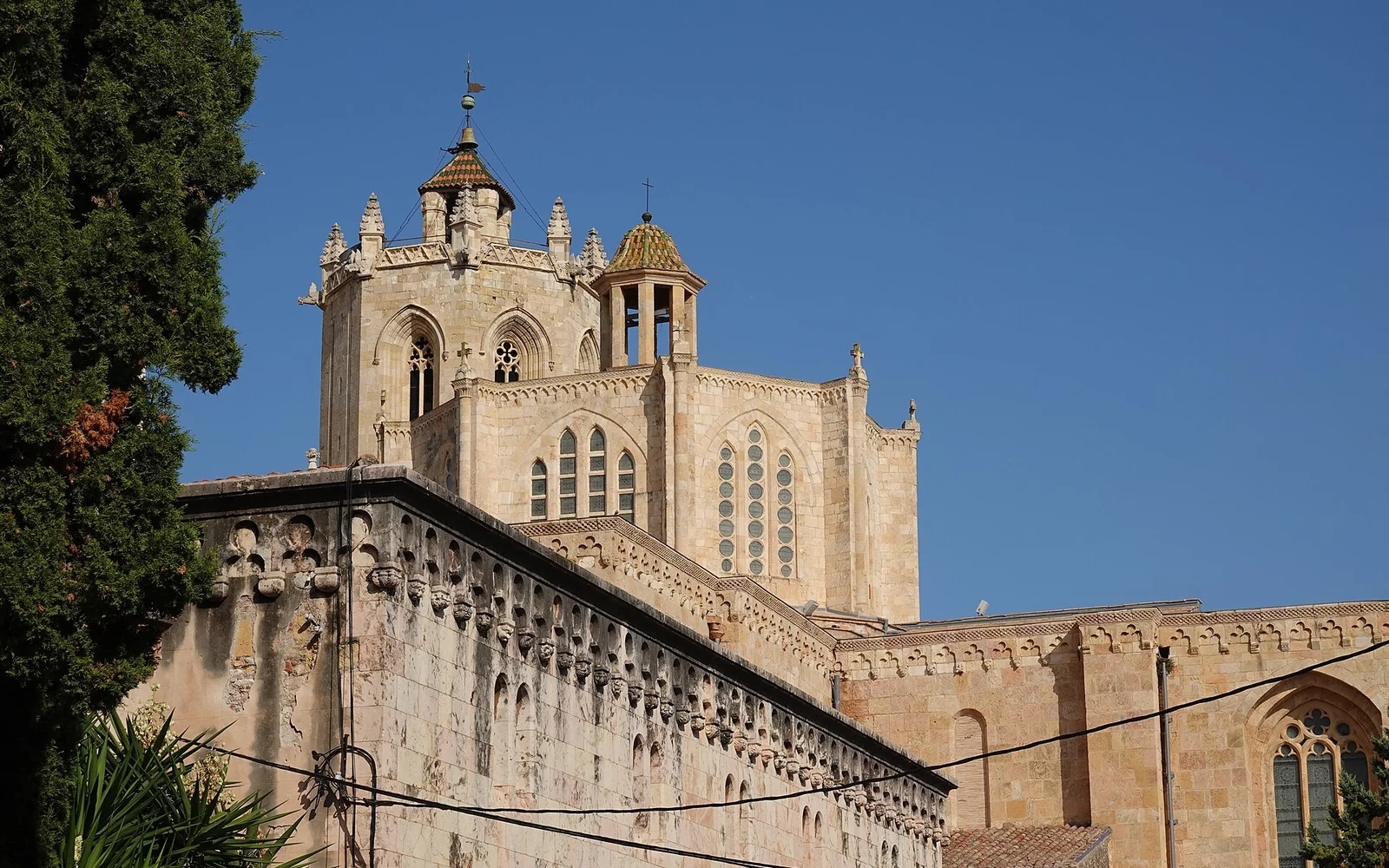
The upper old town follows the footprint of Roman Tarraco. Cathedral streets, walls and small squares make the best walking area.
Roman sites across the city
Not every remain sits inside one ticketed complex. Choose a coherent set and use the archaeology museum or official route for context.
Where to stay
Rambla Nova is practical for transport and both city levels. Part Alta has atmosphere but more steps and limited vehicle access. Beach accommodation is less useful for a short heritage visit.
A practical itinerary
- Morning: visit the amphitheatre and Mediterranean viewpoint before climbing to Part Alta.
- Afternoon: explore the cathedral area, Roman walls and one museum or additional site.
- Second day: add a beach, port walk or further Roman remains according to opening times.
Getting there
Central Tarragona station serves many coastal trains below the city. Camp de Tarragona high-speed station is outside the urban centre and requires a separate transfer. Confirm the station before booking.
Getting around
Walking covers the central sights, with a noticeable climb between the coast and Part Alta. Buses help with outer districts and the high-speed station transfer.
Food to look for
Look for seafood, romesco-based dishes and local produce from Camp de Tarragona. Port-area restaurants and old-town taverns provide different settings and prices.
When to visit
Spring and autumn suit ruins and coast. Summer is hot and adds beach visitors. Winter is quieter, but shorter opening patterns require checking.
Accessibility
Rambla Nova is broad and level, while Part Alta, walls and archaeological remains include steps and uneven stone. Choose accessible sites from current official information.
Practical limits
Do not confuse central Tarragona station with Camp de Tarragona. A cheap high-speed fare may add a long road transfer that changes the value of a day trip.
Nearby places
Barcelona is the simplest rail base. Girona lies on the opposite side of Barcelona and is better planned on another day.
Places to add to your map
- Roman Amphitheatre: Seafront Roman site below the old town.
- Tarragona Cathedral: Main landmark in Part Alta.
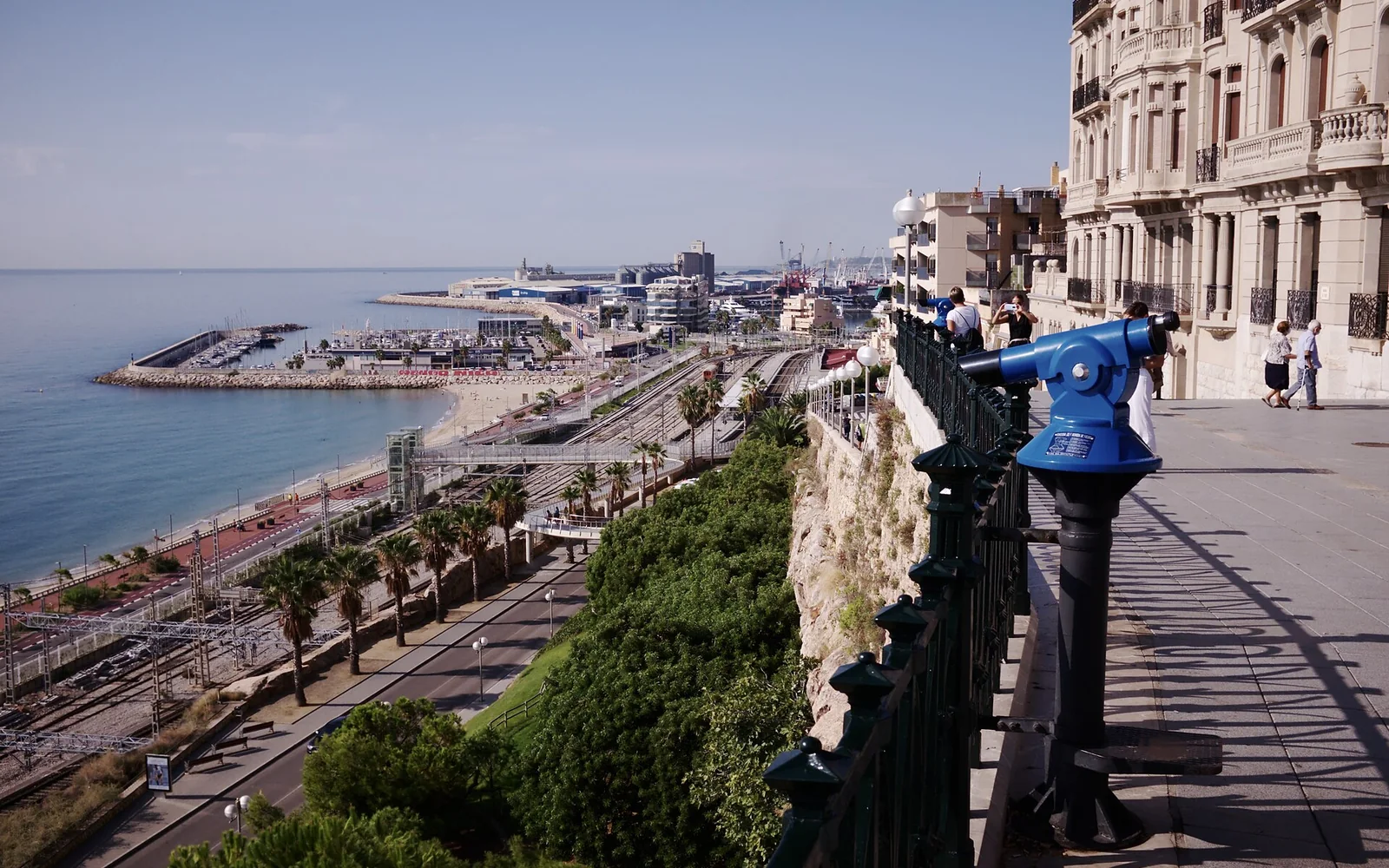
- Balcó del Mediterrani: Viewpoint at the end of Rambla Nova.
Open the route planner to place these stops in a wider Spain trip.
Continue planning
Questions about Tarragona
Is Tarragona a good day trip from Barcelona?
Yes. Central trains make a full-day visit practical, but check that the service uses Tarragona rather than the out-of-town high-speed station.
How many days do I need in Tarragona?
One full day covers the amphitheatre, upper town and cathedral. Stay overnight for museums or beach time.
Can I walk around Tarragona?
Yes, though the route climbs between the coast and Part Alta. Local buses can reduce longer transfers.
Sources and updates
This guide was last reviewed on 28 August 2026. Transport, access and opening arrangements can change, so check the official source before travel.
- Spain tourism, Turespaña
- Renfe passenger information, Renfe
- Official Tarragona tourism, Tarragona Tourism
- Official Catalonia tourism, Catalan Tourist Board