
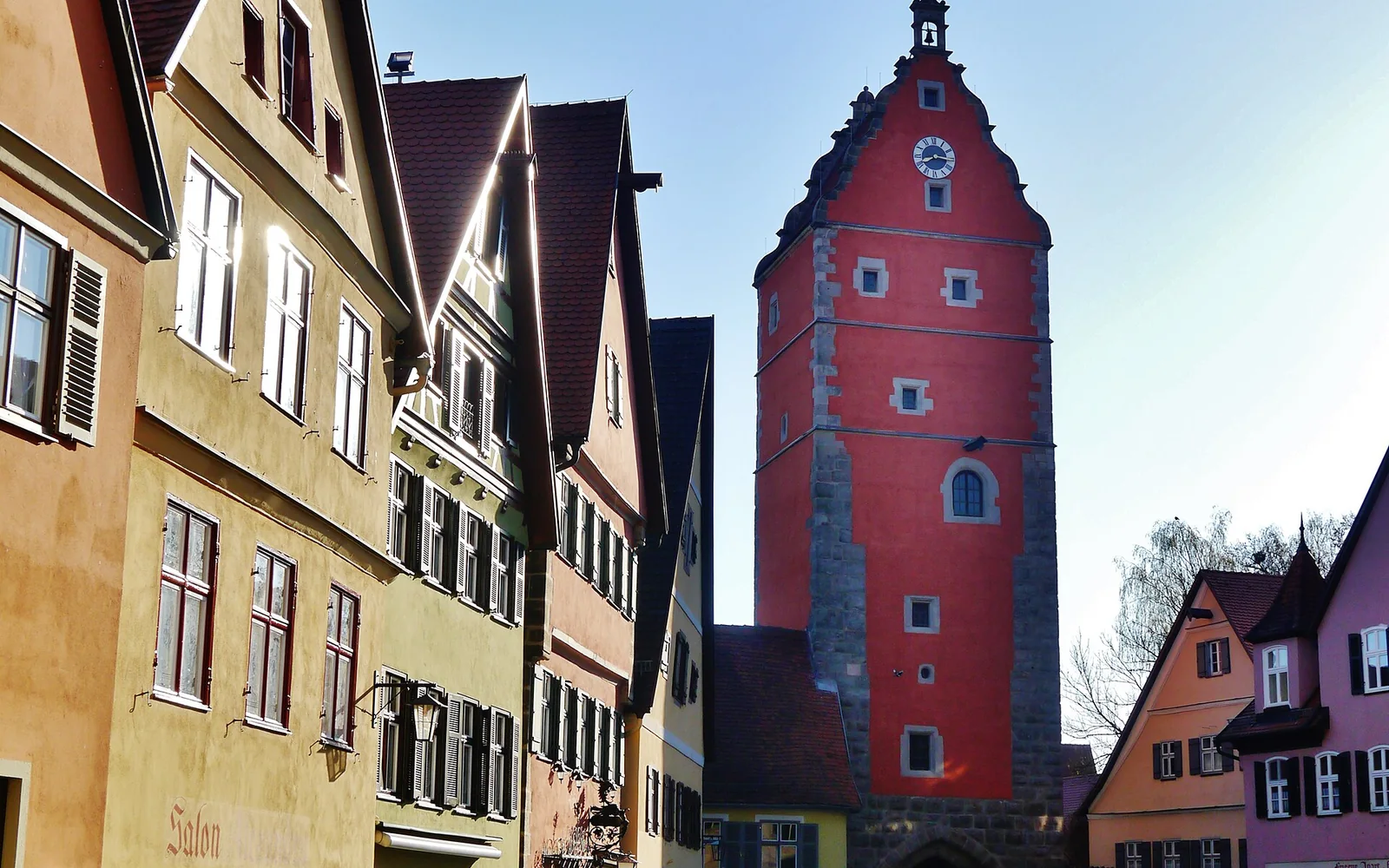
The route is not one road that must be followed metre by metre. Its value lies in selected towns and landscapes between Würzburg and Füssen, with Rothenburg, Dinkelsbühl, Nördlingen and Augsburg among the useful stages.
Decide which section deserves the journey
The route is not one road that must be followed metre by metre. Its value lies in selected towns and landscapes between Würzburg and Füssen, with Rothenburg, Dinkelsbühl, Nördlingen and Augsburg among the useful stages.
Driving gives the most flexibility, but rail and bus combinations can cover a smaller selection. Cycling and long-distance walking require their own official stage plans.
Choose five or six meaningful stops
A rushed list of every town loses the route’s purpose. Stay overnight in at least two smaller centres.
Do not confuse road and rail routes
Trains often connect via larger hubs rather than following the tourist road. Check each transfer independently.
Finish with Füssen, not only the castle
The southern end includes the old town, lakes and separate official access to Neuschwanstein.
Build the road around two or three overnight towns
Day 1: begin in Würzburg and visit the Residence.
Day 2: continue through the Tauber Valley to Rothenburg.
Day 3: stay in Dinkelsbühl or Nördlingen.
Day 4: pass through Augsburg and the Lech corridor.
Day 5: finish in Füssen with a separate castle plan.
Compare driving with separate rail and bus legs
Würzburg and Füssen sit on different rail networks, with Frankfurt and Munich as the main international gateways. The intermediate route needs multiple local connections.
A car offers the widest choice. Public transport works for selected towns but rarely as one simple line. The official route also publishes cycling and walking information.
Food and local stops in Romantic Road
Franconian wine, Swabian dishes, Bavarian beer culture and Allgäu dairy traditions appear along different stages. Use the route to notice regional changes.
Allow for parking, events and winter daylight
Late spring to early autumn suits road, cycling and walking routes. Summer is busy in Rothenburg and Füssen. Winter reduces daylight and some transport but brings market periods.
Historic centres include cobbles, slopes and old buildings. Use town-level guidance, and check each castle or church rather than assuming a route-wide standard.
Parking, coach traffic and town access vary. The road label does not guarantee a scenic drive at every point, and one day is too short for the full route.
Anchor the route in Würzburg or Füssen
Nuremberg and Munich provide larger rail links. Berchtesgaden lies east of the route and should be a separate Alpine stage.
Choose a Romantic Road base
- Rothenburg travel guide
- Neuschwanstein and Füssen guide
- Nuremberg travel guide
- Bavaria travel guide
- Würzburg
- Germany travel guide
Romantic Road planning questions
How many days does the Romantic Road need?
Four to five days cover several key towns by car. Add more time for cycling, walking or detailed castle and museum visits.
Can I travel the Romantic Road without a car?
Yes for a selected set of towns, but public transport does not follow the route as one continuous service. Build each leg with the official planner.
Where should I stay on the Romantic Road?
Use staged overnight stops such as Würzburg, Rothenburg, Dinkelsbühl and Füssen rather than one base for the entire route.
Sources and updates
This guide was last reviewed on 3 September 2026. Transport, access and opening arrangements can change, so check the official source before travel.
- Germany travel planning, German National Tourist Board
- DB passenger information, Deutsche Bahn
- Official accessible travel guidance for Germany, German National Tourist Board
- Official Bavaria visitor information, Bavaria Tourism
- Official Romantic Road visitor information, Romantic Road Tourism Association