
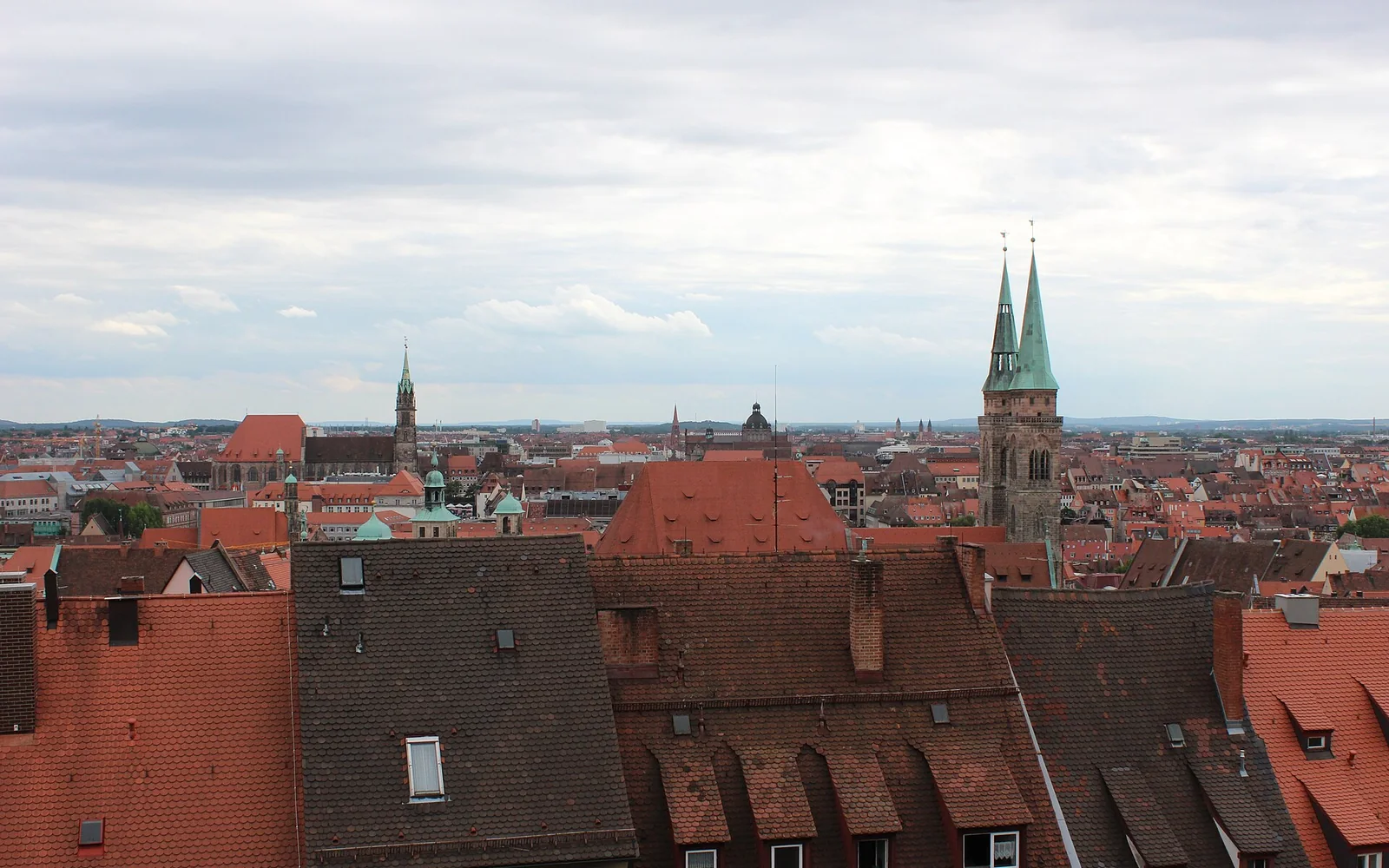
The Imperial Castle, Hauptmarkt, churches, city walls and Germanisches Nationalmuseum form the central historic route. A separate half-day is needed for the former Nazi Party Rally Grounds and their documentation.
Keep the old city and documentation sites distinct
The Imperial Castle, Hauptmarkt, churches, city walls and Germanisches Nationalmuseum form the central historic route. A separate half-day is needed for the former Nazi Party Rally Grounds and their documentation.
Treat those modern-history sites as places for evidence and reflection, not as dramatic backdrops. The Memorium Nuremberg Trials adds another distinct legal-history strand.
Walk uphill through the old city
Begin near the station and move through the market and Sebald quarter toward the castle, leaving time for side streets such as Weissgerbergasse.
Separate medieval and modern history
The old city and the rally grounds explain different periods and should not be compressed into one narrative.
Use documentation centres carefully
Check exhibition availability and allow enough time to read, listen and reflect.
Build three days around different periods
Day 1: walk the old city from the station to the Imperial Castle.
Day 2: visit a major museum and the rally-ground documentation area.
Day 3: add the Nuremberg Trials site or a slower neighbourhood route.
Use Nuremberg’s central rail and tram connections
Nuremberg Hauptbahnhof sits just outside the old walls and connects directly with Munich, Leipzig, Frankfurt and other German cities.
The old city is walkable. U-Bahn, trams and buses reach the rally grounds, airport and outer districts.
Food and local stops in Nuremberg
Nuremberg sausages, gingerbread, Franconian beer and regional dishes are widely available. Market and festival stalls vary by season.
Check museum hours and emotionally demanding visits
Spring and autumn are comfortable. Summer brings events. The Christmas market is famous and extremely busy, while winter outside those dates is quieter.
Public transport reaches the main areas, but castle gradients, cobbles and historic buildings vary. Ask each museum for the current accessible entrance.
Documentation exhibitions can close or move during renovation. Christmas market crowds reshape the centre, and castle slopes require realistic mobility planning.
Continue through Franconia
Bamberg and Würzburg are rail-linked. Rothenburg and the Romantic Road need more local transport and benefit from an overnight stay.
Plan another Franconian stop
- Bavaria travel guide
- Romantic Road guide
- Rothenburg travel guide
- Munich travel guide
- Bamberg
- Würzburg
- Germany travel guide
Nuremberg planning questions
How many days do I need in Nuremberg?
Two days cover the old city and one modern-history focus. A third day allows another museum or the Nuremberg Trials site.
Where are Nuremberg’s twentieth-century history sites?
The former rally grounds lie outside the old city, while the Trials memorium is in the western court complex. Plan them separately.
Can I visit Rothenburg from Nuremberg?
Yes, but rail journeys involve changes and take time. An overnight stay is better for the town walls and evening streets.
Sources and updates
This guide was last reviewed on 3 September 2026. Transport, access and opening arrangements can change, so check the official source before travel.
- Germany travel planning, German National Tourist Board
- DB passenger information, Deutsche Bahn
- Official accessible travel guidance for Germany, German National Tourist Board
- Official Bavaria visitor information, Bavaria Tourism
- Official Nuremberg visitor information, Nuremberg Convention and Tourist Office