Faro is often reduced to its airport, yet it is a useful small city with a walled old town, a local commercial centre and direct access to the Ria Formosa. It suits travellers who want a car-free Algarve base, a quieter start to a regional trip or a day of history before an island beach.
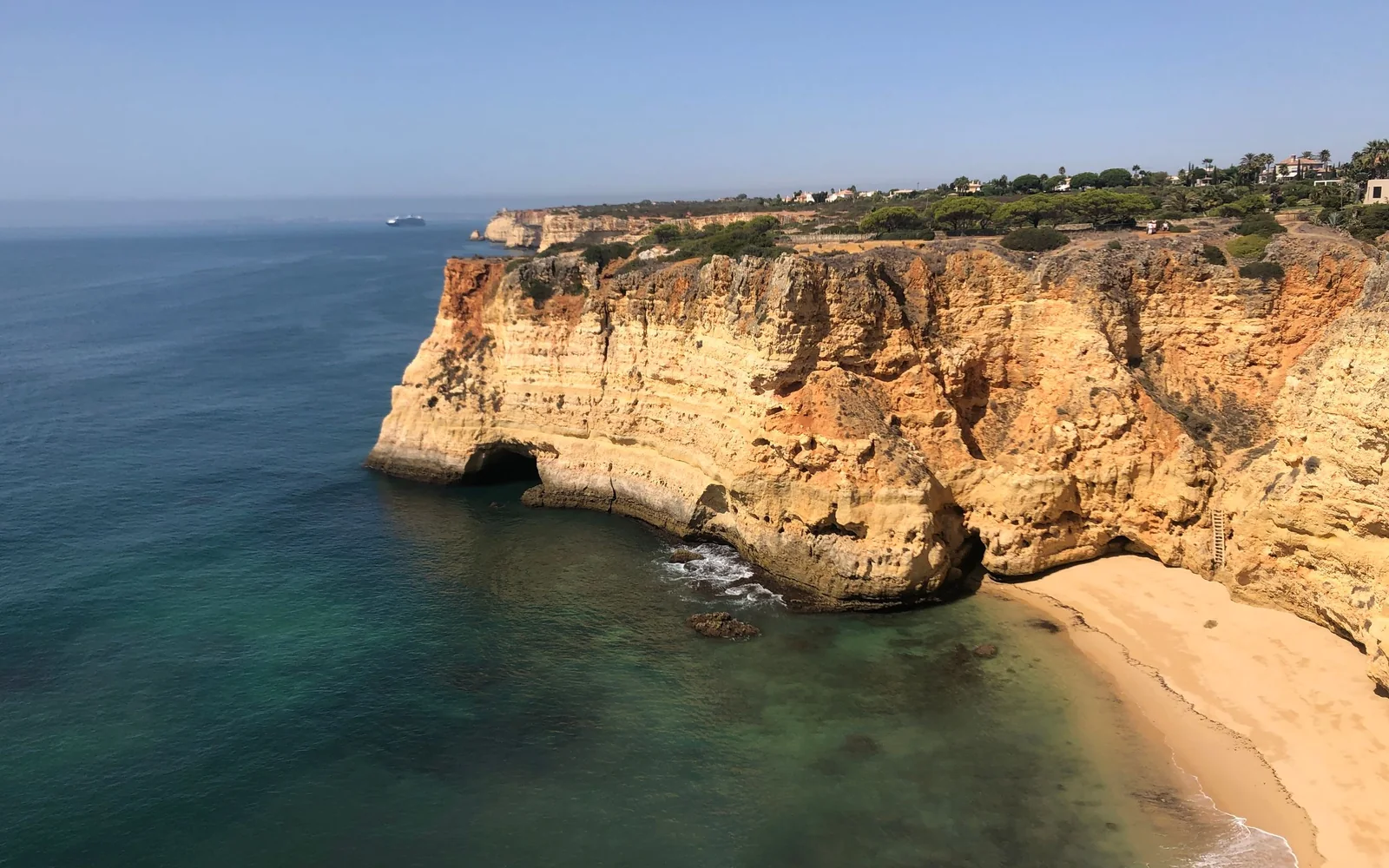
The city of Faro is not the same as the wider Faro district. Famous cliff beaches near Lagos and Albufeira are elsewhere in the Algarve. Faro's own coastal landscape is formed by lagoons, salt marshes and barrier islands.
Choose the old town or an island outing first
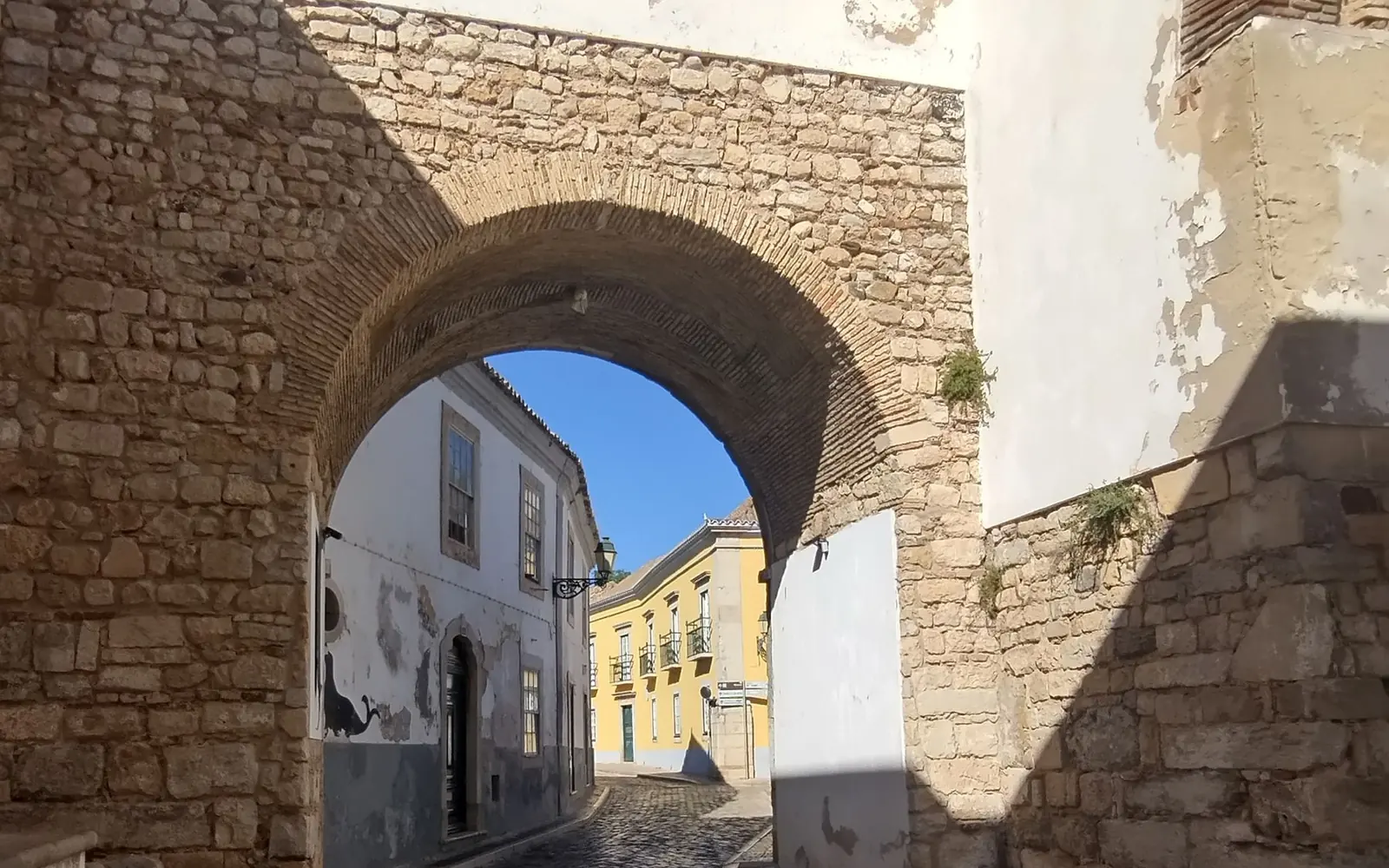
For an arrival afternoon, start at the marina side and enter the old town through Arco da Vila. Keep the cathedral area and nearby lanes in the same walk. This is a useful city visit even when you do not have enough time for a boat departure and a full island outing.
If a Ria Formosa trip is the priority, confirm its actual departure point and return before adding an old-town visit. Faro, Tavira and Lagos offer different kinds of Algarve stay: Faro suits a city and lagoon plan, Tavira another eastern base, and Lagos a western coast plan. Choose the base from the outings you want, rather than the airport name alone.
Continue planning: Compare Tavira · Compare Lagos · Choose an Algarve base.
Official information: Turismo de Portugal: Arco da Vila · Turismo de Portugal: Algarve.
Old town and centre
Enter Cidade Velha through Arco da Vila and continue to Largo da Sé. The cathedral, municipal museum and quiet lanes fit into a relaxed half day. The walls and paving create some uneven surfaces, but distances are short.
Outside the walls, pedestrian streets lead through the everyday centre towards the marina. This area has cafés, shops and transport links, and feels more like a small regional capital than a resort strip.
Ria Formosa and island beaches
Boat trips leave for parts of the Ria Formosa and its islands. Routes, frequencies and departure points vary by season and operator. Decide whether you want birdlife and lagoon interpretation, time on an island beach, or a simple passenger transfer, then check the current service.
Faro Beach has a road connection, while other islands rely on boats. None should be described as a short walk from the old town. Wind and tides can affect the experience, so keep some flexibility in a coastal plan.
A two-day plan
- Day one: Walk Cidade Velha, visit the cathedral or municipal museum, then spend the late afternoon around the marina and centre.
- Day two: Take a properly checked boat trip or beach transfer into the Ria Formosa. Keep the evening free for onward travel or a local meal.
With only a few hours between flights or trains, stay in the centre. An island visit needs enough margin for the return boat and airport or station transfer.
Where to stay
The centre near the marina, bus terminal and railway station is the most practical area without a car. The old town is quieter at night and close to historic sights. Accommodation near the airport can be useful for an early departure but is not a natural base for exploring on foot.
Food
Faro is a good place to try cataplana, grilled fish, shellfish and rice dishes linked to the lagoon and coast. Availability follows season and catch. Restaurants around the centre offer more variety than the old town alone, so compare a few streets rather than choosing the first terrace beside a landmark.
Arriving and travelling onward
Faro Airport lies outside the centre and is linked by road transport. The railway station has services along the Algarve and towards Lisbon, while buses cover routes not served conveniently by rail. Check current timetables, especially for late arrivals and Sundays.
A car is useful for remote beaches and inland villages, but not needed for the old town or a rail-based Algarve route. If collecting a vehicle, consider doing so when leaving Faro rather than parking it during a city stay.
Best time to visit
Spring and early autumn balance warm weather with comfortable city walking. Summer brings stronger heat and heavier demand on beach and boat services. Winter is quieter, but some seasonal connections reduce and wet or windy days can interrupt lagoon plans.
Access and family planning
The modern centre is mostly level, while the old town includes cobbles and occasional steps. Boats differ in boarding arrangements and accessibility. Families and travellers with mobility needs should ask the operator about the exact vessel, gangway and island landing before booking.
Common planning mistakes
- Do not assume every place in Faro district is close to Faro city.
- Do not plan an island trip without checking the last return service.
- Do not allow a tight boat connection before a flight.
- Use the city as a base only if its transport links match the beaches and towns you want.
Places to add to your map
- Arco da Vila: Main gateway into the walled old town.
- Faro Cathedral: Historic centrepiece of Largo da Sé.
- Faro Marina: Central waterfront beside boat departures.
- Municipal Museum: Museum in the old town.
- Faro Station: Rail connections along the Algarve and towards Lisbon.
Open the route planner to place these stops in a wider Portugal trip.
Plan nearby destinations
- Portugal travel guide
- Algarve
- Tavira travel guide
- Albufeira travel guide
- Lagos travel guide
- Portugal route planner
Questions about Faro
Is Faro worth more than an airport stop?
Yes. The old town, local centre and Ria Formosa justify at least one full day, especially for travellers who prefer a working city to a large beach resort.
Does Faro have a beach in the city centre?
No. The nearest beaches lie on barrier islands and are reached by road, ferry or seasonal boat services depending on the destination.
Can I explore Faro without a car?
Yes. The centre is walkable, and rail and bus services connect Faro with several Algarve towns. Boat schedules need separate checking.
How long should I stay?
One full day covers the historic centre. Add a second for a Ria Formosa island or nature trip without treating it as a rushed airport layover.
Sources and updates
This guide was last reviewed on 28 August 2026. Transport, access and opening arrangements can change, so check the official source before travel.
- CP passenger information, Comboios de Portugal
- Faro, Turismo de Portugal
- Faro municipality, Câmara Municipal de Faro
- Beaches in the Algarve, Turismo de Portugal
Related places to consider
These guides can help you place Faro within a wider route.