Évora is the clearest first base in the Alentejo for travellers interested in history, food and an inland pace. Its walled centre brings Roman, medieval and later architecture into a walkable area. One full day covers the headline sights, while an overnight stay creates room for quieter streets and a long regional meal.
The city should not be confused with the whole Alentejo. Vineyards, megalithic sites and cork landscapes lie outside the walls and usually require a car, taxi or organised tour.
Make a connected walk inside the old city
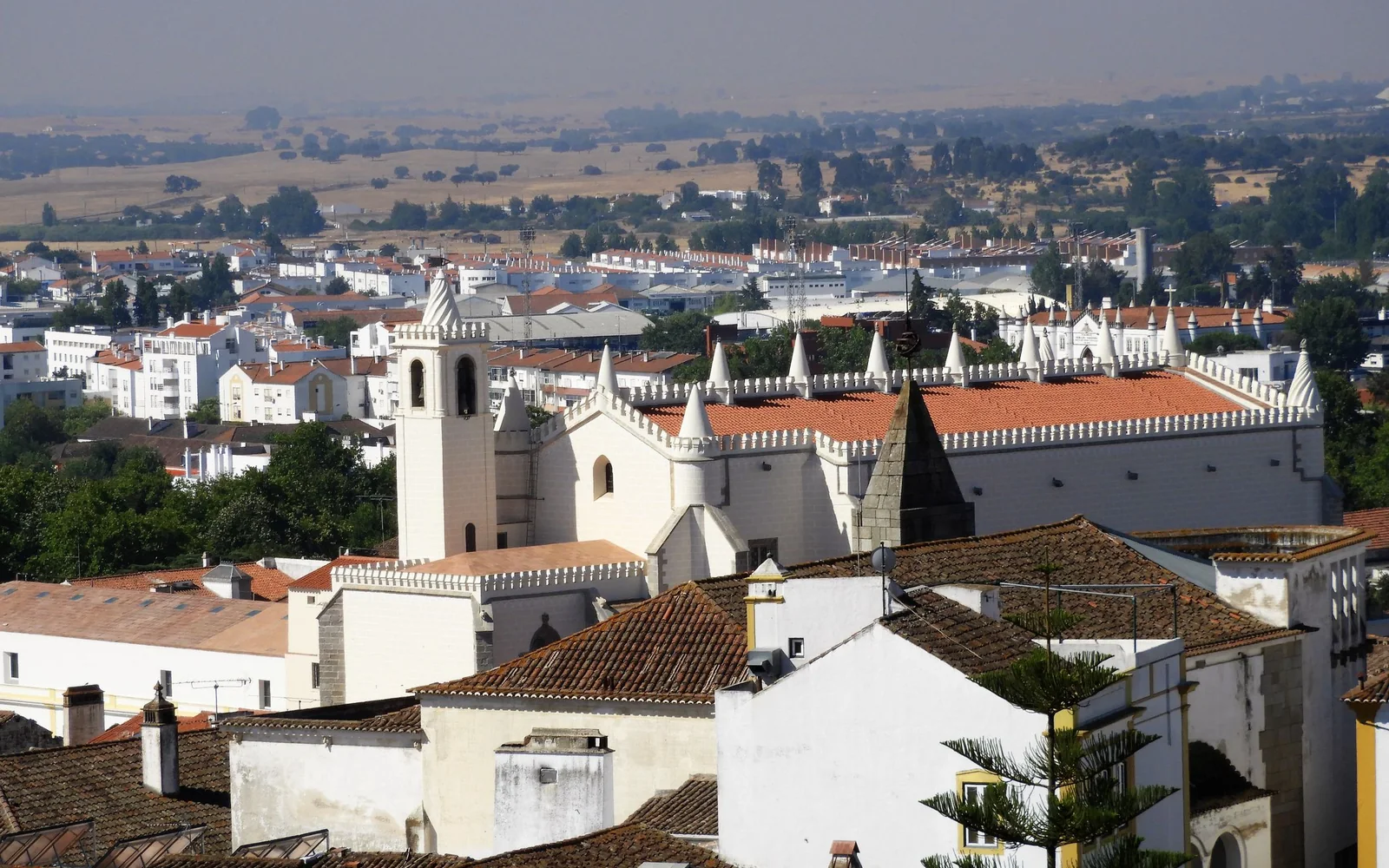
Use Praça do Giraldo as the starting point, then group the cathedral and Roman Temple area into the same part of the day. Return through the centre towards São Francisco if that is your chosen second interior. This creates a visit with a clear shape instead of repeated trips between scattered sights.
If you are visiting from Lisbon, fix the outward and return journey first and keep the last part of the afternoon flexible. An overnight stay gives you more freedom to pause during the hottest part of a warm day and walk again later. Rural Alentejo villages require a different transport plan; do not assume a short city visit also covers the surrounding countryside.
Continue planning: Plan a wider Alentejo stay · Lisbon as an arrival base · Choose between Portugal routes.
Official information: Turismo de Portugal: Évora route and access.
Roman temple and cathedral quarter
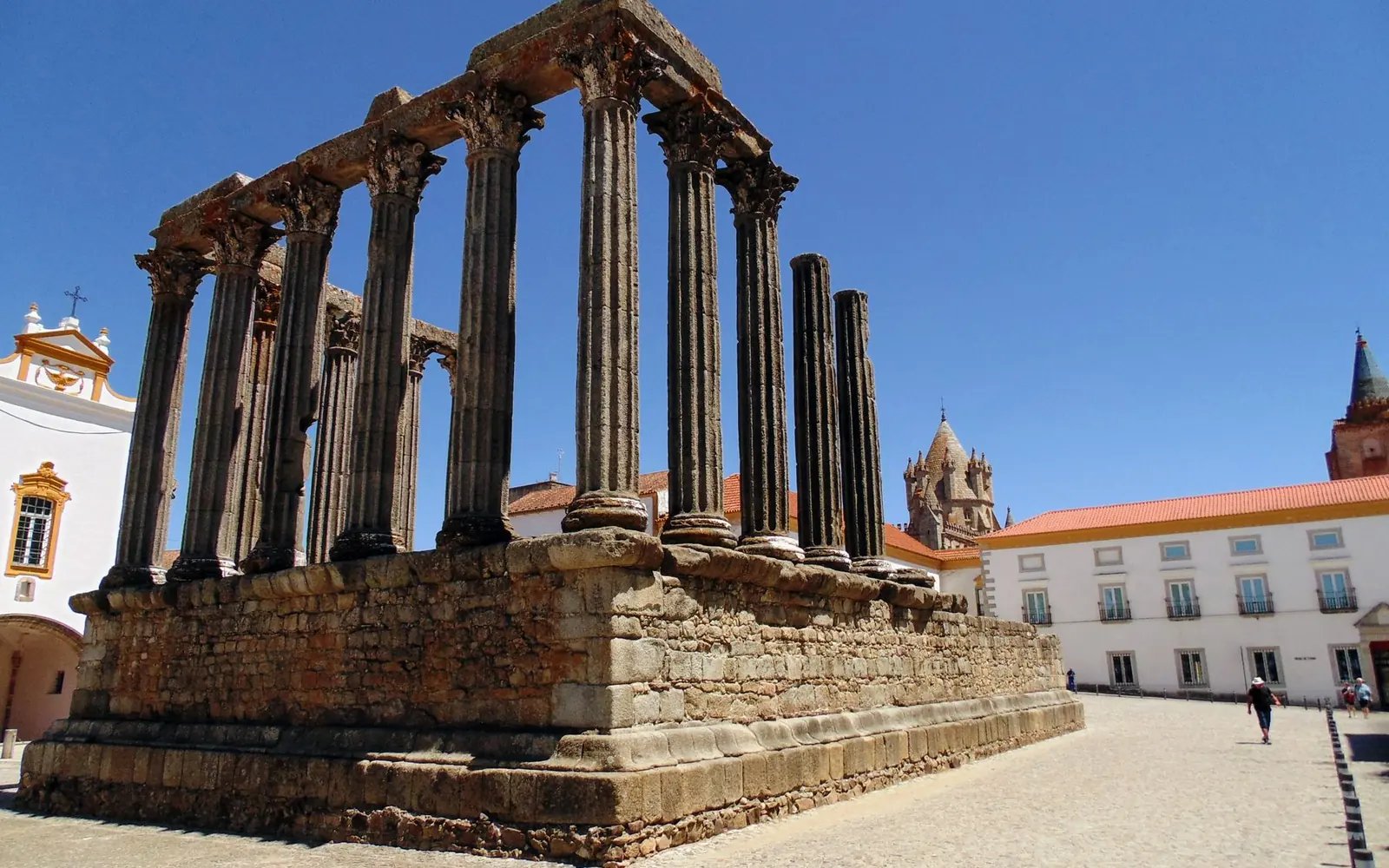
The Roman Temple stands near the highest part of the centre, beside the cathedral and former ecclesiastical buildings. These sights form a natural group. Cathedral access and rooftop arrangements can change, so check the current official information if the roof is important to you.
The surrounding lanes are worth time even without entering every museum. Whitewashed walls, granite details and small courtyards reveal the city's long use rather than one preserved historical period.
Praça do Giraldo and São Francisco
Praça do Giraldo is the central meeting point and a useful break between the upper and lower parts of town. Continue towards the Church of São Francisco for the Chapel of Bones. The chapel contains human remains displayed in a religious setting and will not suit every visitor.
The nearby Public Garden provides shade and a calmer route along part of the old wall. In summer, it is sensible to place exposed monuments early and indoor or shaded stops around the hottest hours.
A practical two-day plan
- Day one: Walk from Praça do Giraldo to the Roman Temple and cathedral. Continue through the old streets, then visit São Francisco and the Public Garden.
- Day two: Choose a city museum, the university area or a pre-arranged countryside visit. Return for dinner inside the walls.
On a day trip, do not add a distant megalithic site unless transport is confirmed and still leaves enough time for the city.
Where to stay
Inside the walls, sights and restaurants are close, but parking and vehicle access can be limited. Just outside the walls often gives easier parking and remains within walking distance. Check the paving and steps at heritage properties if accessibility or heavy luggage is a concern.
Alentejo food
Regional cooking uses bread, olive oil, herbs, pork, lamb and seasonal produce. Açorda and migas appear in different forms, while local cheeses and wines reflect the wider Alentejo. Meals are part of the reason to stay overnight, since a hurried lunch between monuments misses the region's slower dining rhythm.
Arriving and getting around
Buses and trains connect Évora with Lisbon, though frequencies and journey patterns differ. Check current times in both directions before committing to a day trip. The historic centre is walkable and a car adds little inside the walls.
For rural sites, do not rely on the city bus network without confirming the exact stop and return. Tours vary in whether they include standing stones, wineries or villages.
Weather and season
Summer afternoons can be very hot, with strong sun on pale stone and little shade. Spring and autumn suit long walks and countryside combinations. Winter brings shorter days and occasional rain but a quieter centre.
Access
Main squares are relatively level, but cobbles, thresholds and steps appear across the old city. The cathedral, walls and historic buildings have different access limits. Confirm individual sites rather than assuming the compact centre is fully accessible.
Common planning mistakes
- Do not schedule the entire heritage centre for the hottest part of a summer day.
- Do not assume countryside monuments have frequent public transport.
- Do not drive through restricted old-town streets without checking access.
- Allow time for regional food instead of treating Évora as a monument checklist.
Places to add to your map
- Roman Temple: Roman landmark at the highest part of the centre.
- Évora Cathedral: Cathedral beside the Roman temple area.
- Chapel of Bones: Chapel within the Church of São Francisco.
- Praça do Giraldo: Main square in the historic centre.
- Public Garden: Shaded garden near São Francisco.
Open the route planner to place these stops in a wider Portugal trip.
Plan nearby destinations
Questions about Évora
Can Évora be visited as a day trip?
Yes. The main city sights fit into a full day, but an overnight stay gives cooler morning and evening hours and time for a slower meal.
Do I need a car in Évora?
No for the historic centre. A car or organised excursion is useful for megalithic sites, wineries and rural places outside the city.
Is the Chapel of Bones suitable for children?
It contains visible human remains and may unsettle some visitors. Adults should decide based on the child and explain the setting before entering.
When is walking most comfortable?
Morning and late afternoon are better in hot months. Shade is limited on some stone streets and around exposed monuments.
Sources and updates
This guide was last reviewed on 28 August 2026. Transport, access and opening arrangements can change, so check the official source before travel.
- CP passenger information, Comboios de Portugal
- Évora World Heritage, Turismo de Portugal
- Évora municipality, Câmara Municipal de Évora
Related places to consider
These guides can help you place Évora within a wider route.