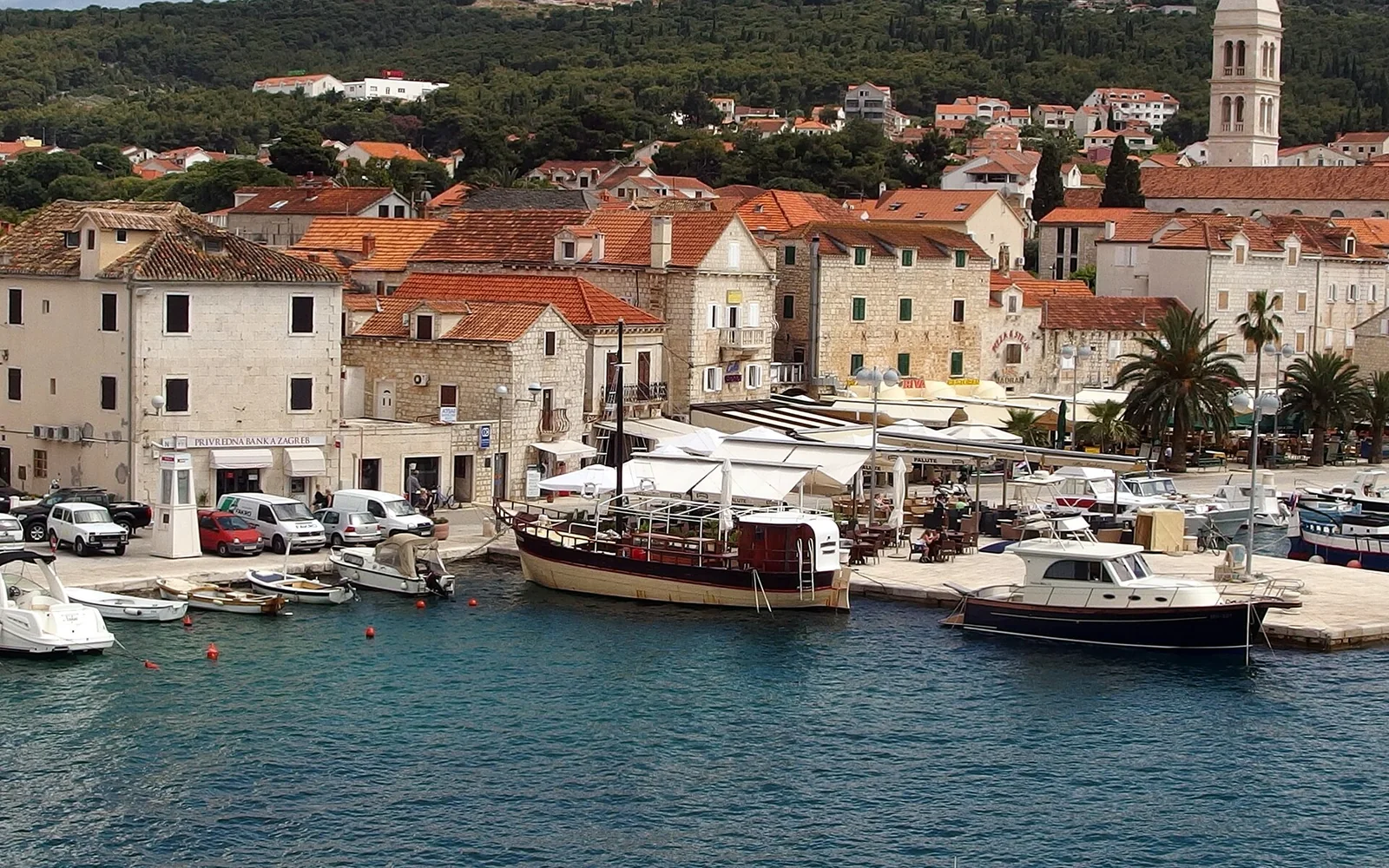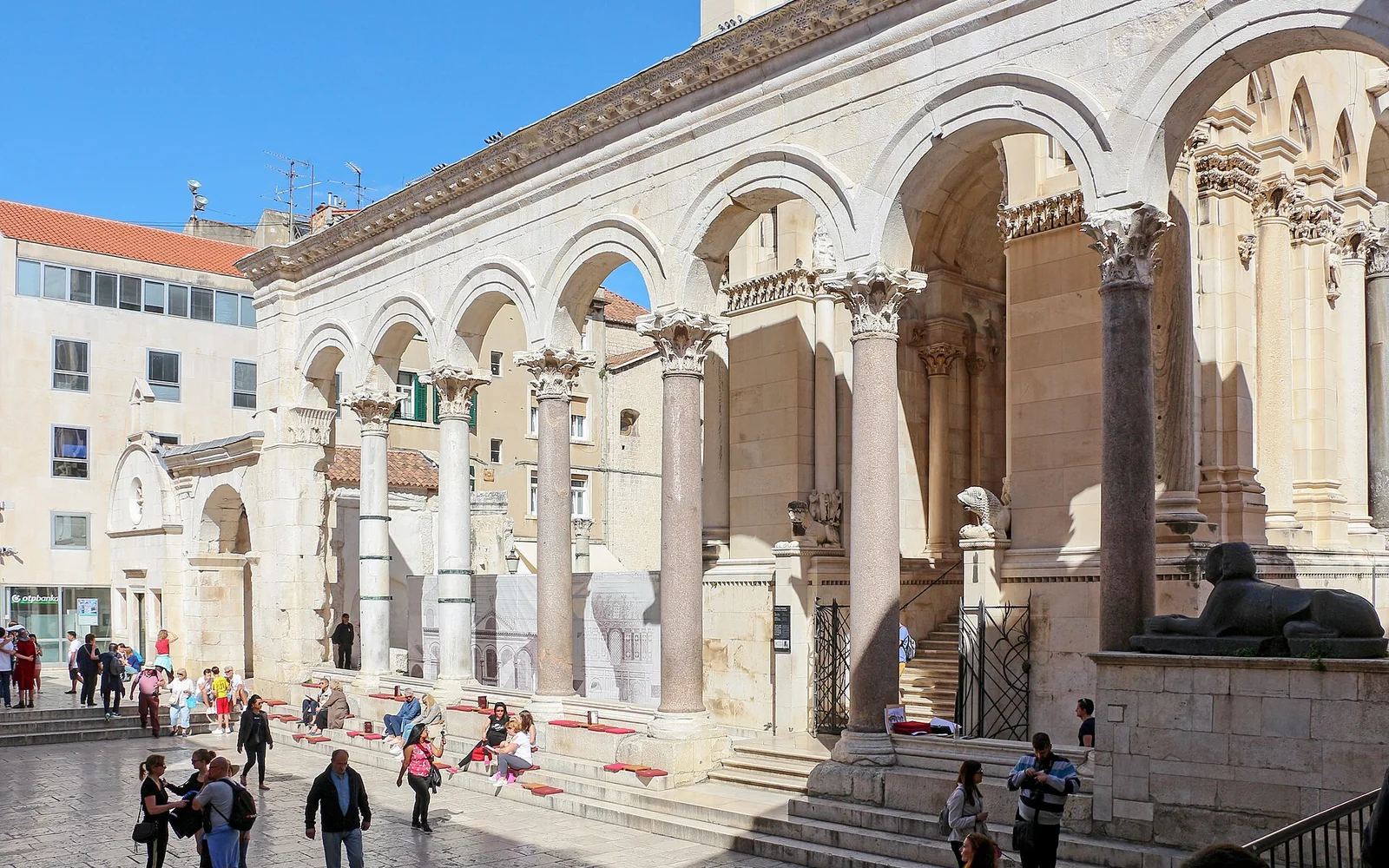
Bol has enough depth for more than a photograph of Zlatni Rat. The old village, waterfront, Dominican Monastery area and a chain of smaller beaches make it a practical southern Brač base.
Start with what makes Bol distinct
Bol has enough depth for more than a photograph of Zlatni Rat. The old village, waterfront, Dominican Monastery area and a chain of smaller beaches make it a practical southern Brač base.
Stay two or three nights to see the village at quieter hours, use more than one beach and keep a weather alternative. Hiking towards Vidova Gora is a separate mountain outing, not a casual extension of a beach walk.
Zlatni Rat
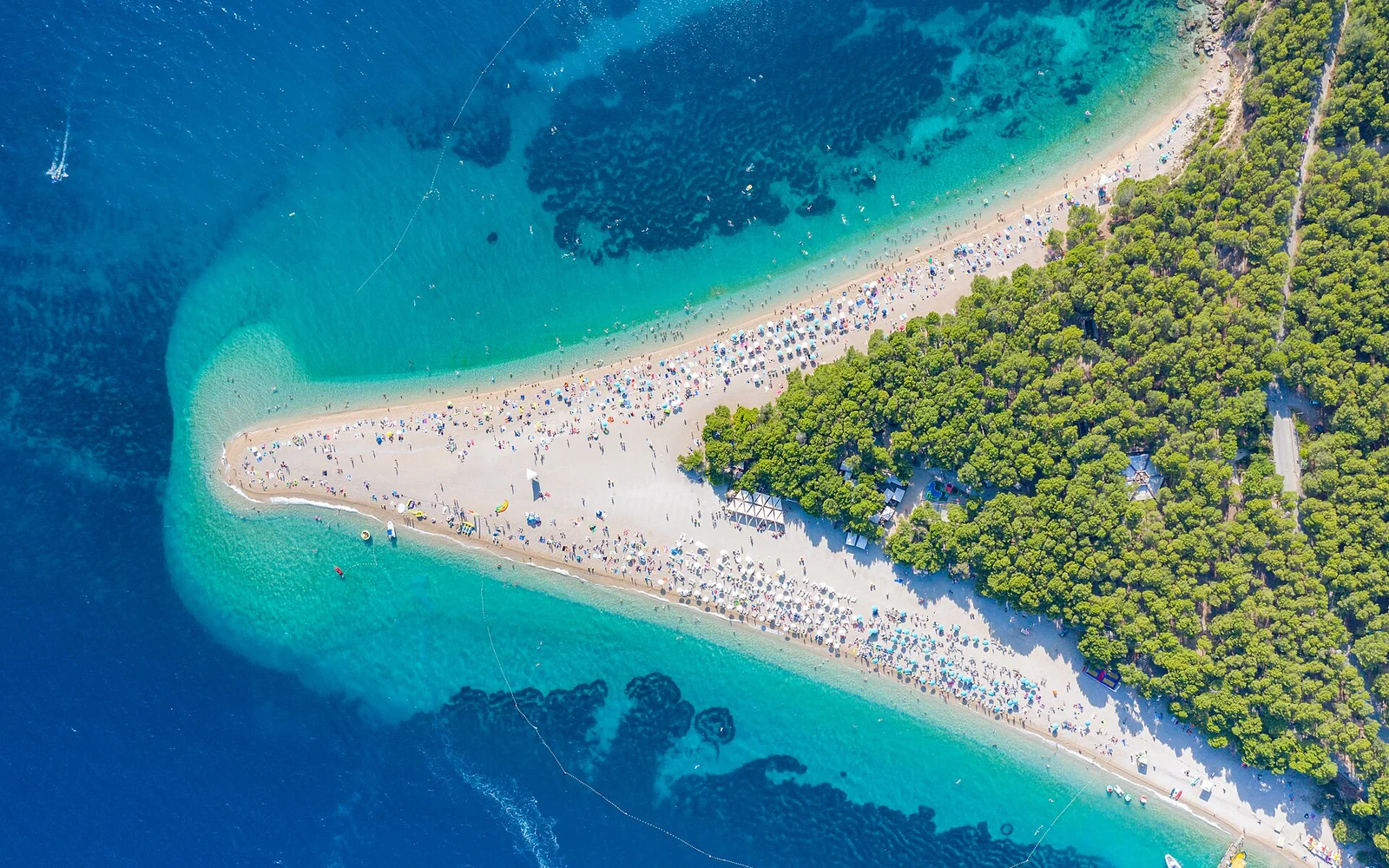
The pebble spit changes shape with wind and currents. Its tip and sides can have different water conditions. Follow beach flags and local safety instructions, especially when wind sports are active.
Bol village and coast
Walk the shaded promenade between the centre and Zlatni Rat, then explore the eastern waterfront and monastery area. Smaller beaches may be calmer than the main spit.
Vidova Gora
The high ridge above Bol needs proper route research, footwear, water and a weather check. Some approaches are much longer and steeper than they appear from the coast.
Build a realistic visit to Bol
Day 1: explore Bol village, the eastern waterfront and a nearby beach.
Day 2: walk the promenade to Zlatni Rat and stay only while conditions suit.
Day 3: choose a prepared mountain walk, boat outing or slower beach day.
Arrive and move around Bol
Selected passenger services arrive in Bol, while many vehicle-ferry journeys use Supetar on the north coast. Buses connect Bol with Supetar and other settlements on a limited schedule.
Bol is walkable along the waterfront. Buses and taxis serve the wider island. A car helps with remote villages but is unnecessary for the town, where parking is limited near popular beaches.
Food and local stops in Bol
Look for Brač lamb, sheep cheese, olive oil and fresh fish. The centre has the widest choice, while seasonal beach venues should not replace a village meal if local cooking matters.
Choose the right conditions for Bol
Summer suits swimming and water sports but brings strong demand and busy beaches. Late spring and September offer calmer walking conditions, though direct sailings and beach services may reduce.
The waterfront promenade is broad in many sections. Beaches are pebbled, and old village lanes or mountain paths are less accessible. Ask about step-free routes and beach access equipment.
Wind can change swimming and boat plans quickly. Zlatni Rat has little natural shade on the spit. Do not start a mountain route late or without enough water.
Continue from Bol
The rest of Brač deserves an island guide. Supetar, inland villages and the north coast require separate transport time. Split is the main mainland gateway.
Continue planning
Questions about Bol
Is Bol only for Zlatni Rat?
No. Bol has an old village, waterfront, smaller beaches, cultural sites and access to the island interior.
Can I reach Bol without a car?
Yes by selected passenger ferries or by bus from Supetar. Check the current connection before choosing a flight or ferry.
Is Zlatni Rat a sandy beach?
No. It is a pebble spit shaped by wind and currents. Water conditions can differ on each side.
Can I hike Vidova Gora from Bol?
Yes on established routes, but it is a serious uphill walk. Check the route, weather and daylight, and carry suitable equipment and water.
Sources and updates
This guide was last reviewed on 3 September 2026. Transport, access and opening arrangements can change, so check the official source before travel.
- Official Croatia travel planning, Croatian National Tourist Board
- Jadrolinija ferry information, Jadrolinija
- Croatian rail timetable, HŽ Passenger Transport
- Split-Dalmatia regional information, Split-Dalmatia County Tourist Board
- Official Bol visitor information, Bol Municipality
Related places to consider
These guides can help you place Bol within a wider route.