
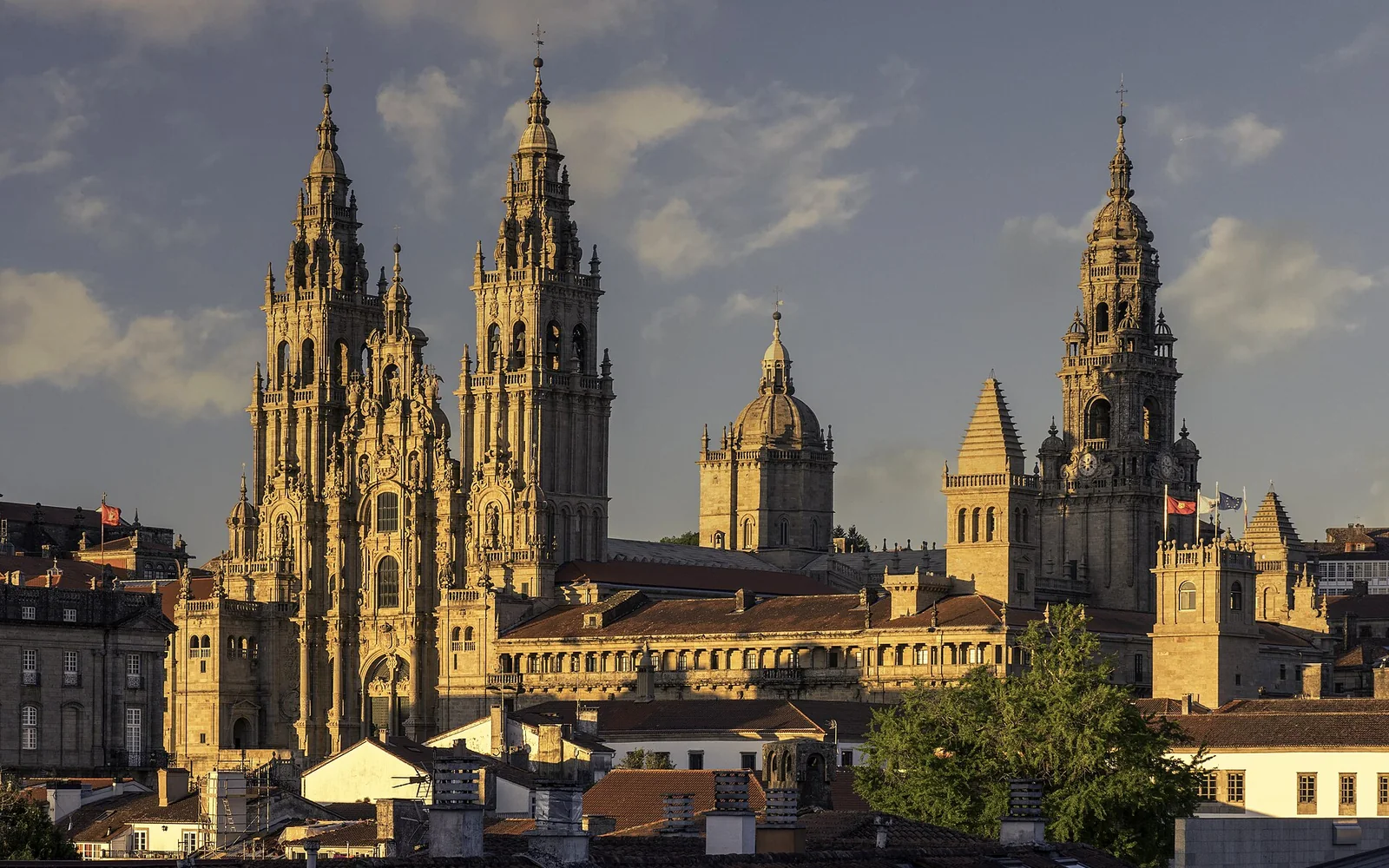
Santiago deserves time after the final Camino steps. Praza do Obradoiro, the cathedral complex, food market and university streets create a compact city whose stone lanes change character in rain and evening light.
One day covers the headline route, but two days allows the cathedral and museums to be visited without competing with every arriving group. It also leaves room for Galician meals at a sensible pace.
What to prioritise
Cathedral and its squares
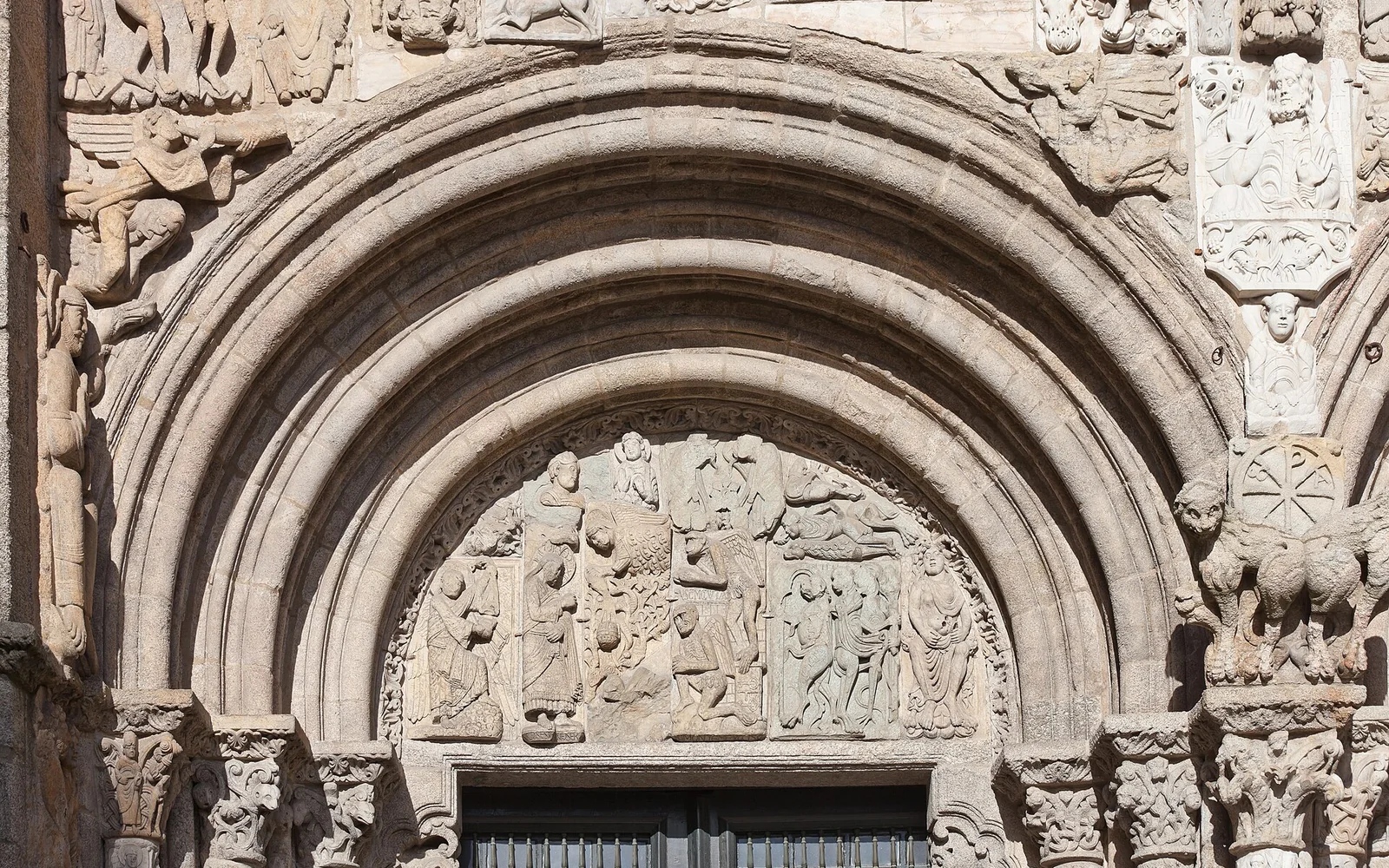
Obradoiro is only one side of the complex. Walk around Praterías, Quintana and Inmaculada to understand the cathedral’s place in the old city.
Old-town arcades
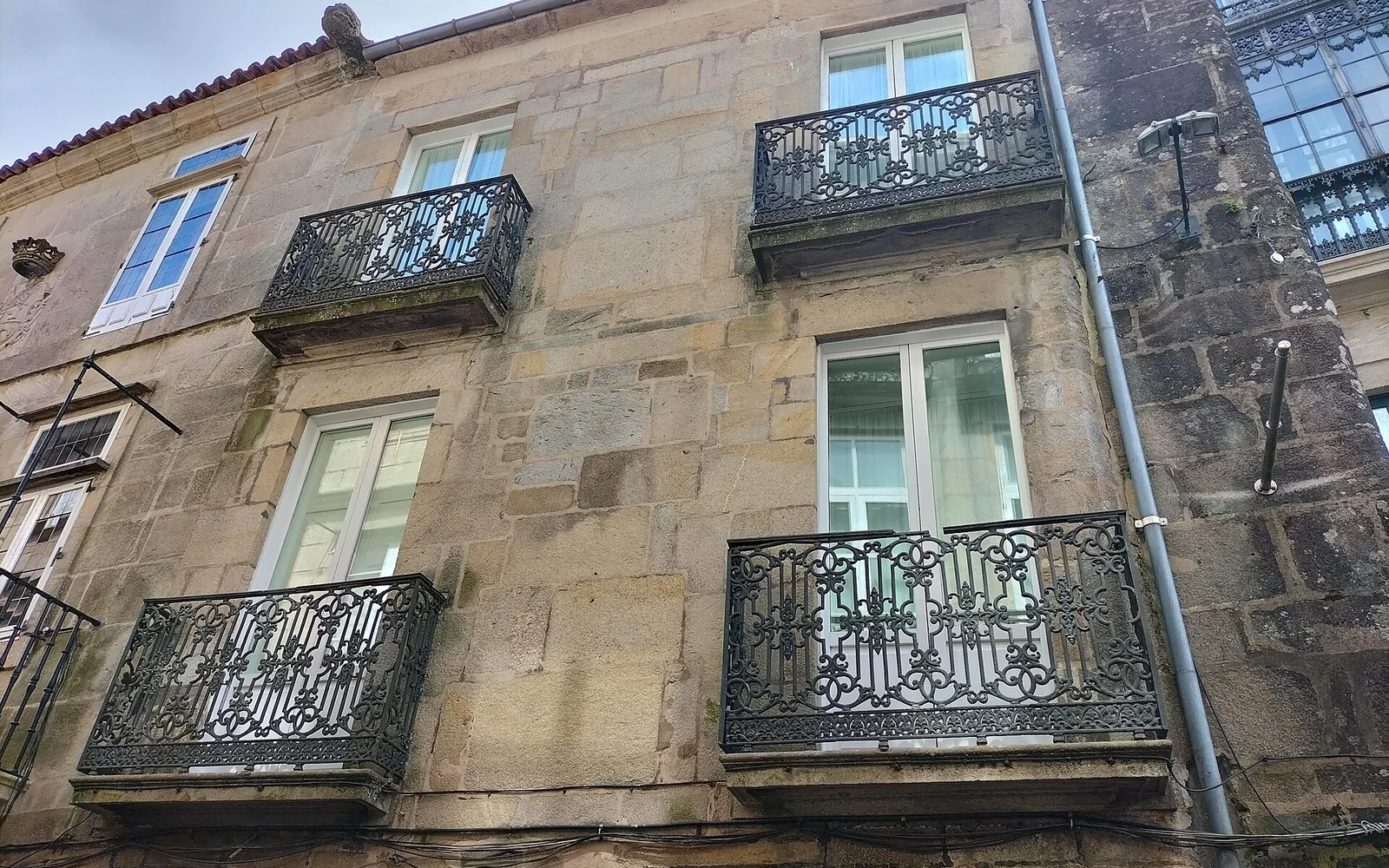
Rúa do Vilar and neighbouring streets provide shelter and connect the main squares with shops, cafés and university buildings. Wet paving requires shoes with grip.
Market and Galician food
Mercado de Abastos is busiest earlier in the day. Use it to understand local seafood, cheese and produce before choosing lunch nearby.
Where to stay
The old-town edge provides atmosphere with easier vehicle access than the deepest pedestrian lanes. Ensanche is practical for the train station and modern services, with a short walk uphill to the historic centre.
A practical itinerary
- Day 1: circle the cathedral squares, visit the main interior at a suitable time and follow Rúa do Vilar through the old city.
- Day 2: visit the market, choose a museum or university route, and keep time for a longer Galician lunch.
Getting there
The airport is linked by bus and road transport. Trains and coaches connect Santiago with Galician and mainland cities. Pilgrims arriving on foot should still plan baggage, accommodation check-in and onward transport.
Getting around
The centre is compact and best explored on foot. Buses serve the airport and outer districts. Granite surfaces become slippery in rain, and the route between the station and old town climbs.
Food to look for
Look for pulpo á feira, empanada, local cheeses, seafood and tarta de Santiago. Market-based restaurants and traditional taverns vary in opening pattern, so do not leave the main meal too late without checking.
When to visit
Rain is possible throughout the year. Summer has longer days and more pilgrims, while winter is quieter, damp and sometimes cold. Holy years and religious events increase demand significantly.
Accessibility
Main squares are broad but historic paving is uneven. Cathedral access changes with services and works, so use current official information. Taxis can reduce the uphill route from transport terminals.
Practical limits
The botafumeiro is not guaranteed at every service, and access should never be promised. Respect worship, pilgrim ceremonies and restricted areas inside the cathedral.
Nearby places
A Coruña, Vigo and the Galician coast require separate transport planning. Santiago works as a hub, but coast trips are not interchangeable and often need most of a day.
Places to add to your map
- Praza do Obradoiro: Main cathedral square and Camino arrival point.
- Mercado de Abastos: Central food market east of the cathedral.
- Rúa do Vilar: Arcaded old-city street linking major squares.
Open the route planner to place these stops in a wider Spain trip.
Continue planning
Questions about Santiago de Compostela
How many days do I need in Santiago de Compostela?
Two days is ideal for the cathedral, old town, market and one museum without rushing.
Do I need to walk the Camino to visit Santiago?
No. Santiago is a major historic city open to every visitor, with rail, bus, road and air connections.
Will I see the botafumeiro?
Its use depends on the liturgical schedule and specific services. Check official cathedral information and do not treat it as guaranteed.
Sources and updates
This guide was last reviewed on 28 August 2026. Transport, access and opening arrangements can change, so check the official source before travel.
- Renfe passenger information, Renfe
- Spanish airports, Aena
- Official Santiago tourism, Santiago de Compostela Tourism
- Official Galicia tourism, Galician Tourism Agency