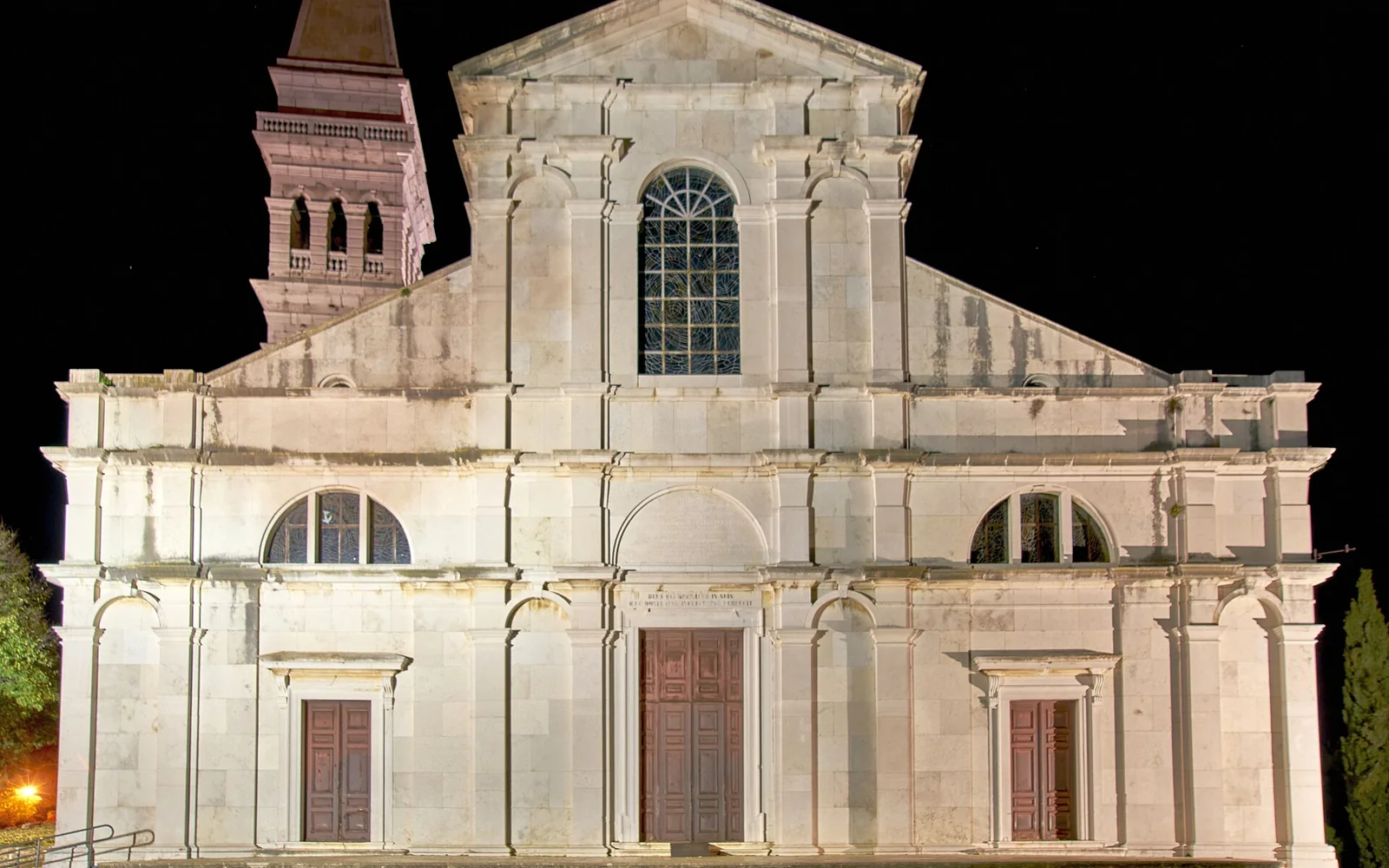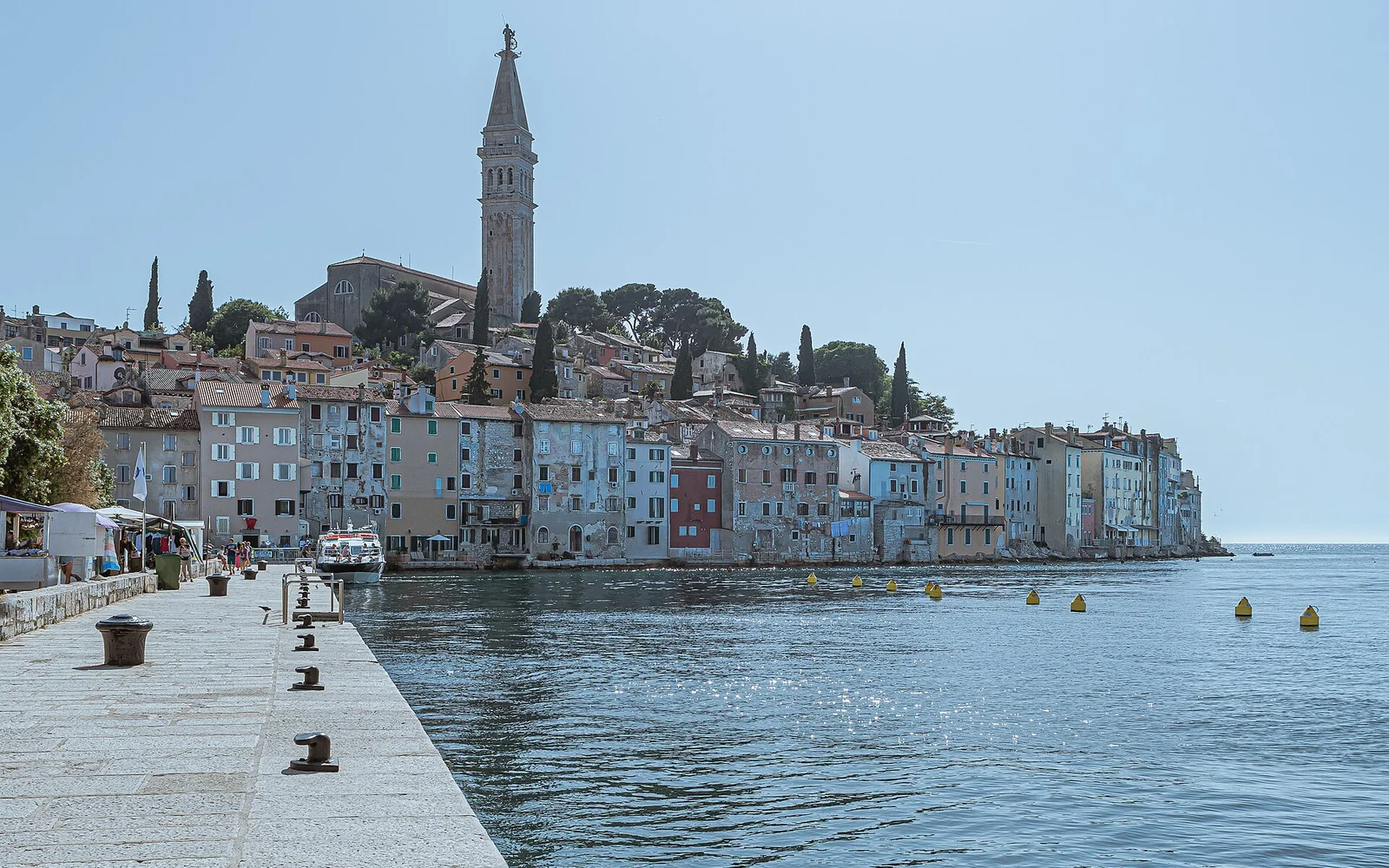
Rovinj’s old town occupies a compact peninsula crowned by St Euphemia’s Church. Its steep stone streets, harbour activity and nearby forest coast make it one of Istria’s strongest bases without requiring a long attraction list.
Start with what makes Rovinj distinct
Rovinj’s old town occupies a compact peninsula crowned by St Euphemia’s Church. Its steep stone streets, harbour activity and nearby forest coast make it one of Istria’s strongest bases without requiring a long attraction list.
Two full days allow the old town at quiet hours, a waterfront meal and one coastal walk or swim. Add another day for cycling, a boat trip with a verified operator or an inland Istrian route.
Old town slopes
Walk up through Grisia and side lanes to St Euphemia, then descend by a different route. Polished stones are slippery when wet and service vehicles can still use selected lanes early in the day.
Harbour and market
The harbour separates the old peninsula from the newer centre. Morning is best for the market and fishing activity, while evening brings heavier restaurant traffic.
Golden Cape coast
Park forest Zlatni Rt offers paths, rocky coves and shaded sections south of town. Beach access is often over stone or gravel rather than sand.
Build a realistic visit to Rovinj
Day 1: explore the old town, church area, harbour and market.
Day 2: walk or cycle through Zlatni Rt and choose a coastal swim.
Day 3: add Pula, Poreč or Motovun according to transport and interests.
Arrive and move around Rovinj
Rovinj has regional and intercity bus links but no passenger rail station in the centre. Pula Airport is the nearest major airport. Transfer and bus frequency vary by season.
The town centre is walkable. Bicycles suit the flatter coastal paths, while buses or a car are needed for wider Istria. Vehicles cannot conveniently enter much of the historic core.
Food and local stops in Rovinj
Istrian pasta, truffles, local olive oil, seafood and malvazija wine appear widely. Choose menus that identify regional ingredients rather than assuming every waterfront restaurant is local in style.
Choose the right conditions for Rovinj
May, June, September and early October often suit walking and sea time. July and August bring high demand, warm water and crowded parking. Winter is quiet with fewer visitor businesses open.
The harbour is level, but the old town is steep with uneven stone and steps. Zlatni Rt has broad paths in places, though individual coves may be difficult to reach.
Old-town accommodation can involve long luggage carries and stairs. Summer parking fills early. Book only after confirming the nearest vehicle access and check-in process.
Continue from Rovinj
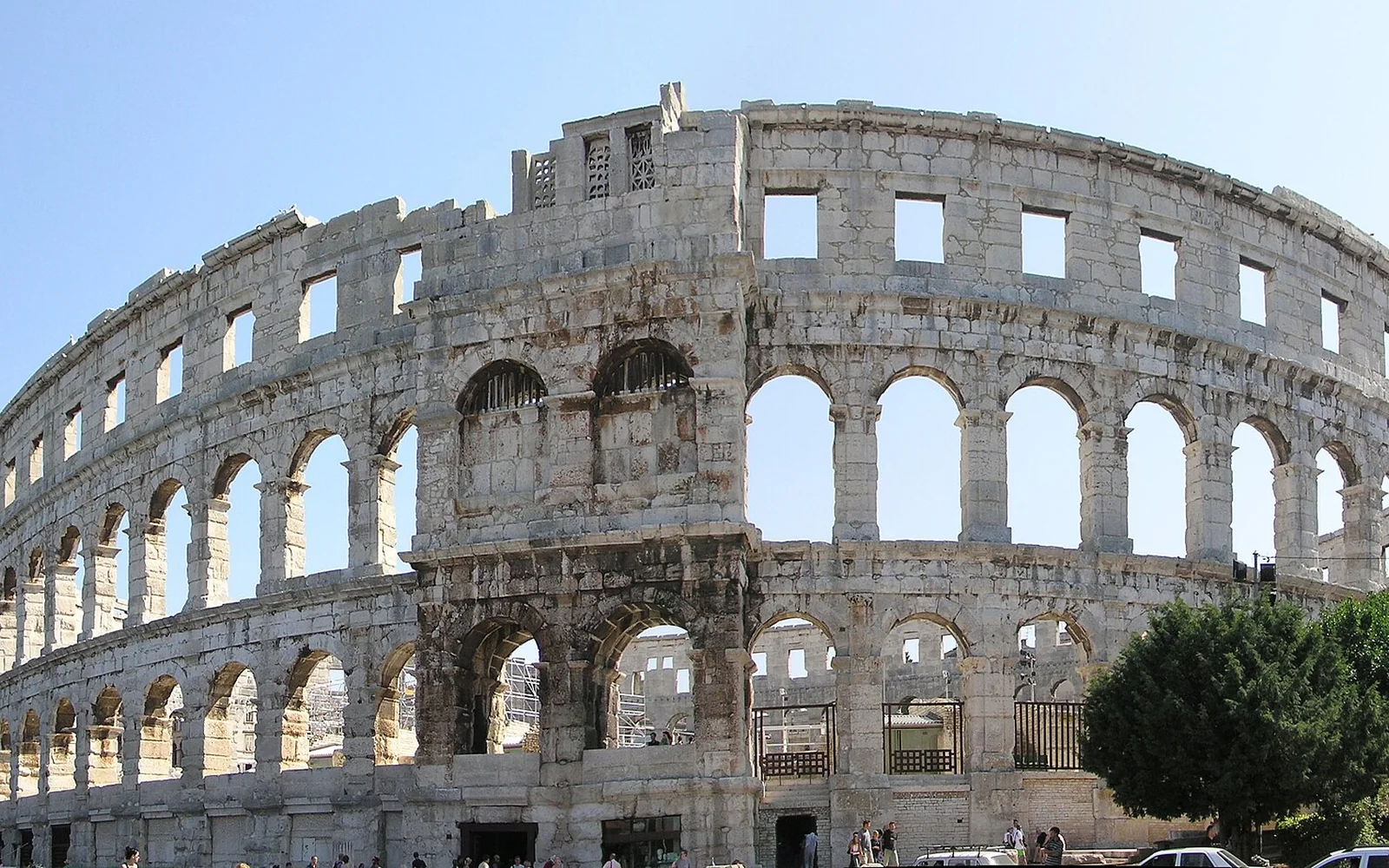
Pula, Poreč and Motovun create a balanced Istrian route. Pula is strongest for Roman history, Poreč for the Euphrasian complex, and Motovun for the inland hill country.
Continue planning
Questions about Rovinj
How many days do I need in Rovinj?
Two days cover the old town and nearby coast. Three or four days suit a slower stay or one Istrian excursion.
Do I need a car in Rovinj?
No for the town and nearby coast. A car helps with Motovun and rural Istria, while buses cover selected coastal routes.
Is Rovinj suitable for a beach holiday?
Yes if you are comfortable with rocky and pebble coves. The town also has enough history and food for a mixed trip.
Sources and updates
This guide was last reviewed on 3 September 2026. Transport, access and opening arrangements can change, so check the official source before travel.
- Official Croatia travel planning, Croatian National Tourist Board
- Croatian rail timetable, HŽ Passenger Transport
- Istria regional visitor information, Istria Tourist Board
- Official Rovinj visitor information, Rovinj Tourist Board
Related places to consider
These guides can help you place Rovinj within a wider route.