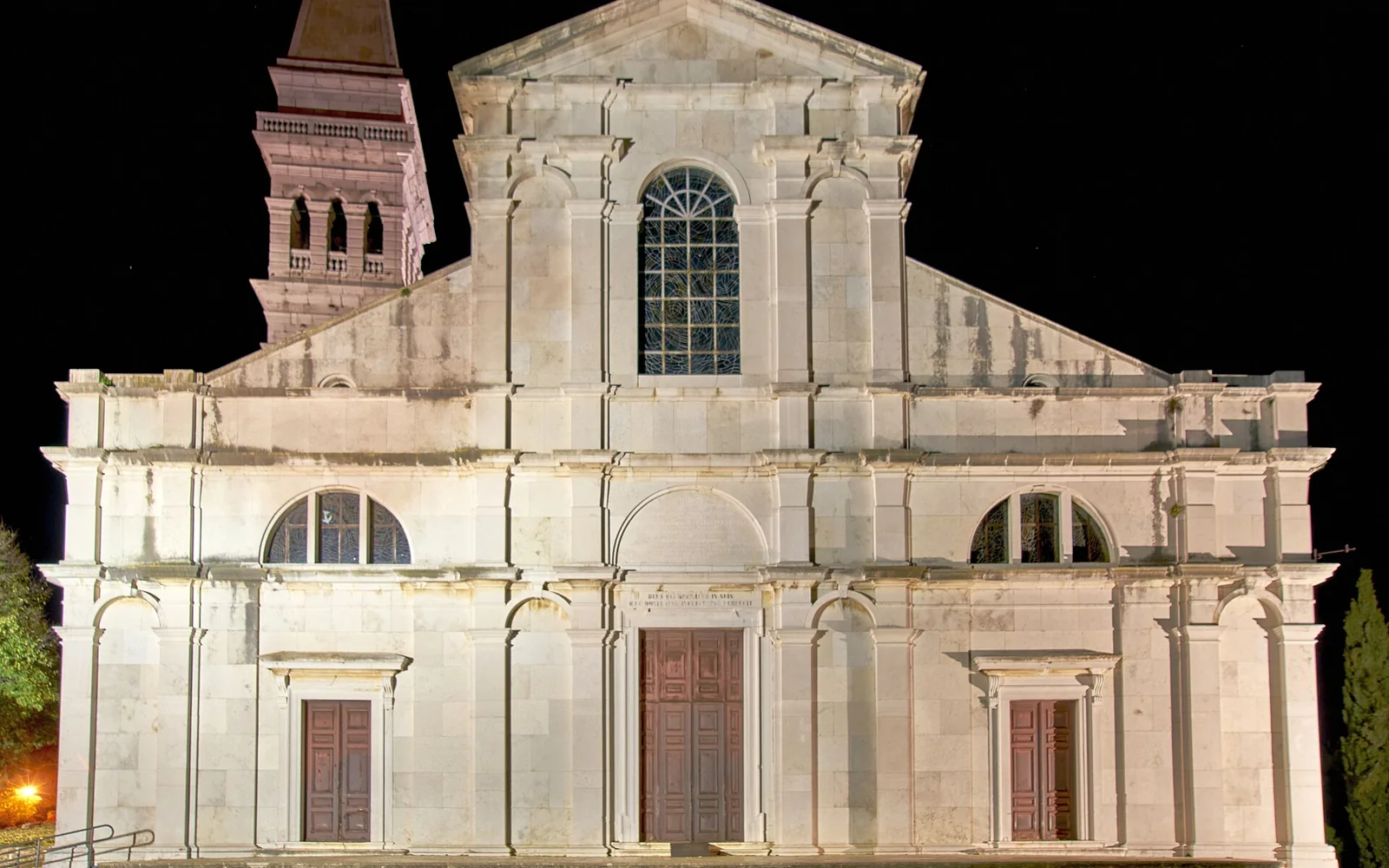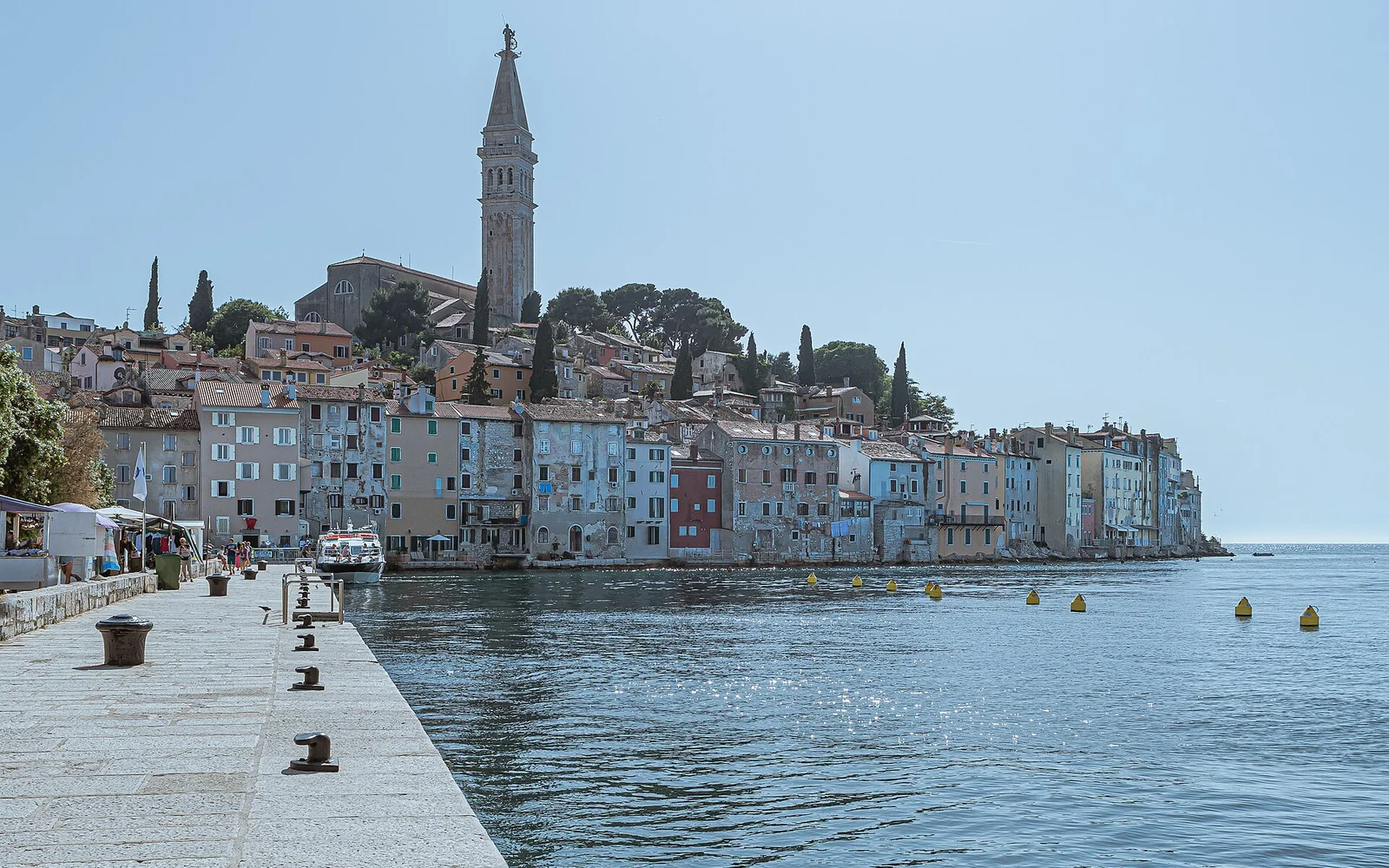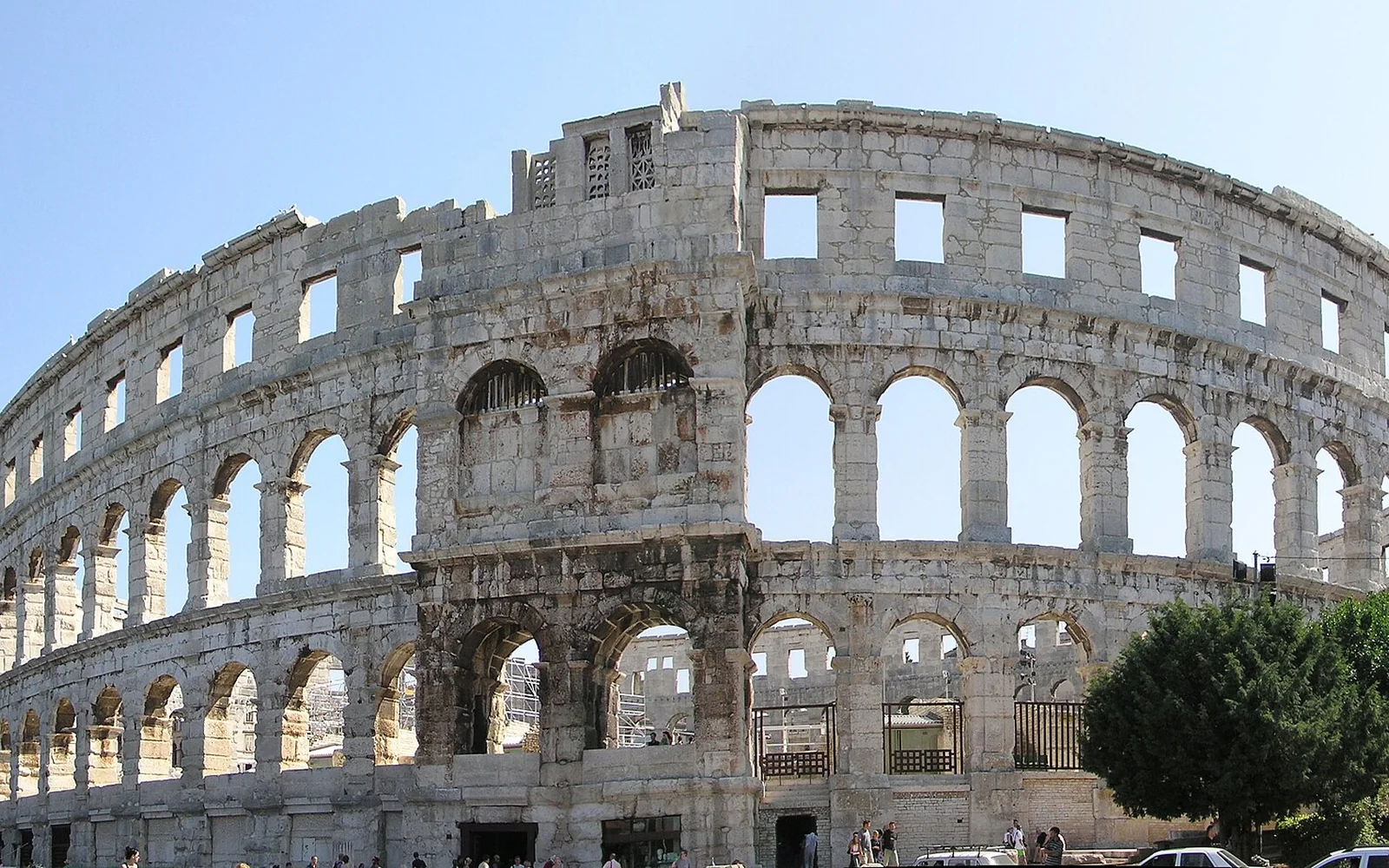
Pula’s Arena is the headline sight, but the city’s Roman arch, temple, theatre remains and market create a fuller historical route. The centre remains functional and less polished than Rovinj, which gives the two towns different roles.
Start with what makes Pula distinct
Pula’s Arena is the headline sight, but the city’s Roman arch, temple, theatre remains and market create a fuller historical route. The centre remains functional and less polished than Rovinj, which gives the two towns different roles.
Stay two nights for the Roman circuit and one coastal half day. A third day can connect Pula with Rovinj, Cape Kamenjak or another southern Istrian stop after checking transport and protected-area rules.
Roman Pula
The Arena, Arch of the Sergii, Forum and Temple of Augustus form a walk through the centre. Events can change visitor access to the amphitheatre, so check the official programme before choosing a date.
Market and city streets
Pula’s market and pedestrian centre are useful for everyday rhythm between monuments. Visit the market in the morning and allow time for small archaeological sites that are easy to miss.
The southern coast
Beach areas lie outside the old centre and vary from resort coves to rougher rocky access. Protected landscapes such as Cape Kamenjak have their own entry, driving and conservation rules.
Build a realistic visit to Pula
Day 1: visit the Arena and follow the Roman route to the Forum.
Day 2: explore the market and city centre, then choose one accessible coastal area.
Day 3: travel to Rovinj or take a carefully planned southern Istria trip.
Arrive and move around Pula
Pula has an airport, regional buses and a rail station with limited usefulness for many Croatian routes. The bus station is the main hub for Istrian connections. Check seasonal airport transport.
Central Roman sites are walkable. Local buses reach several coastal districts. A car helps around southern Istria but is unnecessary for the core and requires attention to parking rules.
Food and local stops in Pula
Look for fuži or pljukanci pasta, maneštra, seafood, Istrian olive oil and local wine. The market area is a useful starting point for fresh ingredients and casual meals.
Choose the right conditions for Pula
Spring and autumn are comfortable for ruins and city walks. Summer brings beach weather and Arena events, along with heat and busier roads. Winter is quieter with reduced coastal services.
The Arena has visitor access provisions, but ancient surfaces and steps affect some areas. Central streets are mostly manageable, while rocky beaches need site-specific checks.
Do not assume an event night includes normal daytime Arena access. Cape Kamenjak and remote beaches need sun, water and road planning. Coastal parking can fill quickly.
Continue from Pula
Rovinj is the easiest covered addition north of Pula. Poreč continues the western coast, while Motovun needs an inland road or limited bus plan.
Continue planning
Questions about Pula
Is one day enough for Pula?
One day covers the main Roman sites. Stay two days if you also want the market, museums and a coastal area.
Can I reach beaches without a car?
Local buses serve several coastal districts. Remote coves and protected areas require more planning.
Should I stay in Pula or Rovinj?
Choose Pula for Roman history and transport, or Rovinj for a compact old-town and harbour stay. A longer Istria trip can include both.
Sources and updates
This guide was last reviewed on 3 September 2026. Transport, access and opening arrangements can change, so check the official source before travel.
- Official Croatia travel planning, Croatian National Tourist Board
- Croatian rail timetable, HŽ Passenger Transport
- Istria regional visitor information, Istria Tourist Board
- Official Pula visitor information, Pula Tourist Board
Related places to consider
These guides can help you place Pula within a wider route.