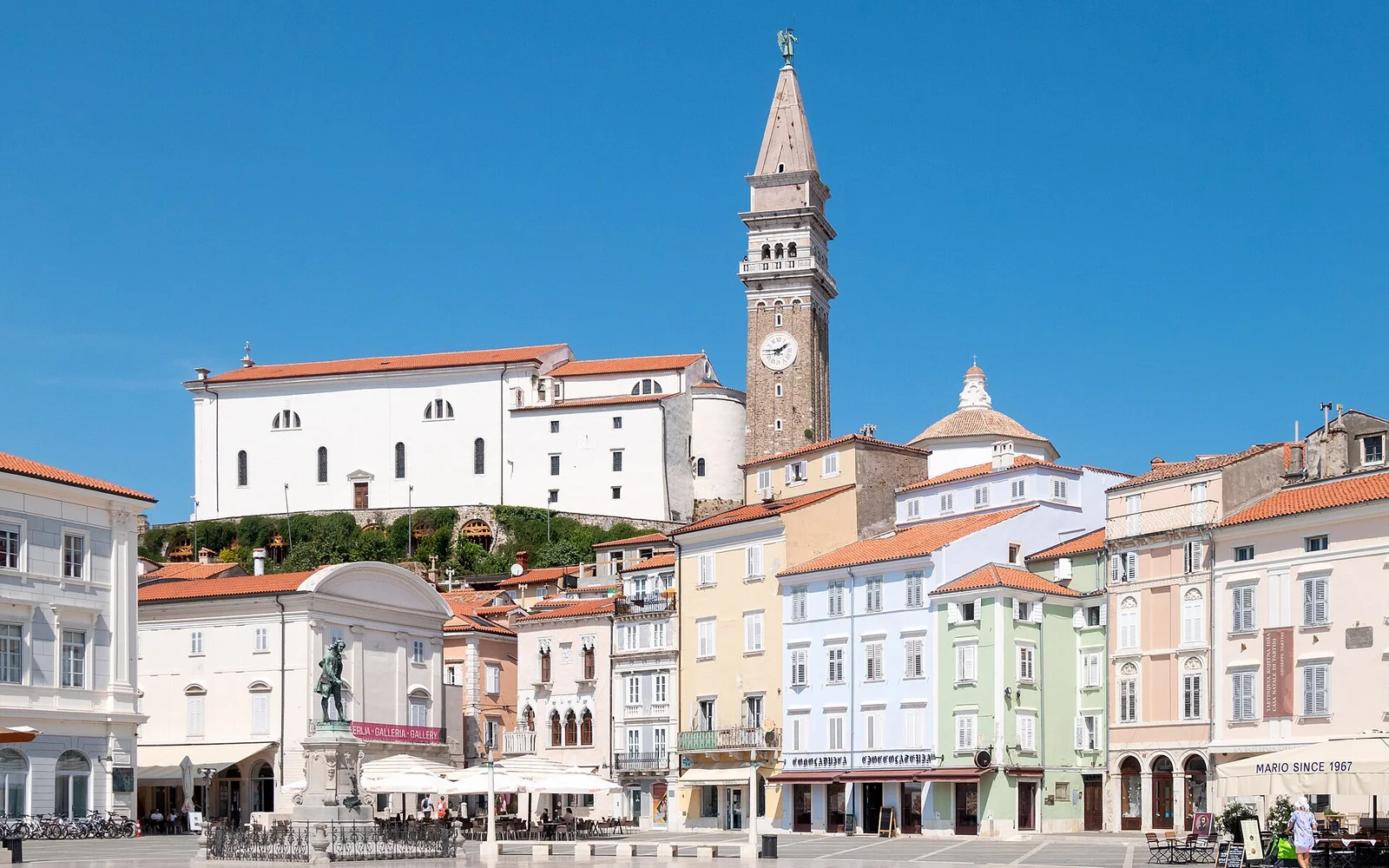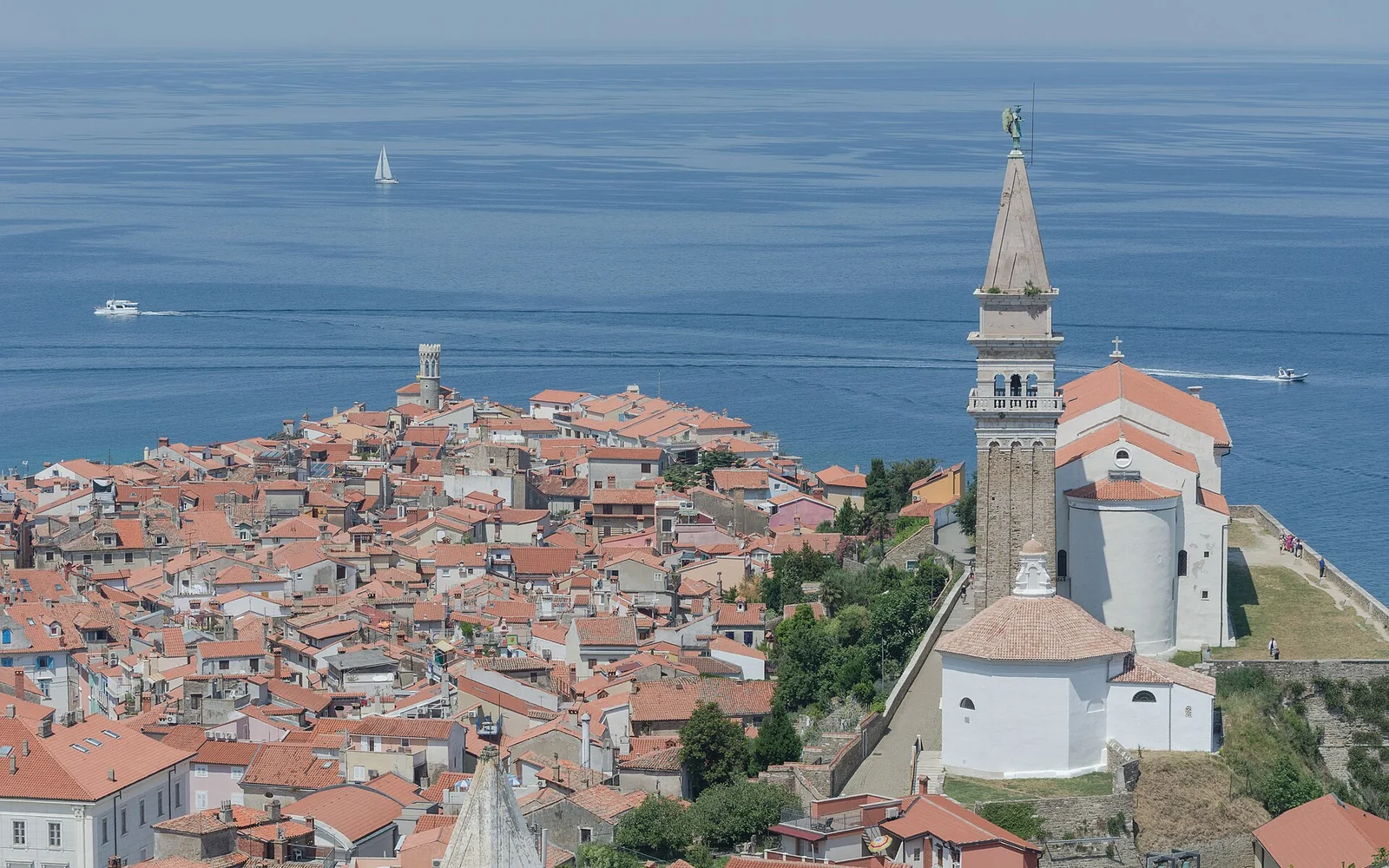
Piran’s lanes climb from Tartini Square towards St George’s Church and the remaining town walls. The compact centre is best explored on foot, with time for the waterfront rather than a checklist of monuments.
Start with what makes Piran distinct
Piran’s lanes climb from Tartini Square towards St George’s Church and the remaining town walls. The compact centre is best explored on foot, with time for the waterfront rather than a checklist of monuments.
An overnight stay changes the experience after day visitors leave. Use local buses for Portorož, Koper and coastal connections instead of bringing a car into the old town.
Tartini Square and lanes
Begin at the square, then follow smaller lanes uphill. Stone paving and steps can be slippery, especially after rain.
Walls and church views
The church terrace and accessible wall sections offer different views. Check opening and ticket information rather than assuming every tower is open.
Waterfront and swimming
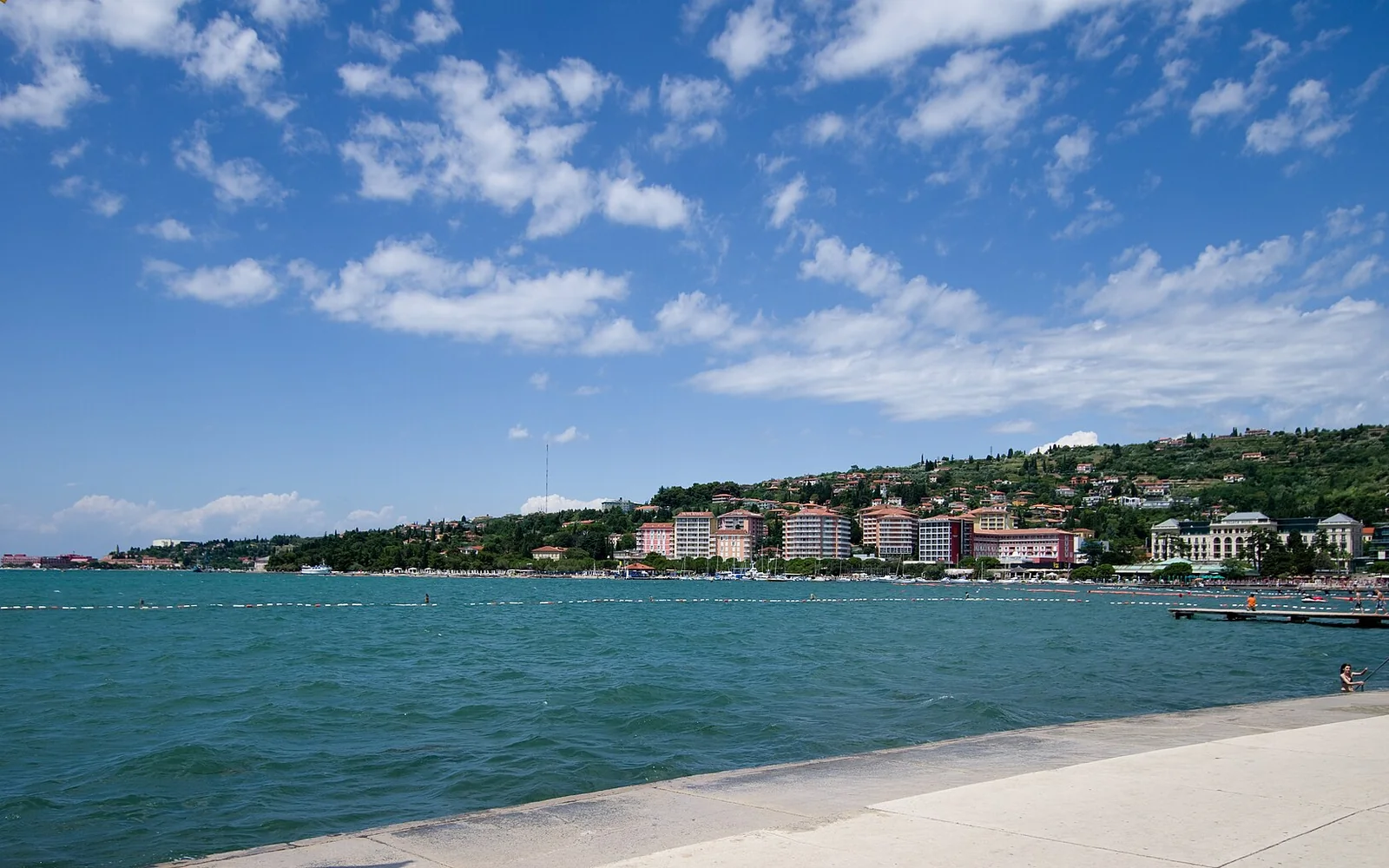
Piran has paved and rocky sea access rather than broad sand beaches. Choose marked swimming places and watch boat traffic and sea conditions.
Build a realistic visit to Piran
Day 1: explore Tartini Square, the upper lanes and waterfront.
Day 2: visit the walls, walk towards Portorož or add the salt-pan landscape.
Day 3: use a local bus for Koper or another coastal stop.
Arrive and move around Piran
Piran has no railway station. Buses connect through Koper, Portorož and other coastal hubs. Drivers use signed parking outside the restricted centre.
Walk within Piran and use local coastal buses. A car is a burden for a short stay because old-town access is restricted and parking is outside the core.
Food and local stops in Piran
Seafood, grilled fish, squid, Istrian pasta, olive oil and local wine are common. Waterfront position does not guarantee quality, so compare menus away from the main square.
Choose the right conditions for Piran
Late spring and September combine warm weather with less pressure. Summer is hot and busy. Winter is quiet, with some reduced opening and strong coastal winds.
Tartini Square and parts of the waterfront are level, but upper lanes, walls and church approaches use steep slopes or steps. Confirm hotel access before arrival.
Do not enter restricted streets by car without clear accommodation instructions. Swimming access can be slippery and exposed.
Continue from Piran
Portorož is close by local bus or coastal walk. Koper is the main rail-linked city, while Škocjan and Postojna require inland connections.
Continue planning
Questions about Piran
Can I drive into Piran old town?
General visitor access is restricted. Use signed parking and local shuttle or walking routes unless your accommodation gives authorised instructions.
How long should I stay in Piran?
Two nights allow the old town, walls, waterfront and a nearby coastal stop without rushing.
Does Piran have a beach?
It has paved, rocky and small gravel swimming areas rather than a broad sandy beach.
Sources and updates
This guide was last reviewed on 3 September 2026. Transport, access and opening arrangements can change, so check the official source before travel.
- Official Slovenia travel information, Slovenian Tourist Board
- Slovenian rail timetable and travel updates, Slovenian Railways
- Official Piran visitor information, Portorož Tourist Board
- Official Portorož visitor information, Portorož Tourist Board
Related places to consider
These guides can help you place Piran within a wider route.