
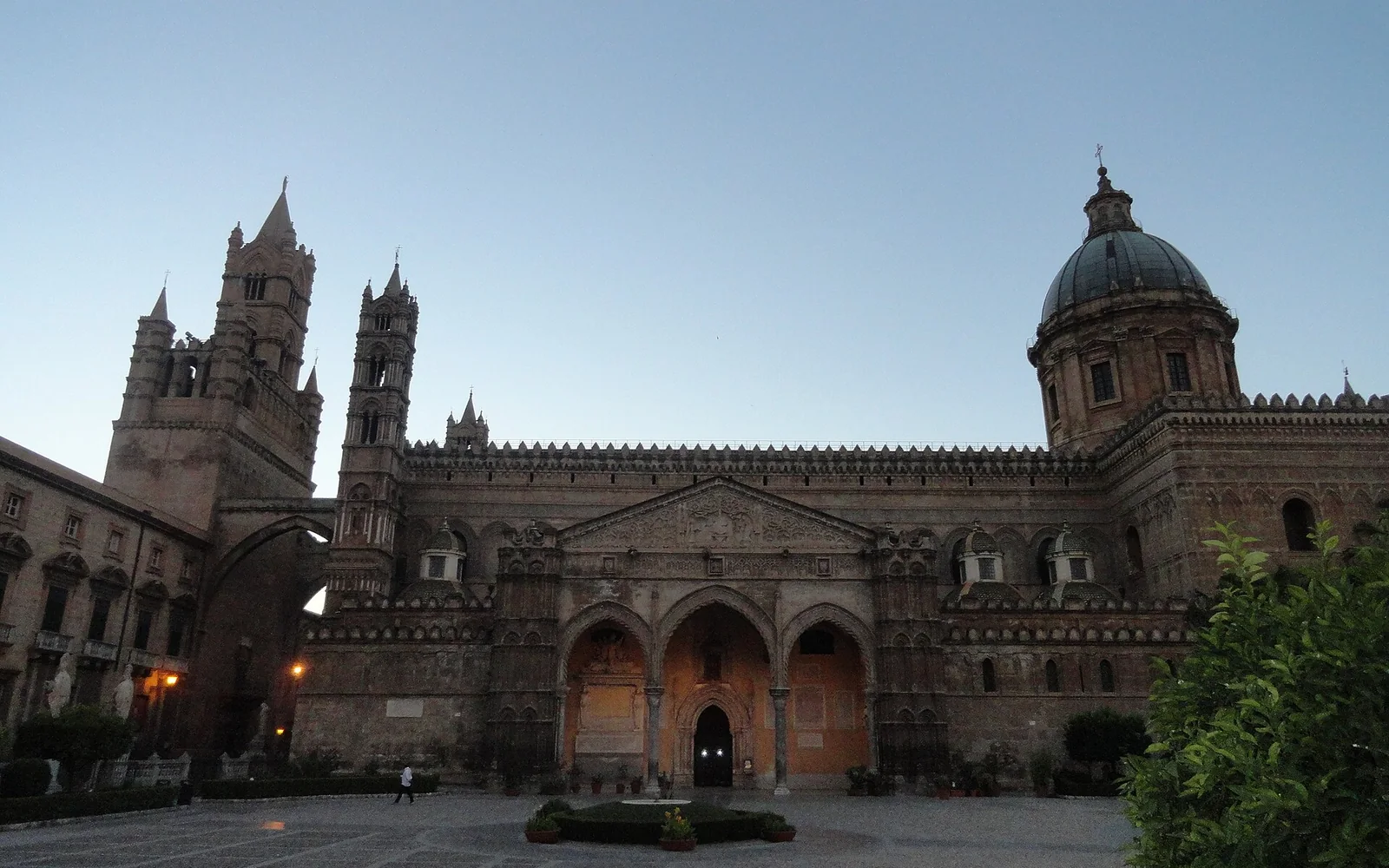
Palermo’s central route runs along Via Maqueda and Corso Vittorio Emanuele, linking Quattro Canti, churches, markets, the cathedral and the Norman Palace. Kalsa, the waterfront and Teatro Massimo add separate areas.
Link Palermo’s markets with its major monuments
Palermo’s central route runs along Via Maqueda and Corso Vittorio Emanuele, linking Quattro Canti, churches, markets, the cathedral and the Norman Palace. Kalsa, the waterfront and Teatro Massimo add separate areas.
Three days allow the main monuments and two market or neighbourhood routes. Monreale deserves its own half day, while wider western Sicily needs another base or a deliberate transport plan.
Arab-Norman Palermo
The Norman Palace and Palatine Chapel, cathedral and selected churches explain the city’s layered history. Opening arrangements vary, so check the municipality and venue pages.
Markets and central streets
Ballarò, Capo and Vucciria have different rhythms. Visit respectfully, keep valuables secure and treat them as working markets rather than staged attractions.
Kalsa and the waterfront
Kalsa combines churches, palaces, gardens and waterfront space. It works well as a slower second-day route after the monumental centre.
Build a realistic visit to Palermo
Day 1: follow Via Maqueda, Quattro Canti and the cathedral route.
Day 2: visit the Norman Palace area and Ballarò, then walk toward Kalsa.
Day 3: explore Teatro Massimo, Capo and the northern centre.
Day 4: visit Monreale or keep a slower city and waterfront day.
Arrive and move around Palermo
Palermo Centrale serves regional trains, while the airport has rail, bus and road connections. Ferries use the port north of the old centre. Match the arrival point to the accommodation before choosing a transfer.
Walking covers the central historic axes, with buses and local rail for outer areas and Monreale connections. Traffic and pavement conditions vary. Licensed taxis can simplify late or luggage-heavy journeys.
Food and local stops in Palermo
Palermo is known for arancine, panelle, sfincione, pasta con le sarde, seafood and sweets. Market stalls require the same judgement as any busy food area, including hygiene, prices and clear ordering.
Choose the right conditions for Palermo
Spring and autumn suit long street days. Summer heat can be intense, so start early and rest at midday. Winter is quieter and works well for churches, food and city history.
Major monuments publish separate access details, but old paving, market streets and kerbs vary. Use the city’s current information and contact key venues before tying the day to one entrance.
Opening hours and ticket combinations change. Use the Municipality of Palermo’s current visitor information, not old price lists. Western Sicily day trips can involve long road or bus journeys.
Continue from Palermo
Monreale is the closest major heritage outing. Cefalù has rail links east, while Trapani and the western coast are better with a separate plan. The wider island belongs in the Sicily guide.
Continue across western Sicily
Palermo travel questions
How many days do I need in Palermo?
Three full days cover the main heritage route, markets and Kalsa. A fourth allows Monreale or a slower city day.
Is Palermo walkable?
The central historic axes are walkable, but heat, traffic, paving and longer trips to outer sights require buses, taxis or careful timing.
Should I stay in Palermo for all of western Sicily?
It works for Monreale and selected rail trips. A broader west-coast or archaeological route benefits from another base.
Sources and updates
This guide was last reviewed on 3 September 2026. Transport, access and opening arrangements can change, so check the official source before travel.
- Official Italian tourism information, Italian Ministry of Tourism
- Trenitalia passenger information, Trenitalia
- Official Sicily visitor information, Regione Siciliana
- Official Palermo visitor information, Municipality of Palermo
- Italian cultural heritage information, Italian Ministry of Culture