
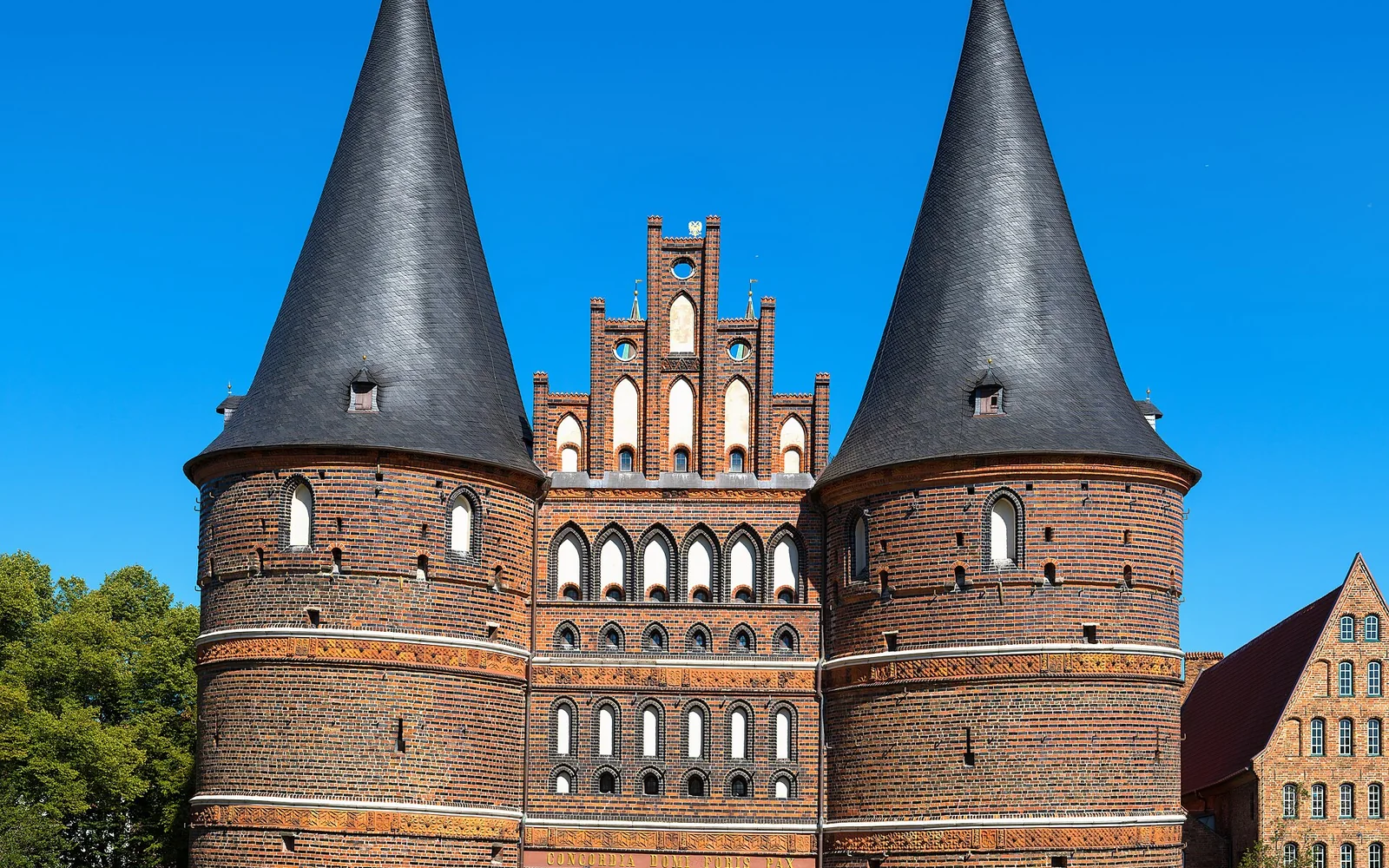
The Holstentor and salt warehouses introduce Lübeck’s trading history, but the old-city island extends through the market, St Mary’s Church, the European Hansemuseum and residential lanes.
Read the old-city island as more than one gate
The Holstentor and salt warehouses introduce Lübeck’s trading history, but the old-city island extends through the market, St Mary’s Church, the European Hansemuseum and residential lanes.
Two days allow the main heritage route and one museum. A third can add Travemünde on the Baltic or a slower courtyard and literature trail.
Enter through the western gateway
The Holstentor, salt warehouses and Trave views explain the city’s relationship with trade before the walk reaches the market.
Choose one deep museum visit
The European Hansemuseum and literature houses have different focuses and need proper time.
Look into the lanes and courtyards
Small passages reveal Lübeck’s residential history, but visitors should respect private homes and signed access.
Combine Hanseatic history with quieter courtyards
Day 1: walk from the station through Holstentor to the market and main churches.
Day 2: visit the European Hansemuseum and follow the Trave and courtyard lanes.
Day 3: travel to Travemünde or explore the literature museums.
Walk from the station and use buses for outer stops
Regional and selected long-distance trains reach Lübeck Hauptbahnhof, a short walk west of the old-city island. Hamburg is the main wider rail gateway.
The old city is compact and walkable. Buses connect the station, outer districts and Travemünde, while river trips are seasonal.
Food and local stops in Lübeck
Lübeck is associated with marzipan, but northern fish dishes, bakeries, cafés and modern restaurants deserve equal space in the plan.
Check museum days and coastal weather
Late spring to early autumn suits river and Baltic extensions. Winter is quiet outside the Christmas market period and works well for museums.
The centre includes cobbles and historic thresholds. Museums and tourism services publish access information, and buses can reduce walking from the station.
Church services, museum days and courtyard privacy affect access. Travemünde is a separate district and should not be treated as a quick old-town walk.
Add Hamburg or a Baltic outing
Hamburg is the easiest large-city connection. Travemünde provides a Baltic extension, while Kiel and the North Sea require separate northern routes.
Continue through northern Germany
Lübeck visit questions
How many days do I need in Lübeck?
Two days cover the main old-city route and one substantial museum. Add a third for Travemünde or more literature and courtyard sites.
Can I visit Lübeck from Hamburg?
Yes by regional train. An overnight stay gives time for the Hanseatic museums and quieter evening streets.
Is Lübeck old town walkable?
Yes, the island is compact. Cobbles, gradients and historic entrances still need consideration for accessible routes.
Sources and updates
This guide was last reviewed on 3 September 2026. Transport, access and opening arrangements can change, so check the official source before travel.
- Germany travel planning, German National Tourist Board
- DB passenger information, Deutsche Bahn
- Official accessible travel guidance for Germany, German National Tourist Board
- Official Lübeck visitor information, Lübeck and Travemünde Marketing