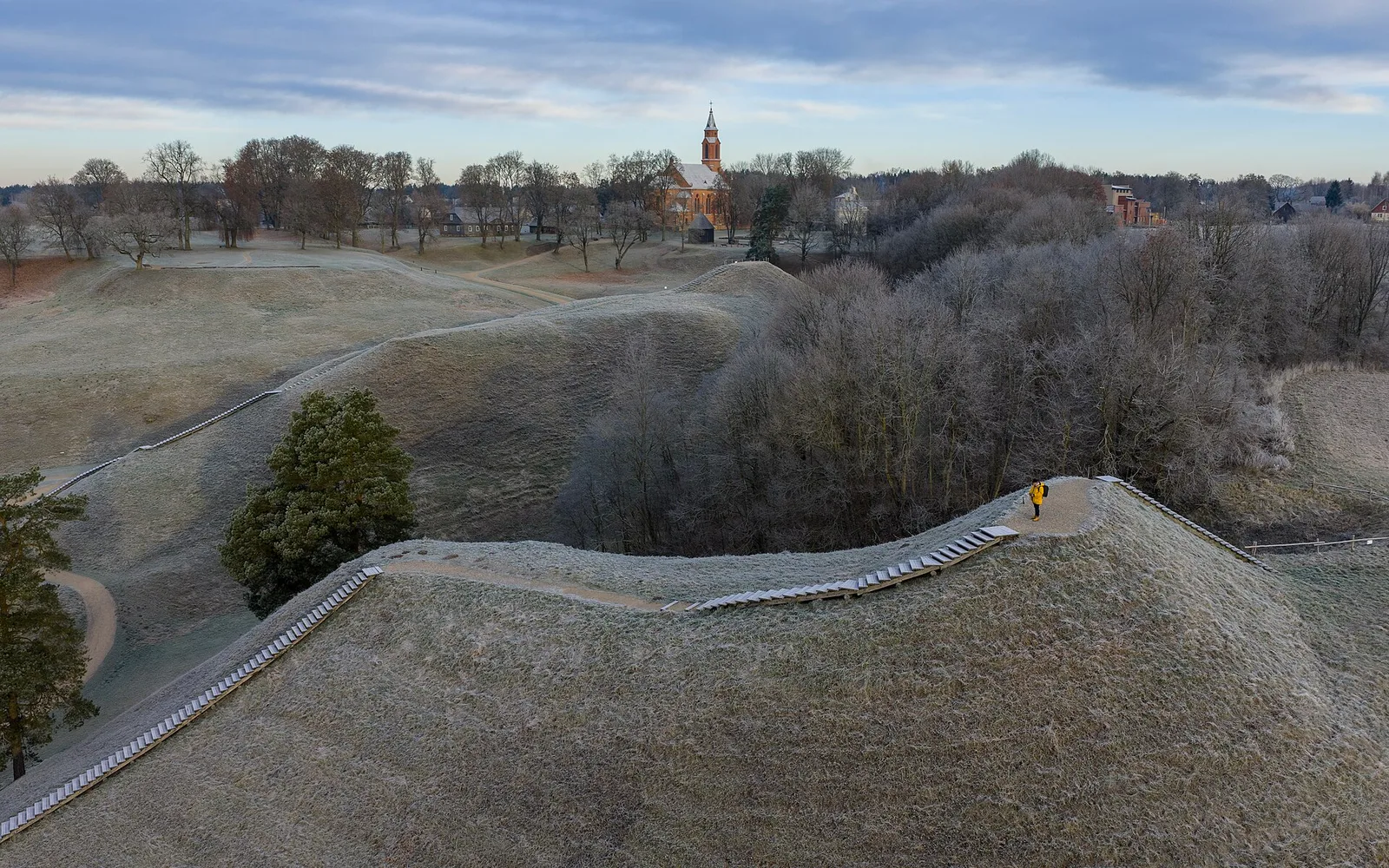
Kernavė reveals an early Lithuanian political centre through archaeology and landscape rather than a reconstructed medieval town. Its museum and five hillforts work together, so a worthwhile visit protects time for interpretation as well as the valley views.
Begin with the museum
Archaeological finds and interpretation explain settlement across different periods and make the earthworks legible. Check current museum opening, then use the outdoor landscape to connect that evidence with the Neris valley and former settlement areas. The museum gives the later hillfort walk a clearer sequence.
Walk the hillforts carefully
Paths cross steep grass slopes and exposed viewpoints. Conditions can be muddy, icy or hot depending on season. Stay on signed routes and allow enough time for the climbs instead of reducing the reserve to a single panorama.
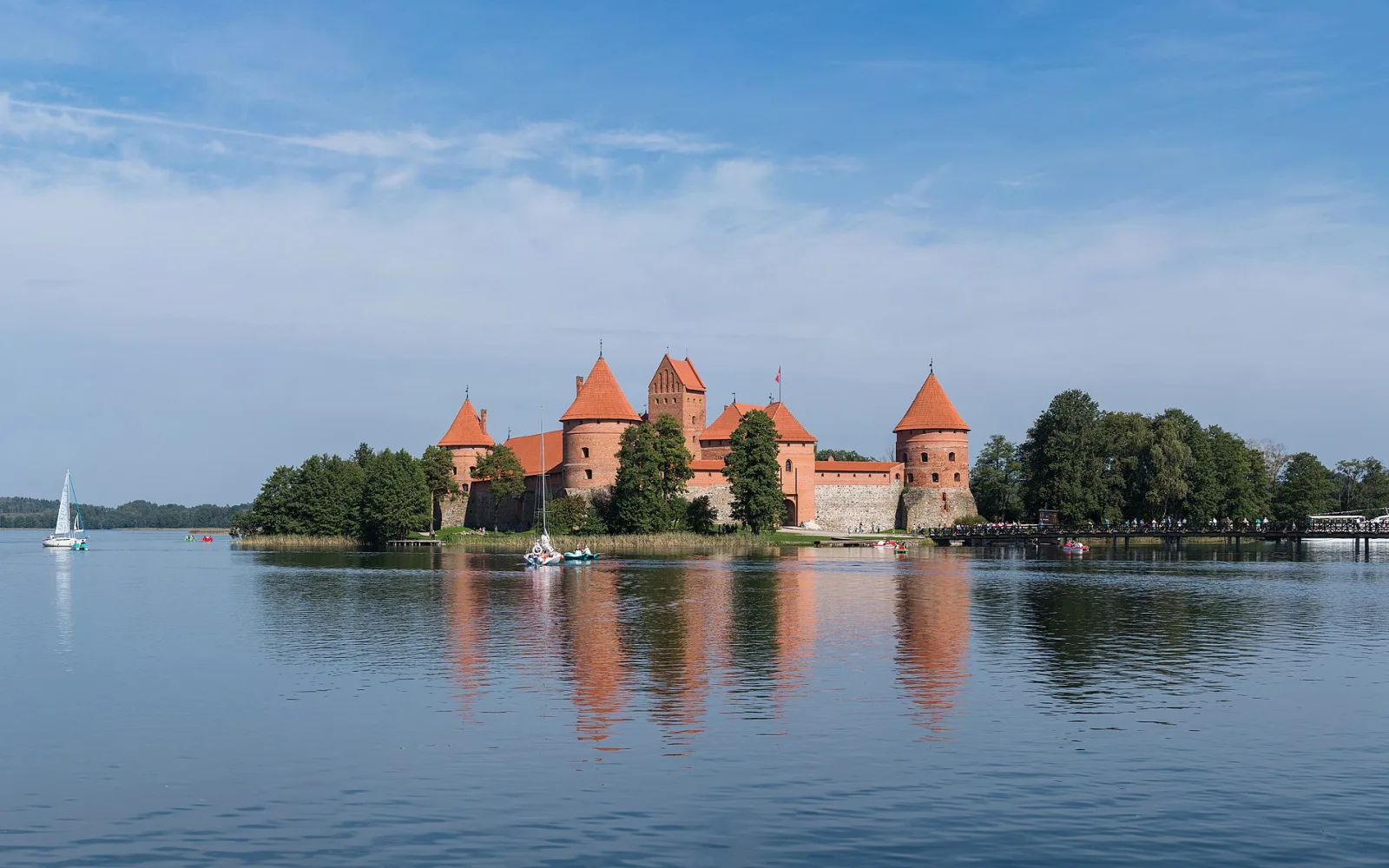
Distinguish Kernavė from Trakai
Trakai presents a later castle and lakeside town, while Kernavė is an archaeological landscape. Both can fit a longer Southeast Lithuania stay, but separate days give their histories a clearer shape.
Confirm the return before leaving
Public transport from Vilnius is less frequent than the Trakai route. Verify the stop and final return, especially at weekends or outside summer. A car gives flexibility without changing the need to check museum access.
Related Lithuania guides
Questions about Kernavė Archaeological Site
Is there a castle at Kernavė?
No standing medieval castle defines the site. Archaeology, hillforts and museum interpretation are central.
Can I visit from Vilnius?
Yes, but public transport needs advance timetable planning.
How long should I allow?
A focused half-day works. A full day suits the museum and unhurried landscape walk.
Sources and updates
This guide was last reviewed on 3 September 2026. Transport, access and opening arrangements can change, so check the official source before travel.
- Lithuania Travel, Lithuania Travel
- Kernavė Archaeological Site, UNESCO World Heritage Centre
- Kernavė museum exhibitions, State Cultural Reserve of Kernavė
Nearby places to consider
These guides can help you place Kernavė Archaeological Site within a wider route.