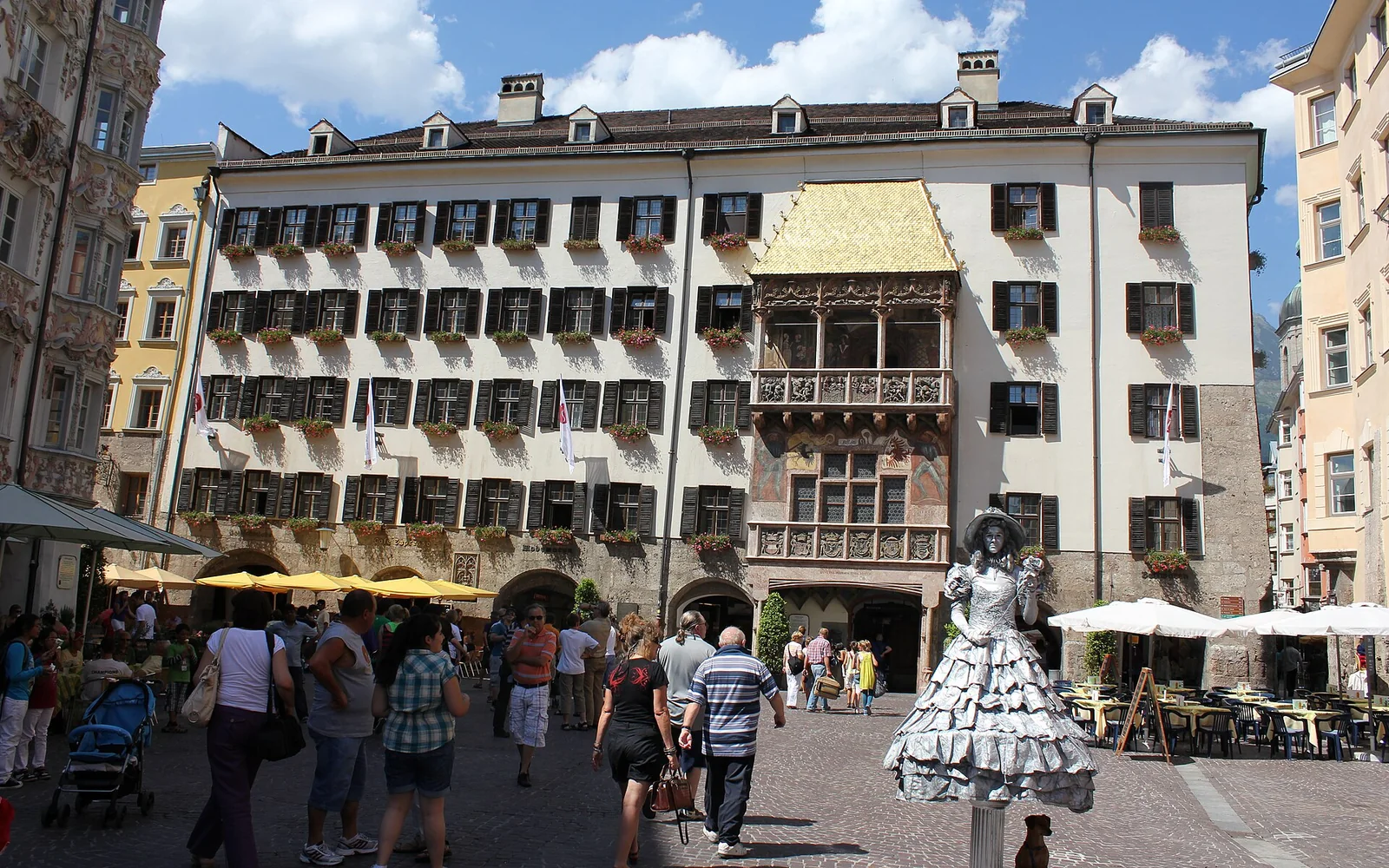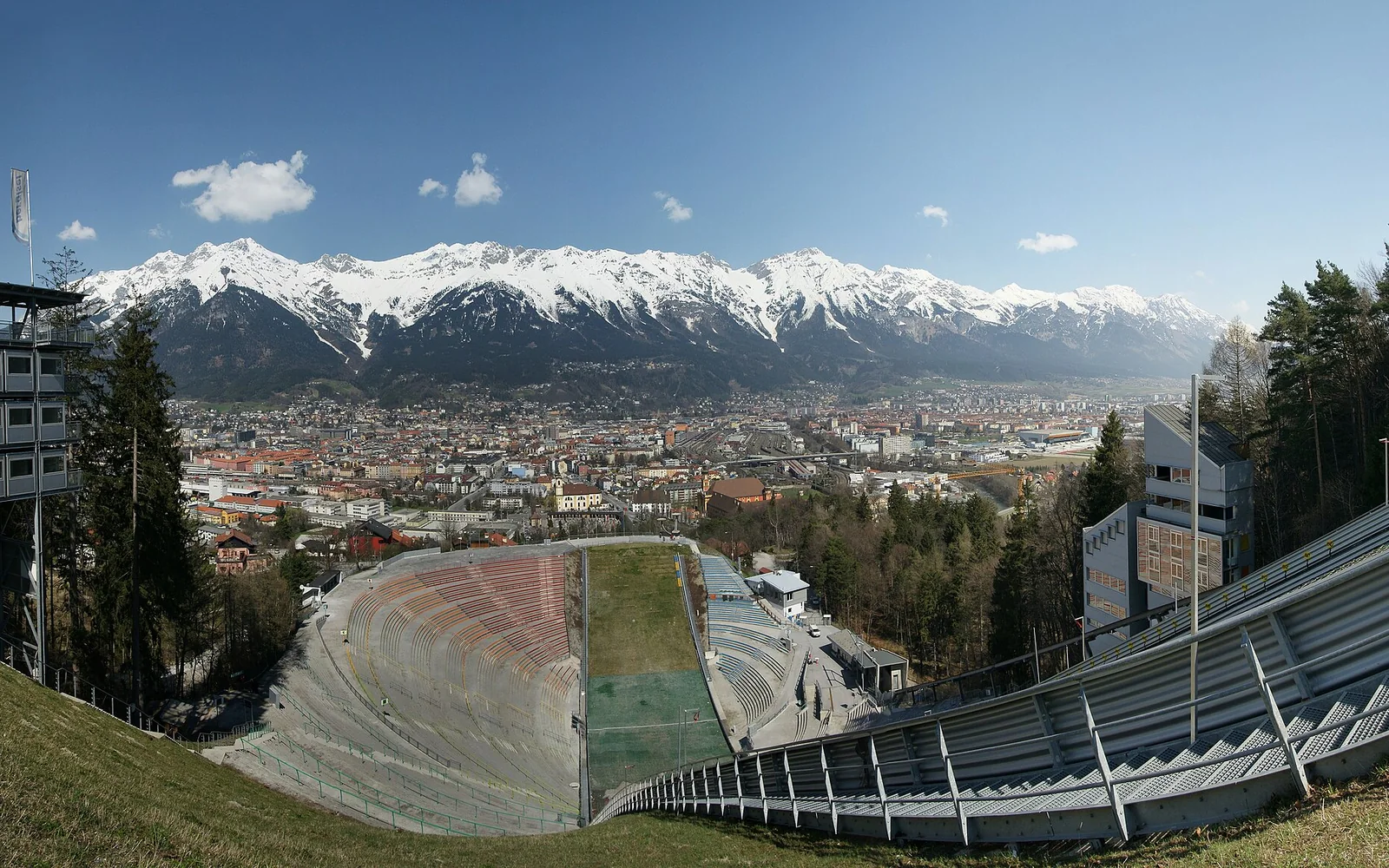
The Golden Roof and old town form a compact historic core, but Innsbruck’s value lies in the contrast between city streets and the mountains above. The Nordkette route begins close to the centre, while other valleys and plateaus use separate buses or trains.
Start with what makes Innsbruck distinct
The Golden Roof and old town form a compact historic core, but Innsbruck’s value lies in the contrast between city streets and the mountains above. The Nordkette route begins close to the centre, while other valleys and plateaus use separate buses or trains.
Keep at least one mountain day flexible. Cloud, wind or maintenance can make a museum or neighbourhood day the better choice.
Old town and imperial sights
Walk Herzog-Friedrich-Strasse, the Golden Roof and Maria-Theresien-Strasse, then choose the Hofkirche, Hofburg or a museum rather than rushing through all three.
Nordkette planning
The city funicular and mountain cableways form separate stages. Check current operation, visibility and appropriate clothing before buying a full ascent.
Beyond the centre of Innsbruck
Wilten, the Bergisel area and riverside routes show more of the city. Each fits around a different tram or bus line.
Build a realistic visit to Innsbruck
Day 1: explore the old town, Maria-Theresien-Strasse and riverside.
Day 2: use good weather for Nordkette or another suitable mountain route.
Day 3: visit Bergisel, Wilten or selected museums.
Day 4: take a focused Tyrol trip or keep a spare weather day.
Arrive and move around Innsbruck
Innsbruck Hauptbahnhof is on the main east-west rail corridor. Airport buses and city transport connect with the centre.
Trams and buses cover the city and nearby villages. Mountain lifts require separate tickets unless a valid card explicitly includes them.
Food and local stops in Innsbruck
Tyrolean cooking includes dumplings, gröstl, cheese dishes and pastries. Old-town restaurants can be busy, while Wilten and outer streets offer broader everyday choices.
Choose the right conditions for Innsbruck
Summer suits hiking and outdoor evenings, winter supports snow sports, and shoulder seasons can bring lift maintenance. City sights remain useful in poor weather.
Central streets are mostly manageable with mixed paving. Lift systems may be step-free to selected viewpoints, but high paths, snow and steep terrain remain limiting.
A cableway ride is not the same as a prepared hike. Weather changes quickly, and last descents must be checked before walking away from a station.
Continue from Innsbruck
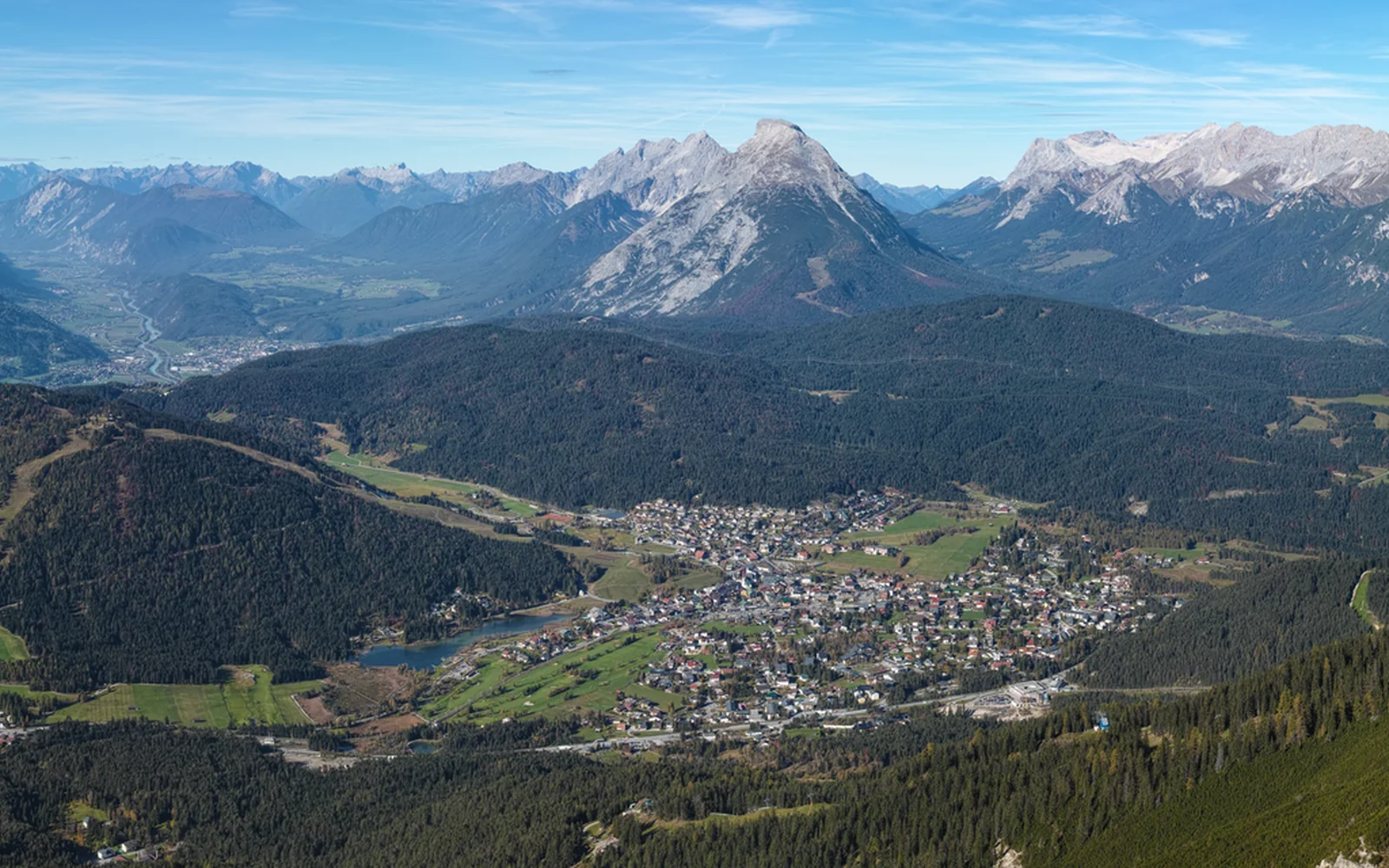
Seefeld is easy by rail. Ötztal, Zillertal and St Anton work better as separate bases than quick city day trips.
Continue planning
Questions about Innsbruck
How many days do I need in Innsbruck?
Three days allow the old town, one mountain day and another city or valley outing.
Can I reach the mountains without a car?
Yes. Cableways, trams, buses and trains reach several mountain areas, but operation and weather must be checked.
Is Innsbruck only a winter destination?
No. The city, museums and valley routes work year-round, while mountain activities change with conditions and lift calendars.
Sources and updates
This guide was last reviewed on 3 September 2026. Transport, access and opening arrangements can change, so check the official source before travel.
- Official Austria travel information, Austrian National Tourist Office
- Austrian rail timetable and service updates, ÖBB
- Official Innsbruck visitor information, Innsbruck Tourism
- Official Tyrol visitor information, Tyrol Tourist Board
Related places to consider
These guides can help you place Innsbruck within a wider route.