Elvas is not simply a compact historic centre. Its World Heritage fortifications extend across bastions, ditches, forts and the long Amoreira Aqueduct, so a useful visit needs time for the wider defensive landscape. The city also makes a logical eastern stop on a route across Alentejo or between Portugal and Spain.
Understand the fortified city
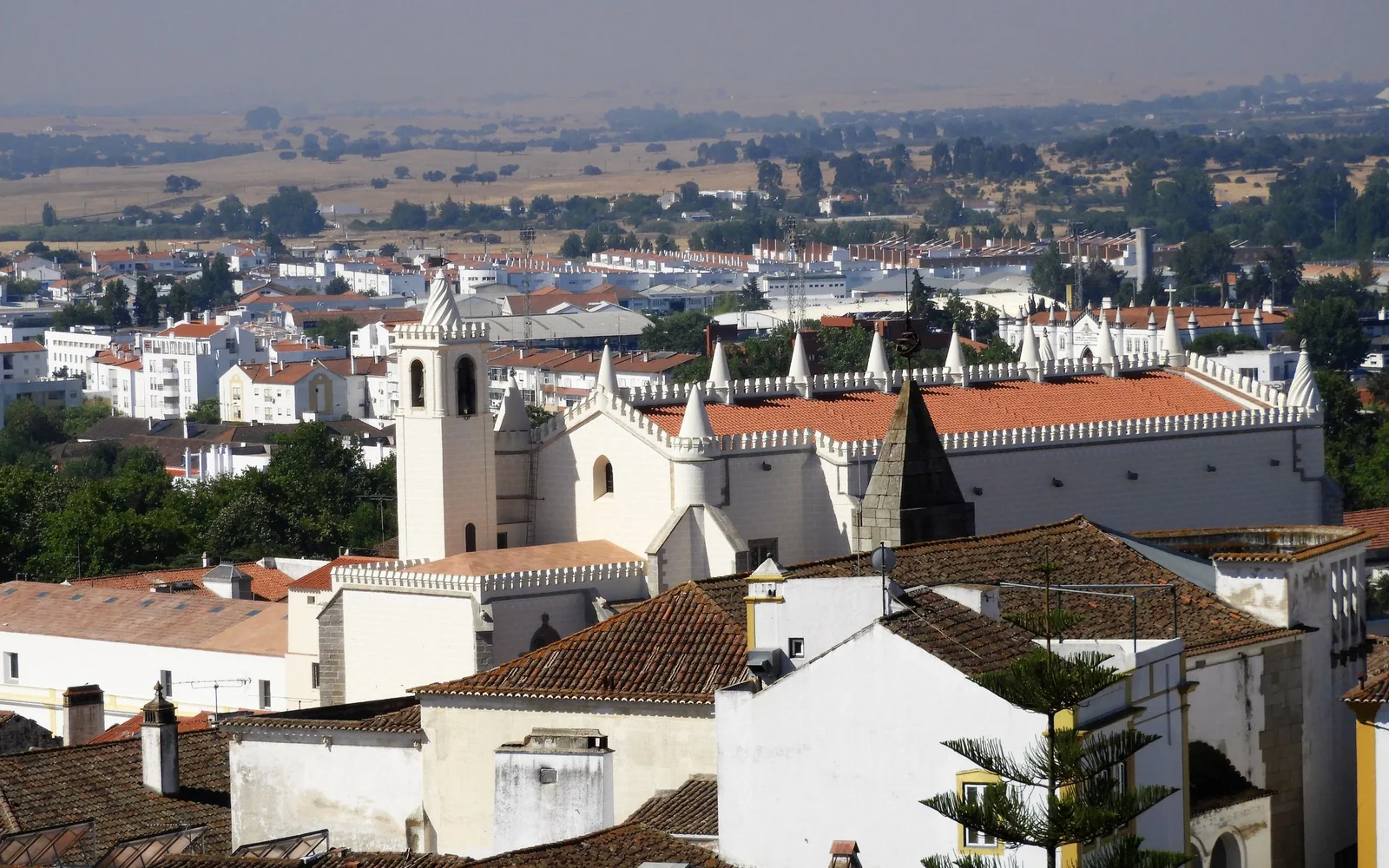
Begin inside the historic centre, where the cathedral, castle and military buildings sit within a layered system of walls. A walk along the bastions helps explain their shape, but the complete site is too large to absorb from one square or viewpoint.
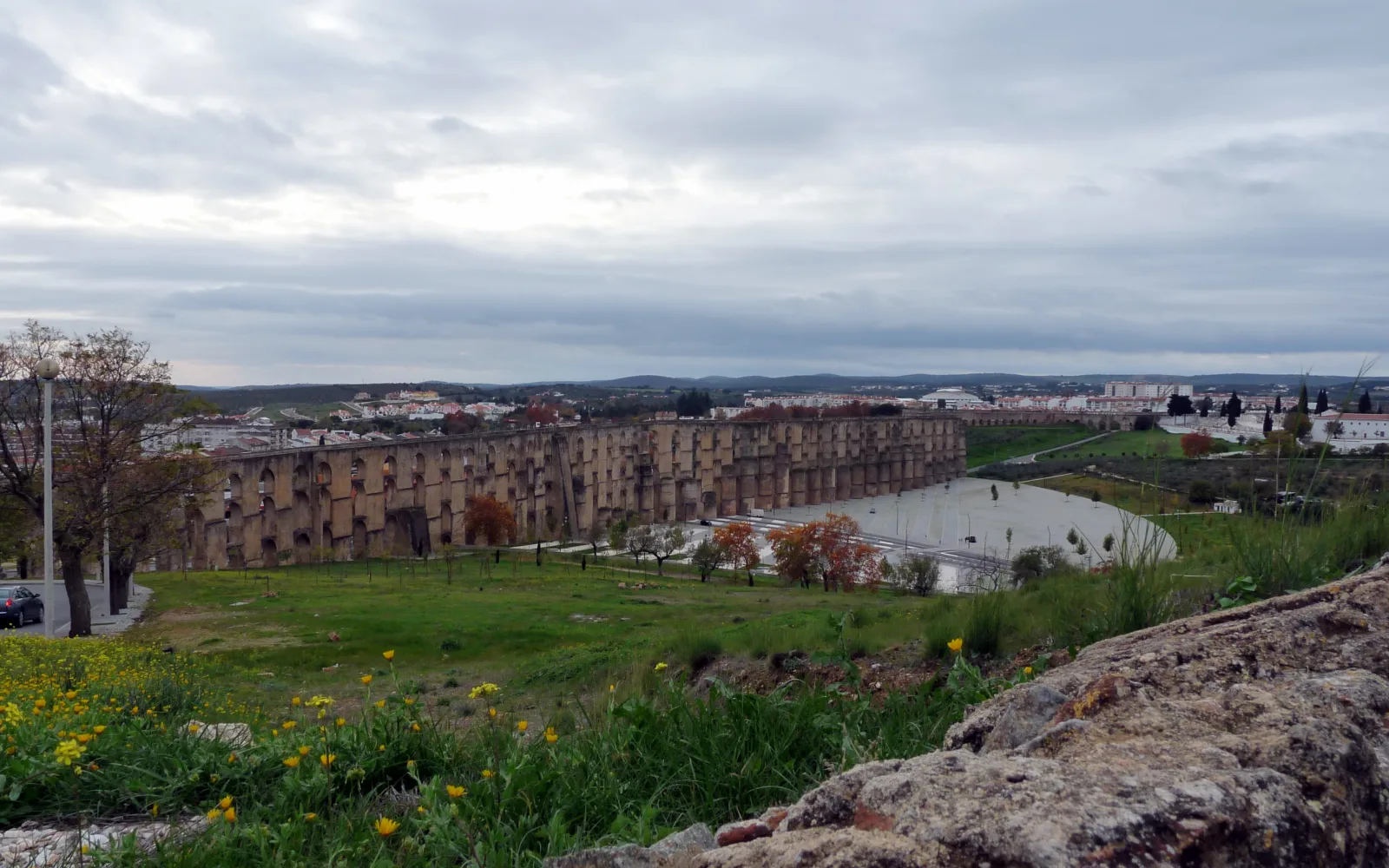
The Amoreira Aqueduct approaches the city from the west in a long sequence of arches. See it from a safe public viewpoint rather than attempting to walk along traffic roads or restricted ground.
Add the outlying forts
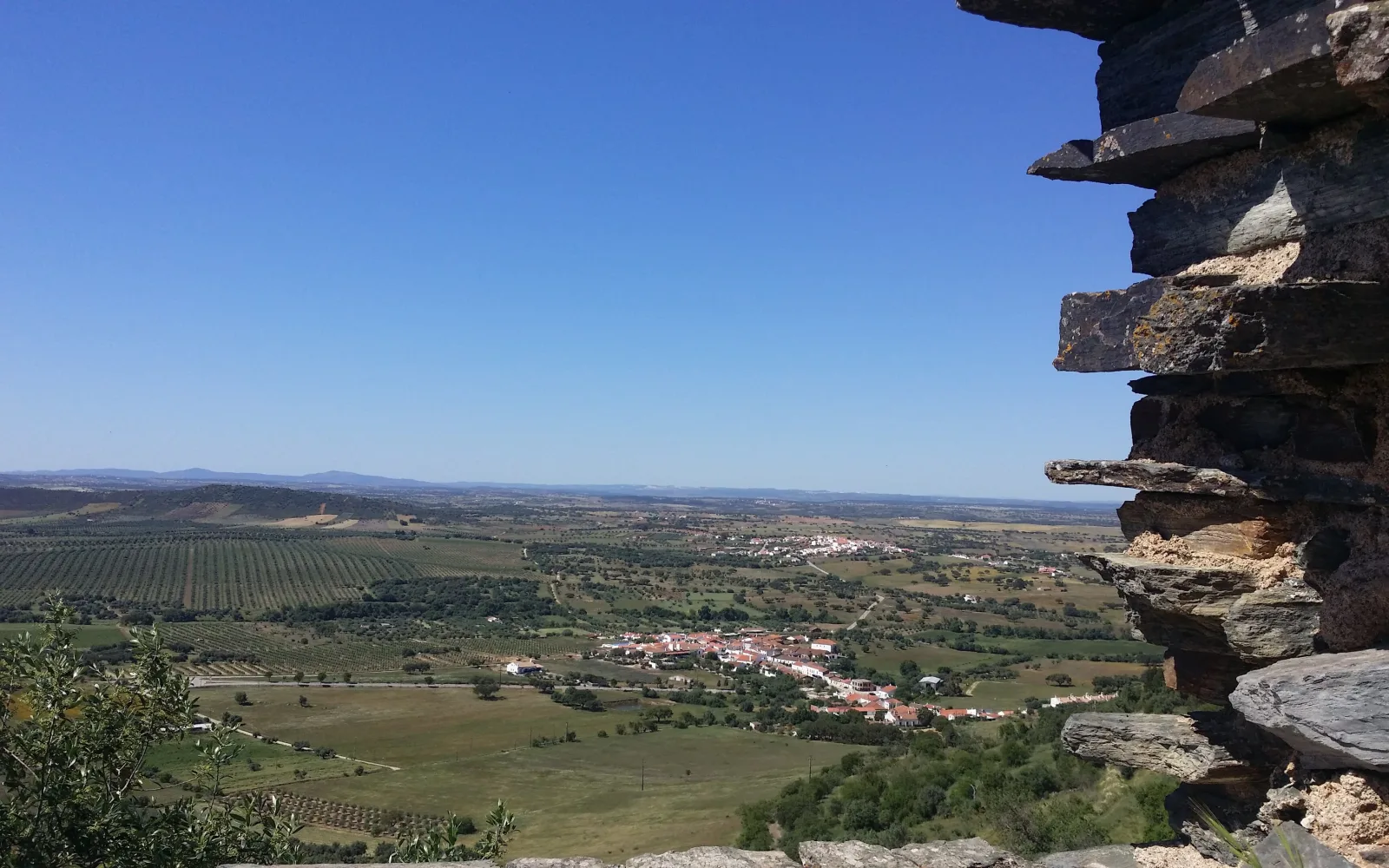
Fort of Santa Luzia and Fort of Graça are separate from the centre and form an essential part of the defensive story. Their opening days and access arrangements can differ, so check current information before setting out. Seeing at least one fort gives far more context to the walls below.
Distances and exposed approaches make a car or taxi useful. If time is limited, choose one fort and leave enough time to explore it properly rather than collecting exterior views of both.
Allow for heat and walking
Elvas involves cobbles, slopes, stairs and long stretches with little shade. In hot weather, begin with the walls or fort, pause through the early afternoon and return to the centre later. Water and sun protection matter more here than the compact map suggests.
Some defensive spaces have uneven surfaces and steep edges. Visitors with limited mobility should check access for individual monuments and use viewpoints that do not require a full wall circuit.
Connect Elvas with Alentejo
Évora and Estremoz are natural companions on an eastbound Alentejo route, while Badajoz lies just across the Spanish border. Elvas deserves its own stop rather than a hurried roadside break because the principal sites are spread around the city.
A cross-border journey requires separate checks for rental-car conditions, road charges and transport schedules. Do not assume a Portuguese regional ticket covers a connection into Spain.
Choose the right transport
Long-distance coaches can make Elvas possible without a car, although service frequency and onward links may constrain the stay. Rail services are not always the most direct choice for a visitor, so compare the current timetable with coach options before booking accommodation.
A car is helpful for the forts and a regional itinerary. Park outside the tightest historic streets where possible, then cover the centre on foot.
Stay one night if possible
A focused day can cover the centre, aqueduct and one fort. Two days provide a slower wall walk, time for both forts and room for seasonal opening hours. An overnight stay also makes Elvas a more comfortable link between central Alentejo and the Spanish border.
Continue planning
Questions about Elvas
How many days should I spend in Elvas?
One full day covers the centre and one fort. Stay two days for both major forts and a slower look at the walls.
Can I reach Elvas without a car?
Yes, long-distance coaches are often the practical choice. A taxi may still be needed for the outlying forts.
Why is Elvas a World Heritage site?
UNESCO recognises its exceptionally extensive system of walls, forts, military works and aqueduct within a historic border landscape.
Can Elvas be a day trip from Évora?
It can, but check current transport times. A car gives more flexibility for the forts and other eastern Alentejo stops.
Sources and updates
This guide was last reviewed on 2 September 2026. Transport, access and opening arrangements can change, so check the official source before travel.
- Alentejo, Turismo de Portugal
- Elvas, Turismo de Portugal
- Garrison Border Town of Elvas and its Fortifications, UNESCO World Heritage Centre
Related places to consider
These guides can help you place Elvas within a wider route.