
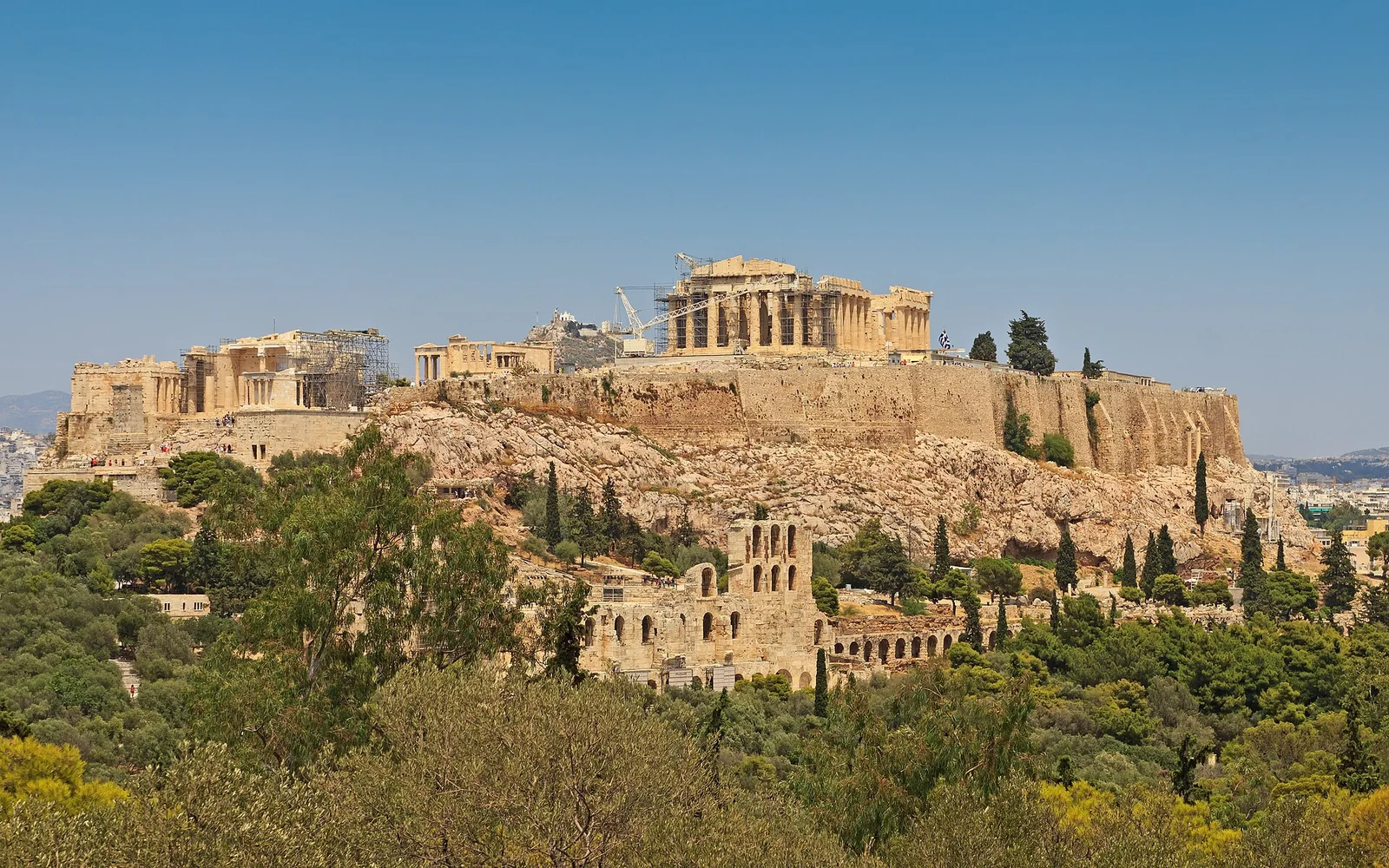
The Acropolis is the fixed point of a first visit, but Athens makes more sense when Plaka, Monastiraki, the Agora, the National Archaeological Museum and everyday neighbourhoods are given separate time.
Start with one connected ancient route
The Acropolis is the fixed point of a first visit, but Athens makes more sense when Plaka, Monastiraki, the Agora, the National Archaeological Museum and everyday neighbourhoods are given separate time.
Group sights by area and start exposed archaeological sites early. The metro handles most visitor journeys, while central streets still include steep slopes, polished paving and crowded crossings.
Start above the city
Use an official timed entry for the Acropolis, then continue to the museum or south-slope sites without trying to add every ruin in one morning.
Read the streets below
Plaka is atmospheric but busy. Anafiotika, Koukaki and the streets around the Agora show different sides of the historic centre.
Choose one major museum
The Acropolis Museum and National Archaeological Museum have different collections and each deserves a substantial visit.
Build a realistic visit to Athens
Day 1: visit the Acropolis, south slope and Acropolis Museum.
Day 2: explore the Agora, Monastiraki and Plaka.
Day 3: choose the National Archaeological Museum, a modern neighbourhood and Lycabettus or the coast.
Arrive and move around Athens
Athens airport connects to the centre by metro, suburban rail, express bus and taxi. Piraeus is the main ferry port, with other sailings using Rafina or Lavrio.
Metro, tram and buses cover most routes. Walking is best within the historic centre, but summer heat and steep streets make short transit hops useful.
Food and local stops in Athens
Look beyond the busiest Plaka lanes for bakeries, market cooking, grilled dishes, seasonal vegetables and small plates. Neighbourhood tavernas differ in style and pace.
Choose the right conditions for Athens
April to June and September to October suit long walking days. Midsummer requires early starts and shade; winter is quieter and good for museums.
The City of Athens publishes mapped accessible routes. The Acropolis has a dedicated lift process, but advance contact and official confirmation are essential.
Archaeological hours and heat measures can change. The Acropolis Museum is a separate venue and ticket from the archaeological site.
Continue from Athens
Cape Sounion, Aegina and the Attica coast suit separate days. Delphi needs a long day or an overnight stay.
Continue from Athens
Athens visit questions
How many days do I need in Athens?
Three full days cover the main ancient sites, one major museum and several central neighbourhoods. Add a fourth for a coastal or Sounion trip.
Is the Acropolis Museum included with the Acropolis ticket?
No. They are separate venues with separate admission, so check both official sites before visiting.
Can I stay in Athens without a car?
Yes. The metro, tram, buses and walking cover the main visitor areas, airport and Piraeus connections.
Daily planning ranges
Travel costs in Athens
These planning ranges are per person, per day and assume two people sharing a room. They are not live quotes.
Standard daily breakdown
- Accommodation
- €58 to €105
- Food
- €30 to €46
- Local transport
- €6 to €14
- Activities
- €20 to €40
What the range assumes: Per person, per day, based on two people sharing a sensible double or twin room. The standard range allows for ordinary paid sightseeing, local transport and a mix of casual and mid-range meals.
Seasonal note: High summer increases demand and can make air-conditioned central accommodation more expensive.
Not included: International travel, intercity travel, shopping, travel insurance and major special-event premiums are excluded.
Price basis 29 August 2026, reviewed 29 August 2026, next review due 28 February 2027.
Cost sources
- Athens public transport prices, OASA
- Athens cost of living, Numbeo
Sources and updates
This guide was last reviewed on 3 September 2026. Transport, access and opening arrangements can change, so check the official source before travel.
- Official Greece travel planning, Greek National Tourism Organisation
- Official Greek islands visitor information, Greek National Tourism Organisation
- Official Greek rail journey planner and service updates, Hellenic Train
- Official Athens visitor information, City of Athens
- Official accessible Athens routes and visitor guide, City of Athens
- Official Acropolis access and ticket information, Hellenic Heritage