Tomar is dominated by the hilltop Convent of Christ, but the city below adds the Nabão River, a compact street plan, churches and a small former synagogue. A day trip can cover the principal monument and centre. An overnight gives the large convent complex proper time and makes Tomar a useful stop between Lisbon and Coimbra.
Give the Convent of Christ enough time
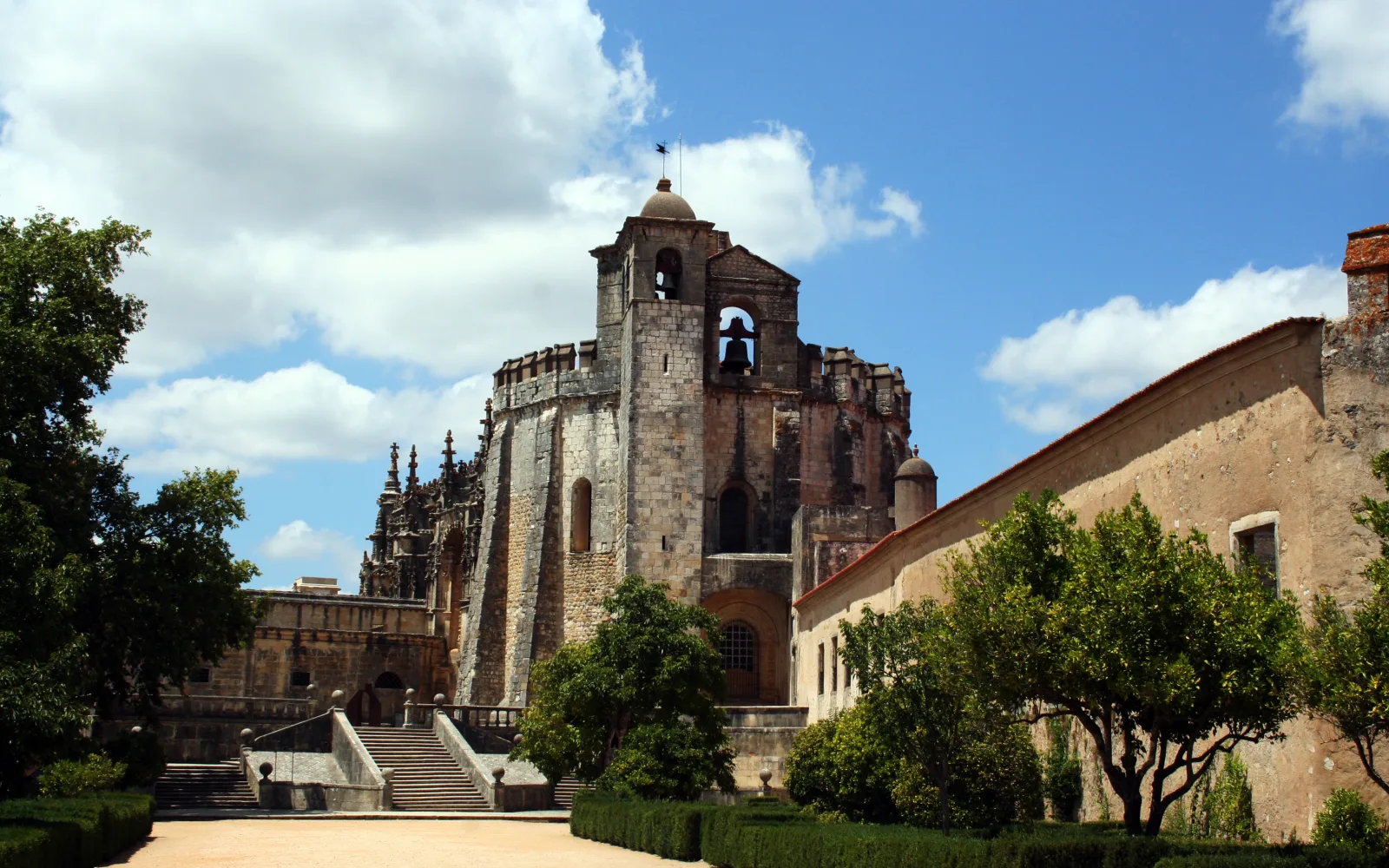
The Convent of Christ grew from a Templar stronghold into a large religious and royal complex. Its rotunda, cloisters, church and Manueline details need several hours if architecture or history is the reason for visiting. Check official opening and ticket information, and arrive with margin before the final admission.
The site stands above the city. Walk up through the castle approach if the slope suits, or use a taxi when heat, luggage or mobility makes the climb impractical. Do not schedule the return train so tightly that the last rooms become a rush.
Walk the old town and river
Praça da República forms the centre of the street grid, with the Church of São João Baptista and lanes leading toward the river. Follow the Nabão through the central park and bridges, then return through a different street rather than treating the lower city as a corridor to the convent.
The small former synagogue and other interiors keep their own hours and may have limited capacity. Confirm access if one is essential to the visit.
Add Mata Nacional dos Sete Montes
The woodland beside the castle and convent provides a quieter route close to the main monument. It is useful for shade and a slower return to town, but opening, path condition and fire restrictions should be checked. The area is not a substitute for a marked mountain walk and should be left out when time or heat makes the day too full.
Choose a day trip or overnight
A long day from Lisbon can cover the Convent of Christ and central Tomar. Staying overnight removes pressure from the regional train and gives the riverside and old streets a calmer evening. It also creates a practical break before continuing north toward Coimbra.
Do not combine Tomar, Batalha, Alcobaça and Fátima in one independent day unless a transport provider has set a realistic route. They use different roads and connections.
Arrive by rail or road
Regional trains connect Tomar with Lisbon through the line’s current service pattern. Check whether the journey is direct and confirm the final return. The station is within walking distance of the centre, while the convent adds an uphill section.
Driving helps when Tomar is part of a wider central Portugal route, but central parking and monument access still need a plan. Leave the car before exploring the old town on foot.
Plan around heat and events
Spring and autumn suit the climb and long monument visit. Summer can be hot, so place the hilltop complex early and keep the river or shaded woodland for later. Tomar’s major festivals can alter access, accommodation and crowd levels. Check the year’s official programme rather than assuming an event follows a remembered date.
Continue planning
Questions about Tomar
Is Tomar a day trip from Lisbon?
Yes by regional rail, but an overnight gives the Convent of Christ and lower city a more comfortable pace.
How long does the Convent of Christ take?
Allow several hours for the main complex, plus time for the uphill approach and current entry arrangements.
Is Tomar easy to walk?
The lower centre is compact and fairly manageable. The convent sits uphill and may require a taxi for some visitors.
Can Tomar fit between Lisbon and Coimbra?
Yes, especially with one overnight. Check the dated rail connections before fixing the onward journey.
Sources and updates
This guide was last reviewed on 2 September 2026. Transport, access and opening arrangements can change, so check the official source before travel.
- CP passenger information, Comboios de Portugal
- Central Portugal, Turismo de Portugal
- Visit Tomar, Tomar City Council
- Convent of Christ, Museums and Monuments of Portugal
Related places to consider
These guides can help you place Tomar within a wider route.