
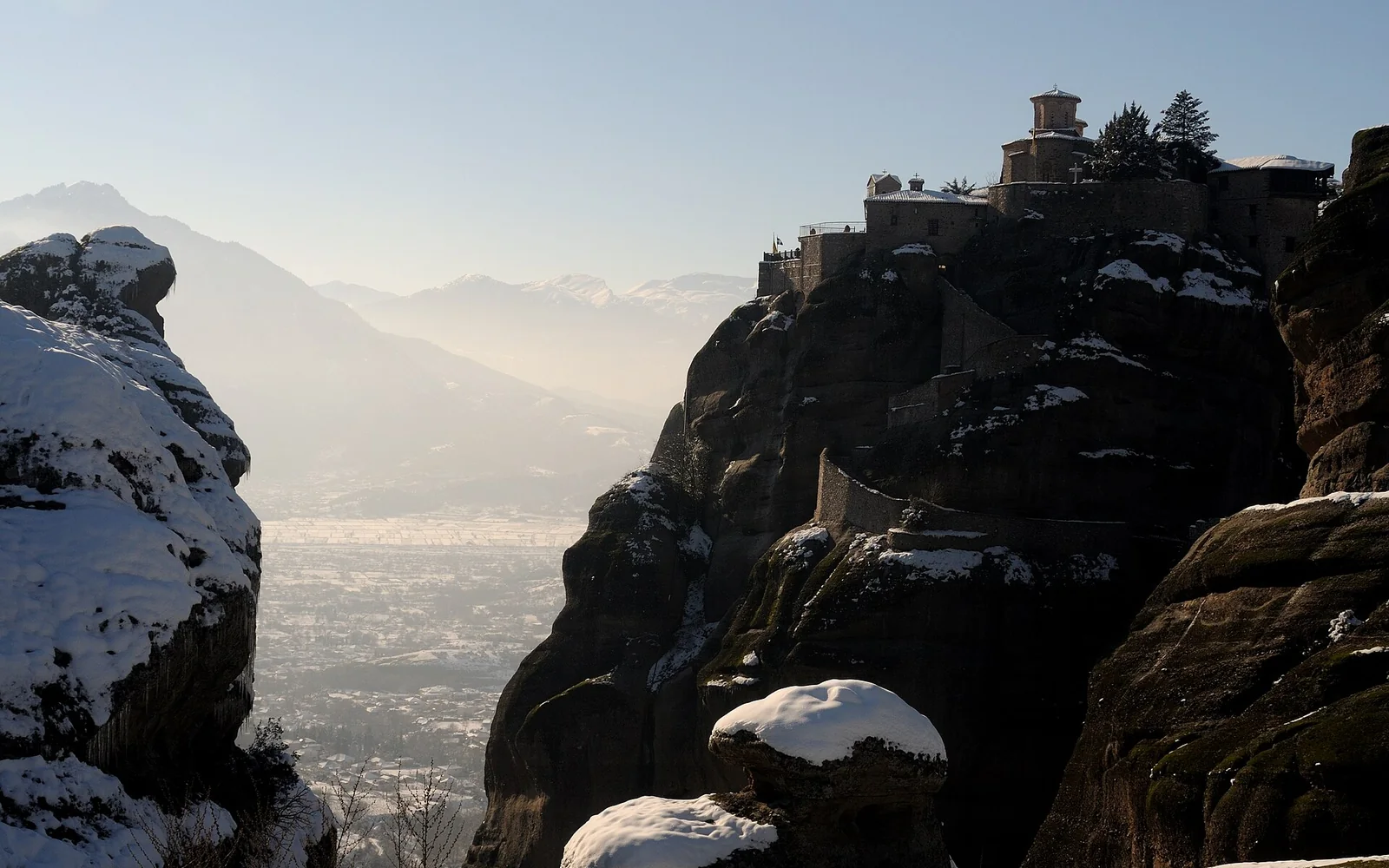
Meteora is the main visitor focus, with Kalambaka and Kastraki as the practical bases below the rocks. The wider region needs a separate mountain or coast plan.
Build the region around Meteora
Meteora is the main visitor focus, with Kalambaka and Kastraki as the practical bases below the rocks. The wider region needs a separate mountain or coast plan.
Train and bus services can change, so verify the complete route rather than assuming a direct Athens or Thessaloniki connection.
Stay below Meteora
Kalambaka offers transport and services, while Kastraki sits closer to several routes.
Check each monastery
Hours and closing days differ between communities.
Allow for steps and weather
Road access does not remove the stairs at most monasteries.
A practical first route through Thessaly
Day 1: arrive and orient in Kalambaka or Kastraki.
Day 2: visit two or three monasteries.
Day 3: add a walking route or viewpoint according to conditions.
Live transport in Thessaly
Check rail and bus changes close to travel.
Religious etiquette in Thessaly
Follow dress, photography and service rules at each monastery.
Continue across central mainland Greece
Thessaly transport questions
Where should I stay for Meteora?
Kalambaka has the broadest services and transport. Kastraki is quieter and closer to several monastery roads and paths.
Can I visit Meteora as a day trip?
It is possible, but one or two nights give better control over transport, monastery hours and weather.
What should I check before travelling through Thessaly?
Confirm the dated transport, opening information and conditions for the exact places in the route.
Sources and updates
This guide was last reviewed on 3 September 2026. Transport, access and opening arrangements can change, so check the official source before travel.
- Official Greece travel planning, Greek National Tourism Organisation
- Official Greek islands visitor information, Greek National Tourism Organisation
- Official Greek rail journey planner and service updates, Hellenic Train
- Meteora World Heritage record, UNESCO World Heritage Centre
- Official Great Meteoron visitor guidance, Holy Monastery of Great Meteoron