
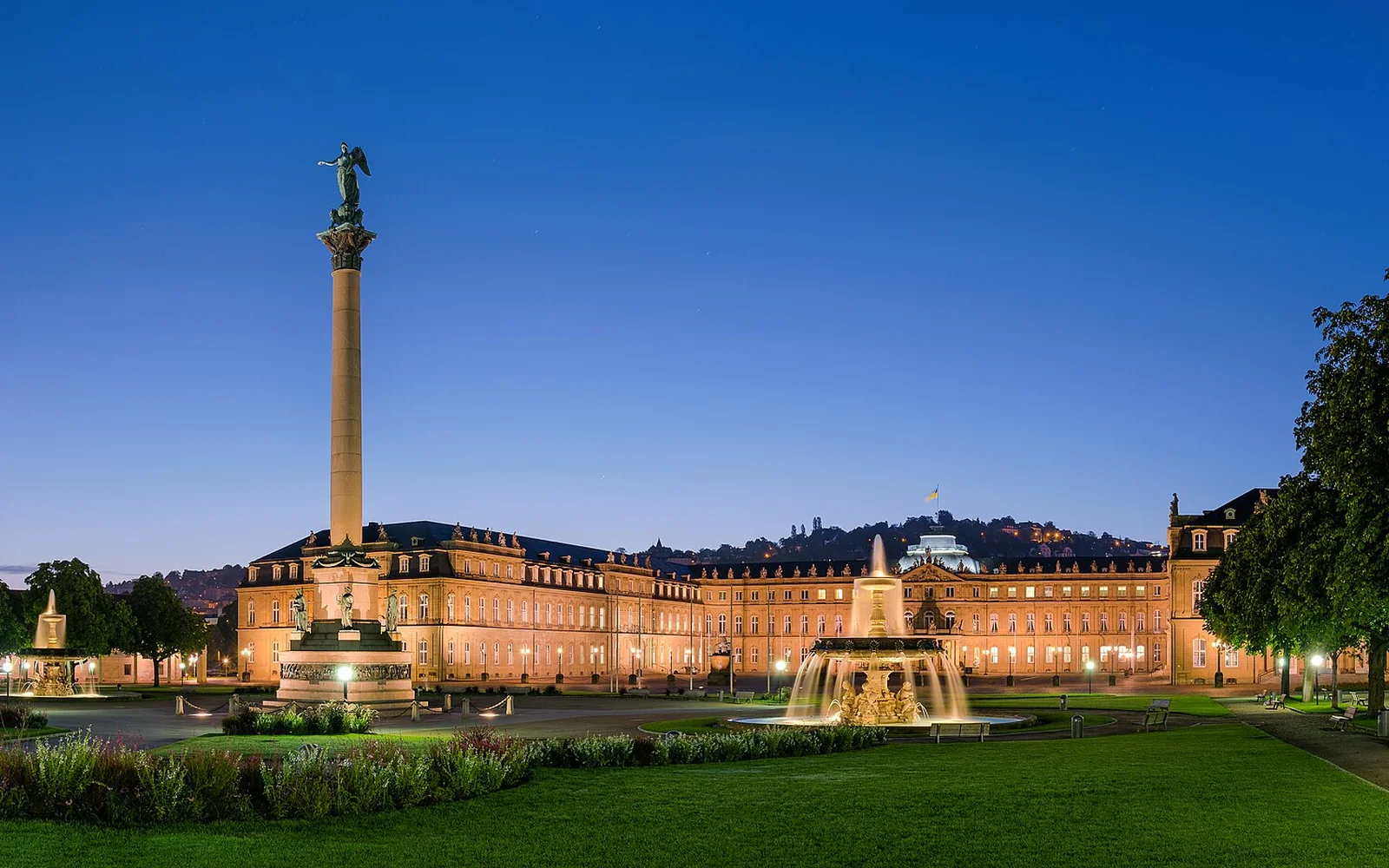
Schlossplatz and the central cultural institutions form one route, while the Mercedes-Benz and Porsche museums sit in different outer districts. Choose one or give them separate half-days.
Plan around the basin and its transport lines
Schlossplatz and the central cultural institutions form one route, while the Mercedes-Benz and Porsche museums sit in different outer districts. Choose one or give them separate half-days.
Stuttgart’s stairs, vineyards and hills explain the city better than the shopping streets alone. Parks link the centre with Bad Cannstatt and the Neckar corridor.
Choose one automotive museum first
The Mercedes-Benz and Porsche museums are large, detailed and separated by a cross-city journey.
Use the park corridor
The Schlossgarten leads north toward Rosensteinpark and Bad Cannstatt, creating a useful green route.
See the basin from above
Vineyard paths and hill viewpoints require climbing, but they reveal Stuttgart’s unusual geography.
Give each major museum its own half day
Day 1: explore Schlossplatz, the central museums and parks.
Day 2: visit one automotive museum and Bad Cannstatt.
Day 3: choose vineyard hills, the television tower or another design and art route.
Use local rail for the spread-out city
Stuttgart Hauptbahnhof is the main rail hub. Large station works can change entrances and walking routes, so follow current signs.
S-Bahn, U-Bahn and buses cover the basin and outer districts. Hills and long stair routes make public transport useful even for short map distances.
Food and local stops in Stuttgart
Swabian dishes include Maultaschen, Spätzle and onion tart, with local wine from city vineyards. Market Hall and neighbourhood restaurants add broader options.
Check events, museum slots and hillside access
Spring and autumn suit vineyard walks. Summer is good for parks. Winter is museum-friendly, with busy market and event periods.
Major museums and transit publish access information. Hills, stairs and construction diversions make route-level checks especially important.
Do not schedule both large car museums as quick stops. Station construction and event traffic can change journeys, and vineyard paths are not uniformly accessible.
Continue through Baden-Württemberg
Heidelberg, Ludwigsburg and Tübingen are rail-linked. The Black Forest and Lake Constance need separate regional bases.
Extend a Stuttgart stay
- Baden-Württemberg guide
- Heidelberg travel guide
- Black Forest guide
- Lake Constance guide
- Freiburg im Breisgau
- Germany travel guide
Stuttgart trip questions
How many days should I spend in Stuttgart?
Two days cover the centre and one major museum. A third allows vineyard hills, parks or another design and architecture focus.
Can I visit both Stuttgart car museums in one day?
It is possible but rushed. They sit in different districts and each contains enough material for several hours.
Why is Stuttgart so hilly?
The centre sits in a basin surrounded by slopes. Public transport and the city’s stair routes connect neighbourhoods at different elevations.
Sources and updates
This guide was last reviewed on 3 September 2026. Transport, access and opening arrangements can change, so check the official source before travel.
- Germany travel planning, German National Tourist Board
- DB passenger information, Deutsche Bahn
- Official accessible travel guidance for Germany, German National Tourist Board
- Official Baden-Württemberg visitor information, State Tourist Board of Baden-Württemberg
- Official Stuttgart visitor information, Stuttgart Marketing