
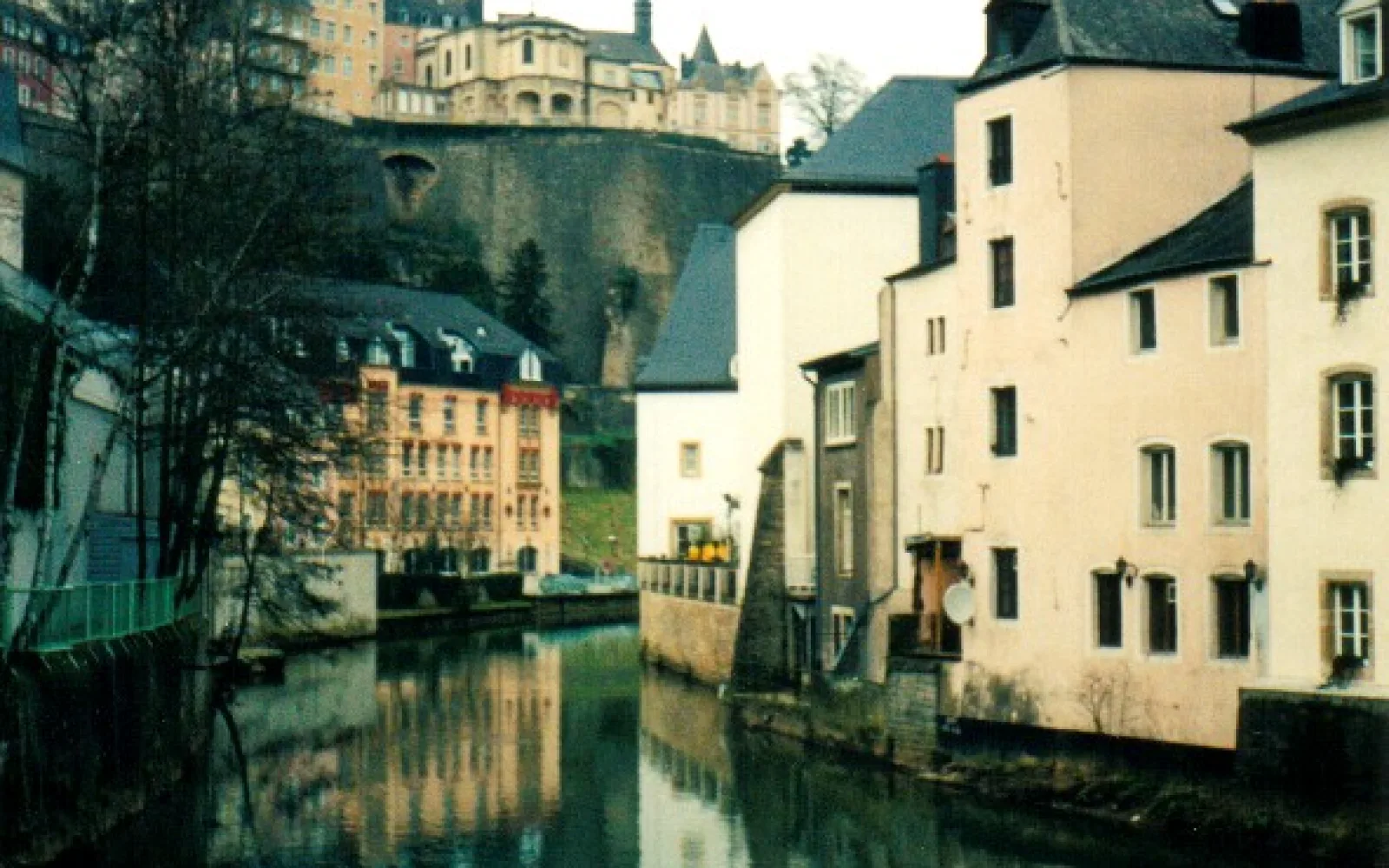
Luxembourg City is compact on a map but not always on foot. The Upper Town, Grund, Pfaffenthal and Kirchberg sit on different levels, connected by bridges, slopes, lifts and public transport. A useful first visit follows that geography instead of treating every landmark as part of one flat centre.
Plan the city by level
Start in the Upper Town for Place Guillaume II, the old streets and viewpoints along the former fortress line. Grund and the Alzette valley belong in the same walking block, while Pfaffenthal works naturally with the panoramic lift. This order reduces repeated climbs and leaves time to notice how the historic quarters fit around the rocky plateau.
Kirchberg is a separate modern district rather than an extension of the old centre. The tram makes it easy to reach, but its museums, European institutions and contemporary architecture deserve a defined half day. Combining Kirchberg with a long valley walk usually creates more transit than useful visiting time.
Read the old quarters through the fortifications
UNESCO recognises the old quarters and fortifications as an exceptional surviving fortified city. The Corniche and Bock area show the relationship between the high defensive ground and the lower quarters. Use the UNESCO visitor material or a guided walk for context, then confirm current access before making either casemate system the fixed point of the day.
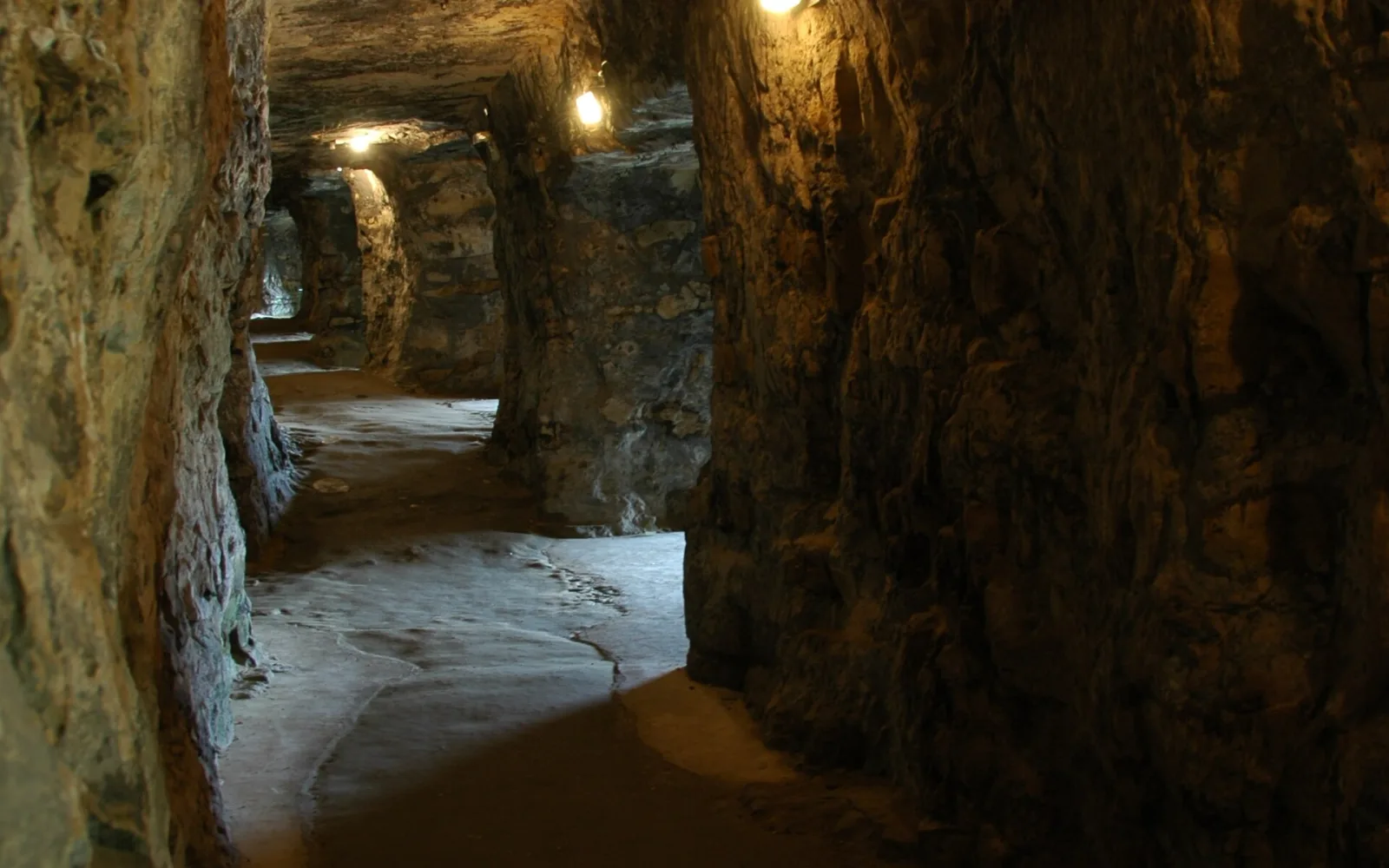
The underground passages contain stairs, uneven surfaces and confined sections. Travellers who prefer an easier route can still understand the setting from the Corniche, bridges, valley paths and city museums. A good itinerary treats the fortress as a landscape, not as a single attraction entrance.
Choose museums that fit the route
The city has enough museums to support a poor-weather day. Lëtzebuerg City Museum and the Nationalmusée um Fëschmaart fit the historic centre, while Mudam and Musée Dräi Eechelen sit together on Kirchberg. Villa Vauban works with the municipal park. Grouping them this way avoids crossing the city after every indoor visit.
Opening days and temporary exhibitions can change the best order. Check the institution’s own schedule before travel, especially for a Monday visit or a trip built around one collection. Leave room for the building and setting rather than counting each museum as a short stop.
Use the capital as a base with limits
National buses, trams and trains make the capital a practical base for Vianden, Echternach, the Moselle and the south. The journey still needs a timetable check. Rural connections and the return from a walking route can turn a simple-looking day trip into a long day with little margin.
Choose one substantial day trip during a three-night city stay. Vianden suits a castle-focused day, Echternach leads into the Mullerthal, and Esch-sur-Alzette offers a quicker urban contrast. Stay regionally when early trail access or a quiet evening matters more than returning to the capital.
Allow two full days before adding more
Two full days cover the historic core, valleys and one museum area without rushing. A third day can add Kirchberg in more depth or a national excursion. An arrival afternoon is useful for the Upper Town, but it should not be counted as a complete city day when hotel access and travel delays reduce the available light.
Spring and early autumn suit the exposed viewpoints and steep streets. Summer brings longer evenings and events, while winter favours museums and a shorter outdoor circuit. Rain can make stone steps slippery, so keep a level-aware alternative rather than abandoning the city route entirely.
Check access for the exact route
Public lifts, the Pfaffenthal funicular and the tram remove some of the city’s hardest climbs, but the historic centre still includes cobbles, gradients and steps. The casemates and older fortification interiors need their own access check. Plan around the least mobile traveller instead of assuming that every sight is equally easy to reach.
A car is unnecessary for the central city and parking can add delay. If the wider trip needs one, collect it after the city stay. Before departure, check the current public transport plan, attraction opening details and any engineering work affecting a regional day trip.
Continue planning
- Plan a wider Luxembourg trip
- Visit Vianden
- Use Echternach for the Mullerthal
- See Esch-sur-Alzette and Belval
Questions about Luxembourg City
How many days do I need in Luxembourg City?
Allow two full days for the old quarters, valleys and one museum area. Add a third day for Kirchberg or a national day trip.
Is Luxembourg City easy to explore on foot?
The centre is compact, but the valleys create steep changes of level. Public lifts, the tram and the funicular make a planned route easier.
Do I need a car in Luxembourg City?
No. Walking and public transport cover the main city areas, and national public transport is a practical option for many day trips.
Which area should I visit first?
Begin with the Upper Town and Corniche, then descend to Grund or Pfaffenthal. Keep Kirchberg for a separate museum and architecture block.
Daily planning ranges
Travel costs in Luxembourg City
These planning ranges are per person, per day and assume two people sharing a room. They are not live quotes.
Standard daily breakdown
- Accommodation
- €95 to €180
- Food
- €40 to €65
- Local transport
- €0 to €8
- Activities
- €22 to €45
What the range assumes: Per person, per day, based on two people sharing a practical double or twin room. The standard range includes ordinary local transport, a mix of casual and mid-range meals, and one paid visitor activity.
Seasonal note: Business and European institution dates can raise central accommodation sharply.
Not included: International and intercity travel, car hire, travel insurance, shopping, nightlife and exceptional event premiums are excluded.
Price basis 29 August 2026, reviewed 29 August 2026, next review due 28 February 2027.
Cost sources
- Official public transport fares and conditions, Luxembourg Public Transport Administration
- Current travel cost research for luxembourg city, Numbeo
Sources and updates
This guide was last reviewed on 3 September 2026. Transport, access and opening arrangements can change, so check the official source before travel.
- Official Luxembourg visitor information, Luxembourg for Tourism
- Official public transport fares and conditions, Luxembourg Public Transport Administration
- Official Luxembourg City visitor information, Luxembourg City Tourist Office
- Public transport information for visitors, Luxembourg Public Transport Administration
- Luxembourg old quarters and fortifications, Luxembourg for Tourism
- City of Luxembourg old quarters and fortifications, UNESCO World Heritage Centre