
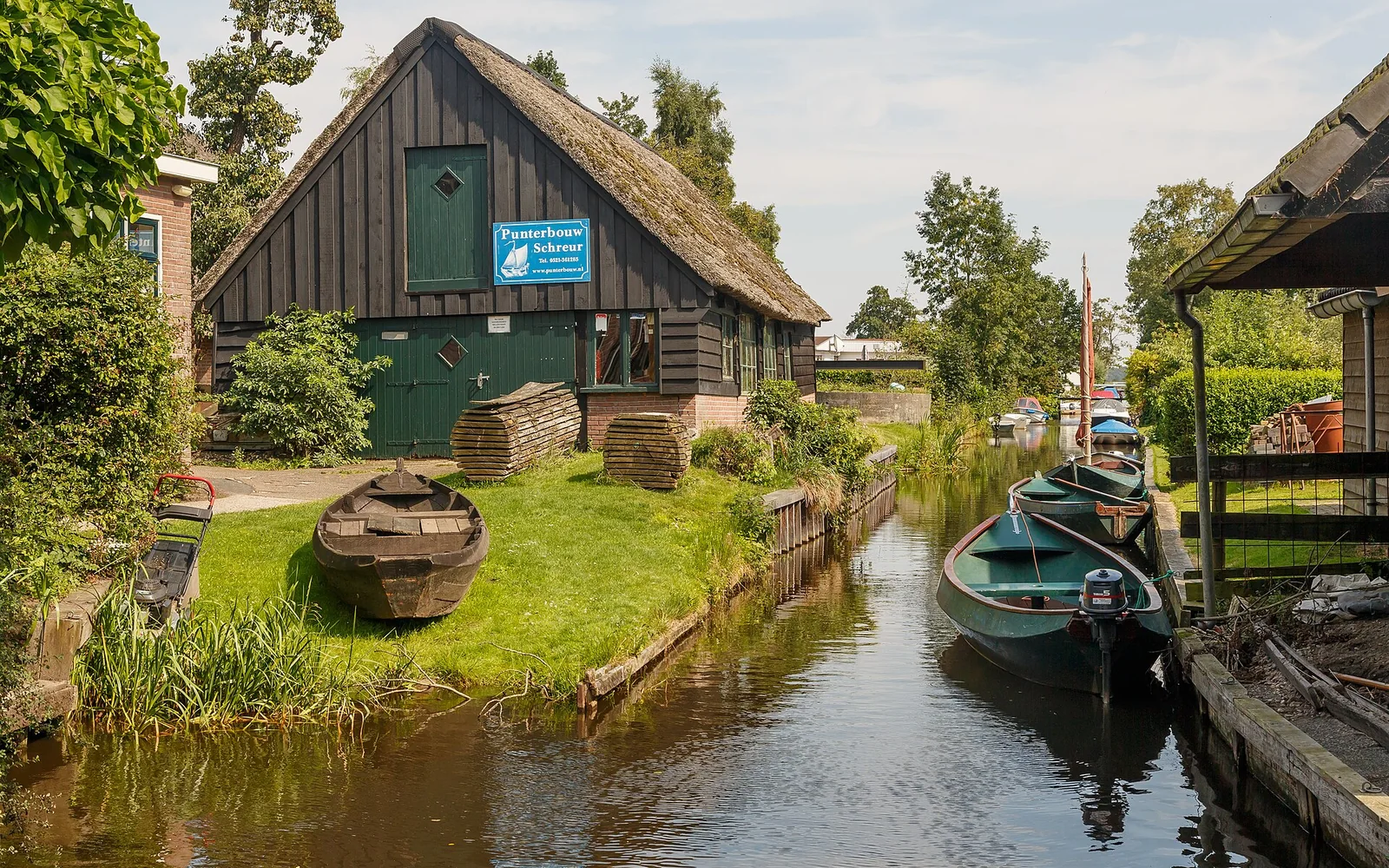
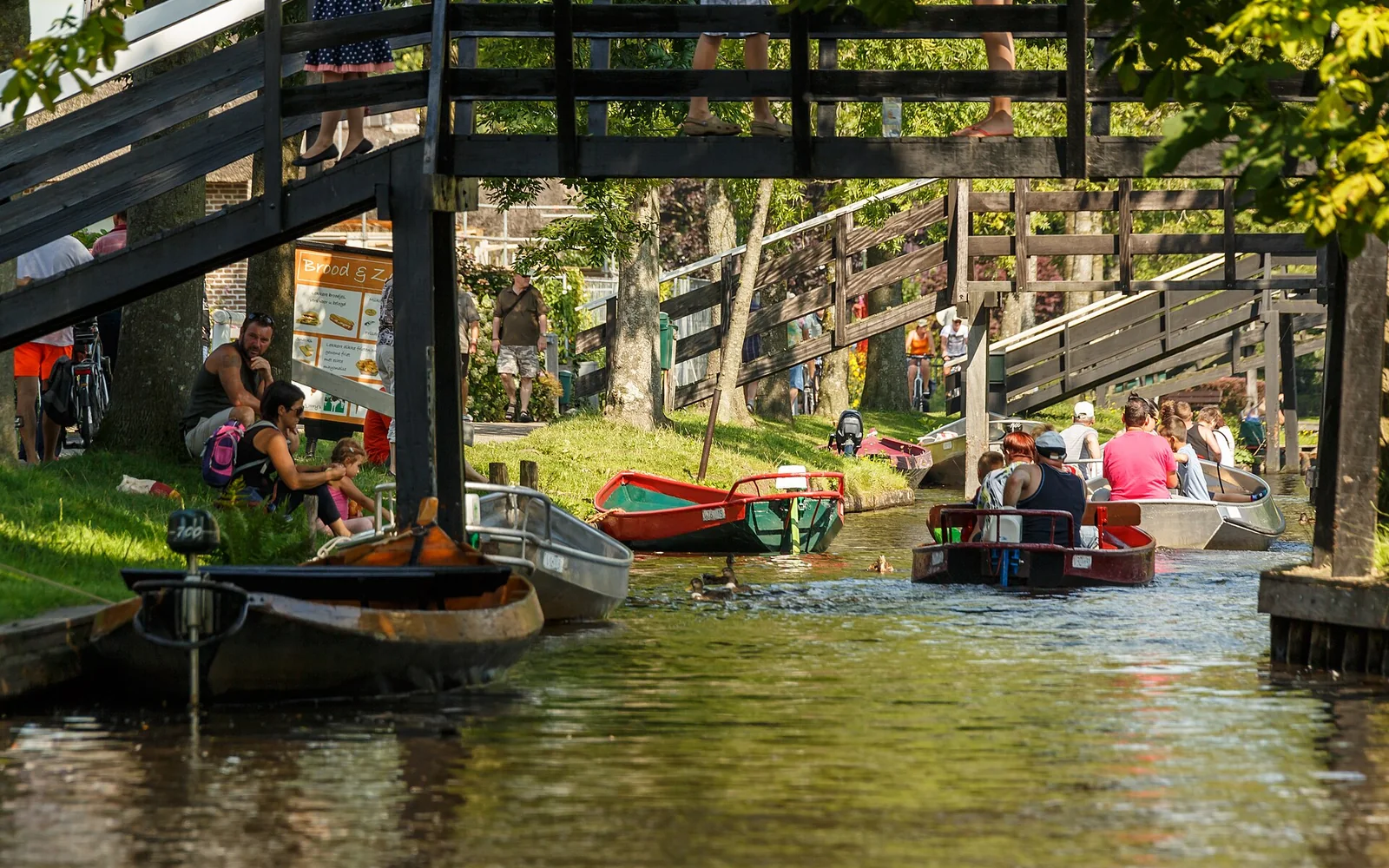
The central canal and footbridges draw heavy day-trip traffic, while paths and waterways beyond the busiest section connect to a much larger wetland landscape.
Start with the main local route
The central canal and footbridges draw heavy day-trip traffic, while paths and waterways beyond the busiest section connect to a much larger wetland landscape.
An overnight stay allows an early walk before tour groups and time for a quieter canoe, bicycle or national-park route. Not every bridge, garden or path is public.
Walk before taking a boat
A first walk explains junctions, one-way sections and the difference between public paths and private homes.
Choose a boat you can control
Ask for a route briefing, understand steering and stopping, and avoid congested water if you are not confident.
Continue into the wetlands
Reed beds, lakes and peat landscapes around Weerribben-Wieden give the village its regional context.
Getting there
The usual public transport route uses a train to Steenwijk and a local bus toward Giethoorn. Frequencies vary by date, so check the final return before setting out.
Getting around
Walking, cycling and small boats are the main local modes. Cars remain outside parts of the historic canal area, and parking does not remove the need to walk.
Food to look for
Canal-side cafés become busy at lunch. Carry water and consider eating before or after the main rush, while respecting that picnic space is limited and often private.
When to visit
Late spring to early autumn has the fullest boats and buses. Weekdays and early hours are calmer. Winter can be beautiful but services and path conditions vary.
Accessible travel
Narrow bridges, boat boarding and uneven waterside paths are common barriers. Ask operators about accessible boats and the complete path from parking or bus stop.
Practical limits
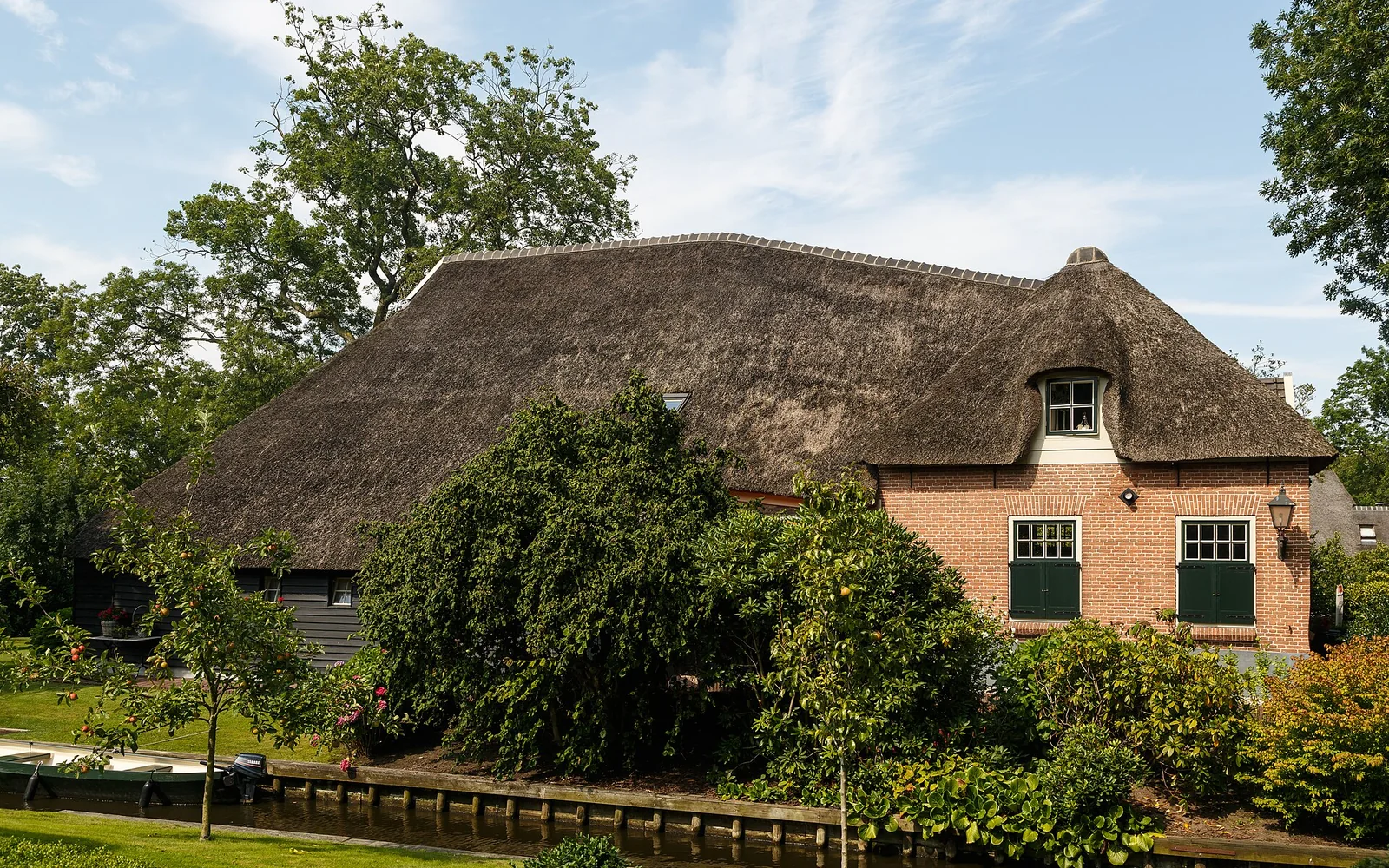
Homes and gardens line the canals. Keep noise down, use public paths, follow water rules and do not fly drones or enter private bridges without permission.
Nearby places
Steenwijk is the rail gateway. De Weerribben, Blokzijl and other wetland routes suit a longer stay with separate local transport.
Continue planning
Questions about Giethoorn
Can I visit Giethoorn without a car?
Yes by train to Steenwijk and a local bus. Check the complete return timetable before travel.
Do I need to rent a boat in Giethoorn?
No. The village can be enjoyed on foot, and a guided boat may suit visitors who do not want to steer.
How can I avoid the busiest time?
Stay overnight or arrive early on a weekday, then explore the wider wetland region after the central canal becomes busy.
Sources and updates
This guide was last reviewed on 3 September 2026. Transport, access and opening arrangements can change, so check the official source before travel.
- Official Netherlands visitor information, Netherlands Board of Tourism and Conventions
- Official Netherlands rail journey planner and service information, NS
- Official nationwide public transport journey planner, 9292
- Official Giethoorn and Weerribben-Wieden visitor information, Visit Weerribben-Wieden