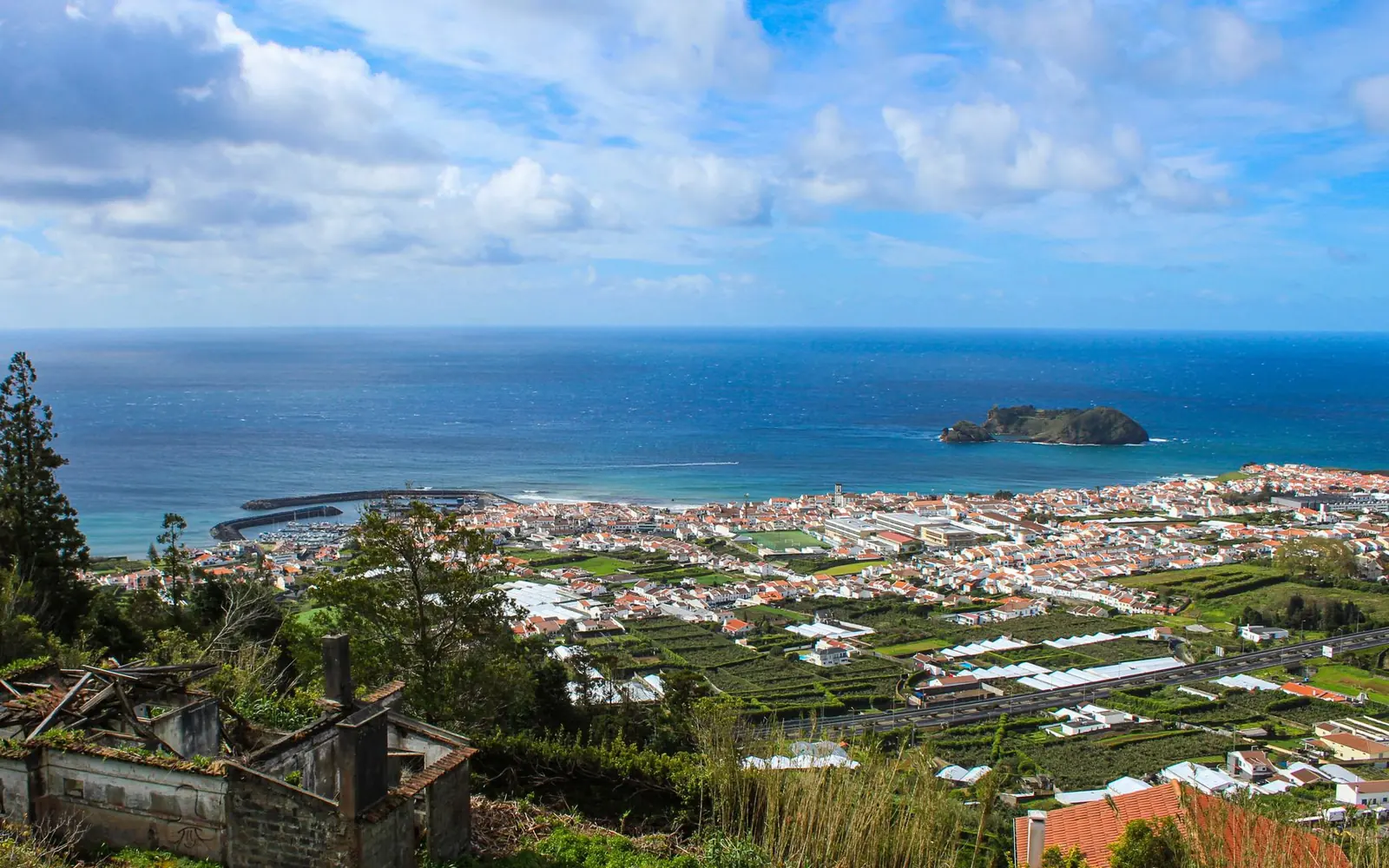
Angra do Heroísmo grew around a sheltered Atlantic harbour that served shipping routes between continents. Its planned street grid, churches, civic buildings and fortifications form a UNESCO-listed centre. One or two days cover the city, while a longer stay lets Angra serve as a base for Terceira.
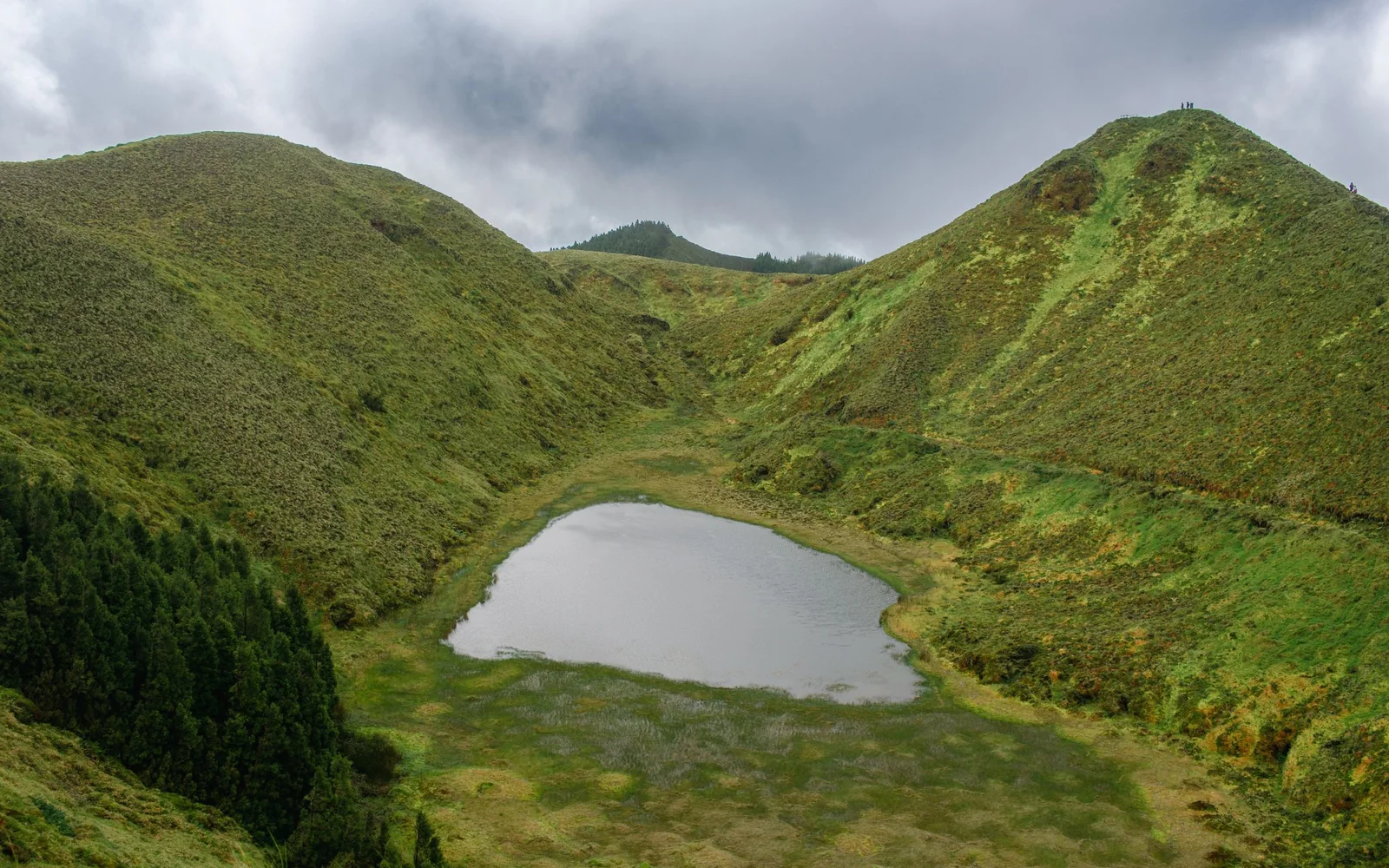
The city is not a label for the whole island. Volcanic caves, pasture landscapes and distant swimming areas require separate road travel.
UNESCO-listed centre
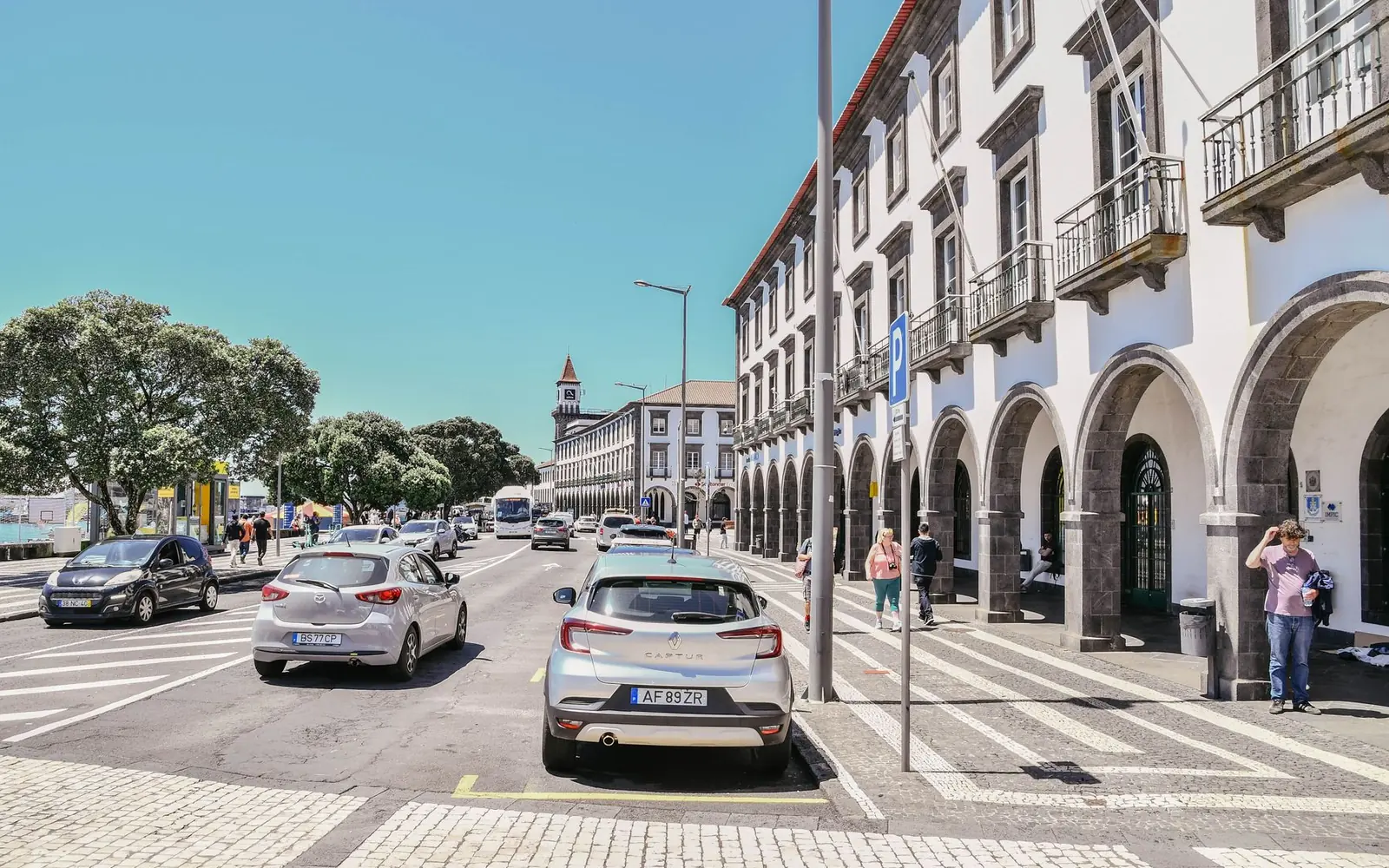
Praça Velha is the civic heart of the old city. From there, streets run towards the cathedral, harbour and Misericórdia Church. Colourful façades and dark stone details show a city rebuilt and adapted after earthquakes and changing maritime fortunes.
The UNESCO designation concerns the central urban area and its role in Atlantic navigation. It does not mean every building is a museum or open to the public. Churches remain active places of worship.
Gardens, harbour and fortifications
The Duke of Terceira Garden rises in terraces above the centre and provides a green route towards higher viewpoints. The harbour front gives the clearest sense of Angra's maritime setting.
Fortifications around Monte Brasil and São Sebastião reflect the strategic importance of the bay. Some areas retain military functions or controlled access, so follow local signs.
Monte Brasil
Monte Brasil is a volcanic peninsula beside the city, with roads, trails and viewpoints over both sides of the coast. It is close on a map but still a substantial uphill outing. Take water and a weather layer.
Cloud, rain and wind can arrive quickly. Use established routes and do not enter signed military or restricted areas. Travellers who prefer not to climb can use a taxi, tour or car for accessible viewpoints where permitted.
A two-day plan
- Day one: Walk Praça Velha, the cathedral streets, Misericórdia Church, harbour and Duke of Terceira Garden.
- Day two: Explore Monte Brasil in suitable weather, then choose a museum, fortification or relaxed city lunch.
Keep island attractions such as Algar do Carvão or Biscoitos for separate days with confirmed transport and current access.
Where to stay
The historic centre is the best base for walking and restaurants. Accommodation on higher streets may have views but more climbing. Rural Terceira properties suit travellers with a car, while Angra offers more options after dark.
Food
Alcatra, a slow-cooked beef dish, is closely associated with Terceira. Local cheeses, seafood and sweet breads also appear across the island. Restaurant versions vary, and regional dishes are not confined to the historic centre.
Exploring Terceira
A car provides the easiest access to volcanic interiors, coastal villages and swimming areas. Organised tours are useful for visitors who do not want to drive. Public buses connect settlements but may not create an efficient sightseeing circuit.
Inter-island plans need buffers. Flights and ferries can be disrupted by Atlantic weather, and ferry routes are seasonal or limited. Never assume the schedule from another year.
Festivals and season
Terceira has strong Holy Spirit traditions and Angra hosts major celebrations, including Sanjoaninas. Dates and programmes must be checked for the year of travel. Events can be a highlight but also change traffic, accommodation demand and normal opening patterns.
Summer generally offers warmer, more settled conditions. Winter is quieter and greener, with a greater risk of wind and rain. A waterproof layer is useful in every season.
Access
The central grid has many manageable streets, though patterned paving, slopes and historic thresholds remain. Monte Brasil is a separate outdoor route. Contact venues directly if lift access or step-free entry is essential.
Common planning mistakes
- Do not describe all Terceira attractions as being in Angra.
- Do not schedule a tight connection after an inter-island flight or ferry.
- Do not walk Monte Brasil without water and a weather check.
- Verify festival dates and road changes for the current year.
Places to add to your map
- Praça Velha: Civic square in the historic centre.
- Sé Cathedral: Cathedral in the central street grid.
- Misericórdia Church: Blue church overlooking the harbour.
- Duke of Terceira Garden: Terraced garden rising from the centre.
- Monte Brasil: Volcanic peninsula with trails and viewpoints.
Open the route planner to place these stops in a wider Portugal trip.
Plan nearby destinations
Questions about Angra do Heroísmo
How many days do I need in Angra do Heroísmo?
One full day covers the historic centre. Add a second for Monte Brasil and museums, and allow three to five nights if Angra is your base for Terceira.
Is Angra a good base for Terceira?
Yes. It has the island’s strongest concentration of restaurants, heritage and services. A car or tour is still useful for remote coast and volcanic sites.
Can I walk up Monte Brasil?
Yes, using established roads and trails. The climb, weather and military areas need respect, and route conditions should be checked locally.
Can I travel between Angra and Ponta Delgada by road?
No. They are on different islands. Travel requires an inter-island flight or a ferry service when one operates on the relevant route and date.
Sources and updates
This guide was last reviewed on 28 August 2026. Transport, access and opening arrangements can change, so check the official source before travel.
- Central Zone of Angra do Heroísmo, UNESCO World Heritage Centre
- Terceira visitor information, Government of the Azores
- Angra do Heroísmo, Turismo de Portugal
Related places to consider
These guides can help you place Angra do Heroísmo within a wider route.