
| Detail | Croatia | Greece |
|---|---|---|
| Best fit | Walled towns, national parks and a compact coast | Ancient sites and a chosen island or mainland region |
| Useful trip length | Seven to twelve days for a mainland and island route | Seven to fourteen days for Athens and one coherent region |
| Route shape | Often linear from Zagreb or Split toward Dubrovnik | Usually Athens plus one island group or mainland circuit |
| Public transport | Coach and seasonal coastal ferry, with limited rail on the main route | Ferry, domestic flight, regional bus and selective rail |
| Ancient history | Roman and medieval heritage is strong in coastal cities | Classical sites and museums are central to many routes |
| Nature | Waterfalls, karst parks, islands and a varied Adriatic coast | Island landscapes, mountains, gorges and a much larger mainland |
| Seasonal difference | Late spring and September balance coast and parks | Late spring and early autumn suit many island and mainland routes |
| Main risk | Seasonal ferries and crowded coastal roads | Longer sea crossings and overambitious island combinations |
Croatia and Greece both reward a coast-led journey, but the route logic is different. Croatia is easier to shape as one Adriatic line. Greece asks travellers to choose between the mainland and distinct island groups before transport is booked.
The basic trip difference
Croatia lends itself to a north-to-south mainland and island route, with historic coastal cities connected by coaches and seasonal catamarans. Greece offers a much larger choice of mainland regions and island groups that should not be treated as one route.
Choose Croatia for a more linear Adriatic journey. Choose Greece when ancient sites or a specific island group matter more than keeping transfers simple.

History, beaches and landscapes
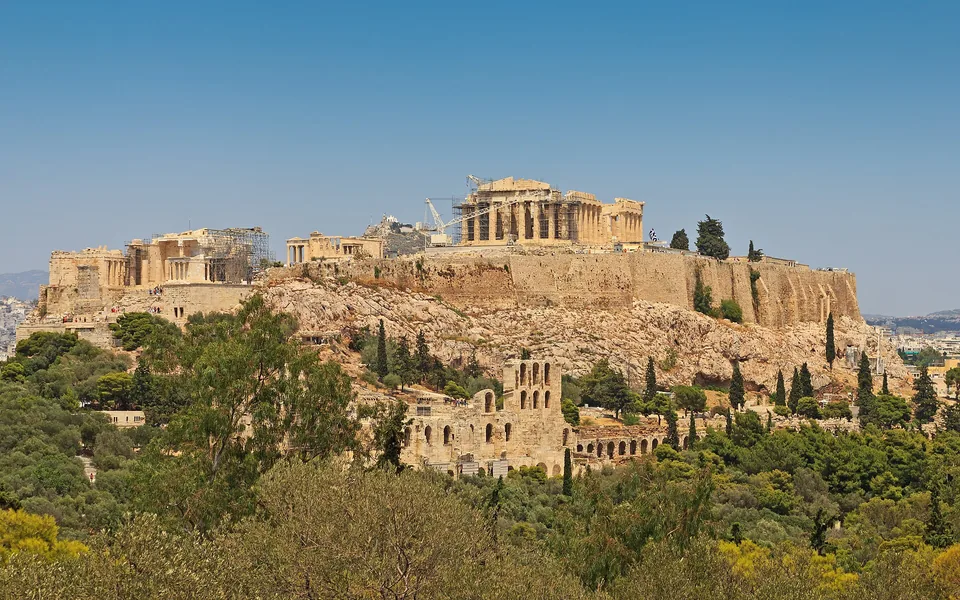
Croatia combines walled cities, Venetian-era towns, clear-water coves and national parks. Greece offers a deeper concentration of ancient archaeology alongside island landscapes and a more extensive mainland.
Neither country should be judged by beaches alone. Plitvice, Istria and Zagreb broaden a Croatia trip, while the Peloponnese, northern Greece and mountain regions sit beyond the familiar Cyclades route.
Ferries and route planning
Croatia’s main visitor route often combines coaches with one or two coastal ferries. Direct island-to-Dubrovnik services are seasonal, so a mainland fallback is essential.
Greek ferries connect separate island groups with very different patterns. Athens plus one coherent group is usually more resilient than building a trip around several unrelated islands.
Season and travel pressure
Late May, June and September work well for both countries. July and August offer the widest seasonal transport but bring heat and high demand in the most famous coastal and island centres.
Wind can disrupt sea travel even in summer. Keep the last night on the departure mainland or island rather than connecting a long ferry directly to an important flight.
Choosing Croatia or Greece
Choose Croatia for a compact Adriatic route with walled towns, national parks and shorter decisions about where to stop. Choose Greece for major archaeological sites and a wider choice of distinct island or mainland trips.
A first visit of seven to ten days is usually better in one country. Combining both adds a flight and rarely improves a route that already needs ferry buffers.
Start with the two country guides
Planning sources
Transport, visitor information and attraction details can change. Check the official pages before booking.
- Official Croatia travel planning Croatian National Tourist Board, checked 2 September 2026
- Official Greece travel planning Greek National Tourism Organisation, checked 2 September 2026
- Split to Hvar ferry information Jadrolinija, checked 3 September 2026
- Krilo coastal ferry timetable Kapetan Luka Krilo, checked 3 September 2026
- Croatia weather and warnings Croatian Meteorological and Hydrological Service, checked 3 September 2026
- Getting around Greece Greek National Tourism Organisation, checked 3 September 2026
- Greece weather information Hellenic National Meteorological Service, checked 3 September 2026
Comparison reviewed 3 September 2026.